

Blog
Commercial Bread Slicers: Electric Models and Prices

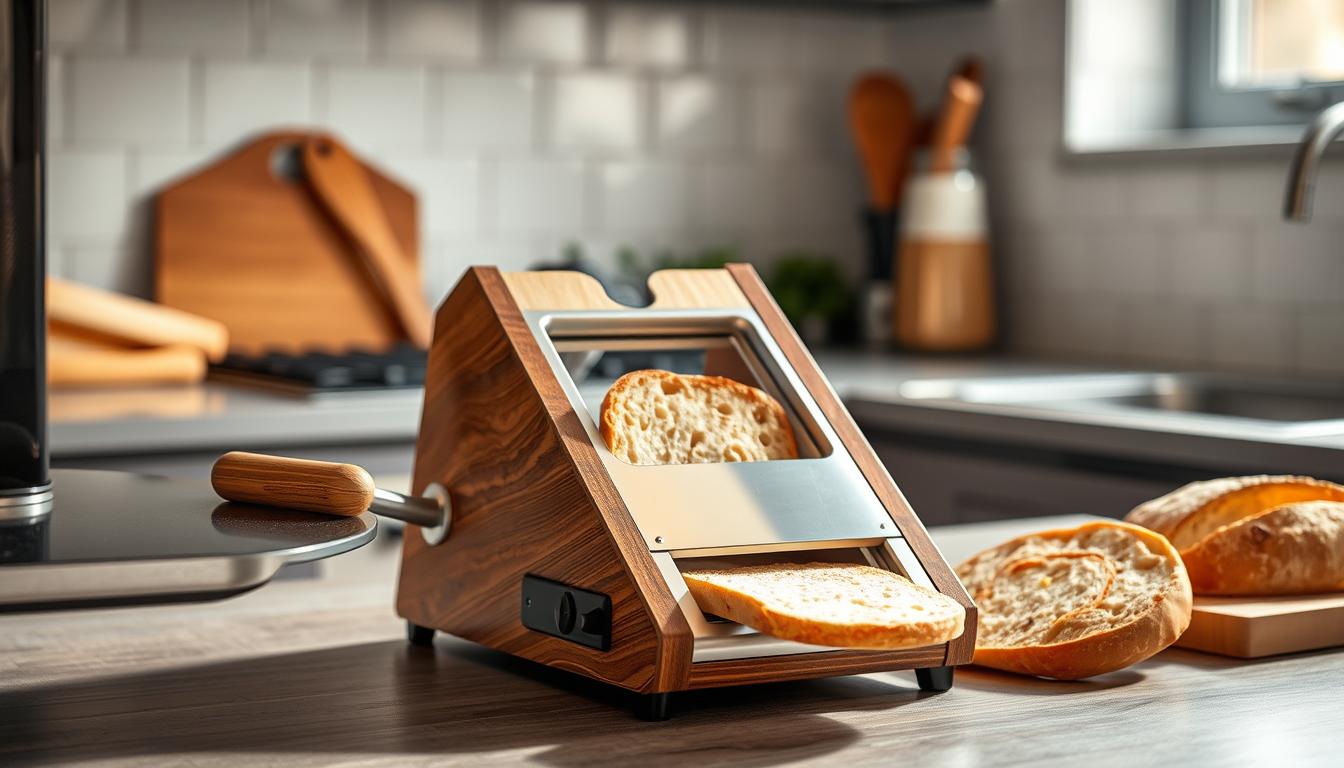
A commercial bread slicer is a countertop or floor machine that cuts whole loaves into even slices in seconds. For most restaurants, delis and bakeries, a gravity-feed electric countertop slicer is the best fit. Babak lists the Thunderbird ARM-07 and four Berkel countertop models, and this guide explains how to choose between electric, manual and automatic slicers, what specifications matter, and what to expect to pay in Canadian dollars.
Why a commercial bread slicer pays off
Hand slicing is slow, uneven and one of the more common causes of kitchen cuts. A commercial slicer fixes all three.
- Consistent slices. Even thickness means even toasting, predictable portions and better presentation on sandwiches and bread baskets.
- Speed. A whole loaf can be sliced in the time it takes to cut a few slices by hand, which helps during rush periods.
- Safety. Guarded blades and stable bases are safer than a knife on a slippery board.
- Less waste. Clean, uniform cuts reduce crumbs, ragged ends and rejected slices.
- Bakery value. In-house artisan loaves can be sold sliced to customers who want convenience.
Types of commercial bread slicers
Electric countertop bread slicers
This is the category most buyers want when they search for an electric bread slicer or industrial bread slicer. A motor drives a blade set, and you push the loaf through or lay it in a hopper. These machines are compact, plug into a standard outlet in most cases, and handle everything from sandwich shops to small bakeries.
Manual bread slicers and guides
Manual slicers and slicing guides are the entry-level choice. They suit low volume and very tight budgets, but they are slower and more dependent on the operator, so they are rarely the long-term answer for a busy kitchen.
Floor-standing and high-capacity slicers
Larger bakeries and retail operations that slice many loaves per hour move to floor-standing or conveyor-style machines. These cost considerably more and need more space and power, so they make sense once your volume justifies them.
Home-use bread slicers
If you landed here looking for a bread slicer for home use, a commercial machine is probably more than you need. Commercial slicers are made for daily professional use and are priced accordingly. Home bakers who slice a loaf or two a week usually do well with a simple guide or a household appliance.
Bread slicers Babak lists
Our bread slicers category includes the following models. Check each product page for current specifications and electrical requirements.
Thunderbird ARM-07
The Thunderbird ARM-07 countertop bread slicer cuts 1/2 inch or 5/8 inch slices and runs on 115 V. That standard voltage makes it simple to place on most counters. Babak is an authorized Thunderbird dealer, so our team can discuss this model and the rest of the Thunderbird line, including mixers and dough prep equipment that often pair with it in a bakery.
Berkel countertop bread slicers
Berkel makes countertop bread slicers with a fixed slice thickness and a 15 1/2 inch maximum loaf length. We list four thicknesses, so you can choose the cut that suits your menu:
- Berkel MB3/8STD, 3/8 inch slices for thin sandwiches and delicatessen use
- Berkel MB7/16STD, 7/16 inch slices
- Berkel MB1/2STD, 1/2 inch slices, a common choice for sandwich bread
- Berkel MB3/4STD, 3/4 inch slices for thick-cut toast and Texas-style bread
If you slice only one style of bread, a fixed-thickness model is simple and consistent. If you slice more than one, look at models that offer a choice of thicknesses, such as the ARM-07.
What to look for when you choose
Slice thickness
Match thickness to what you serve. Sandwich bread is usually around 3/8 to 1/2 inch, brioche and artisan loaves often go thicker, and toast bread is thicker again. Decide this first.
Loaf length and size
Check the maximum loaf length and the height and width of the opening against the loaves you actually bake or buy. A great slicer that does not fit your longest baguette is the wrong slicer.
Power and electrical
Confirm voltage and plug type. Countertop models are commonly 115 V, but always check the product page. In BC, electrical equipment must carry a certification mark from a Standards Council of Canada accredited agency, so ask for the certification details of any model you buy.
Blade and drive quality
The blade set affects cut quality, noise and how often you replace parts. Ask about replacement blades and where to get parts and accessories.
Safety features
Look for blade guards, stable feet and clear controls. Staff training matters as well: only trained employees should use or clean a slicer.
Cleaning
Bread crumbs and flour build up quickly. Choose a model with accessible surfaces and a removable crumb tray where available.
Space and counter layout
Leave room for loaves coming in and sliced bread going out. A sturdy stainless work table and nearby racks keep the workflow tidy.
Which slicer fits which business
- Sandwich shops and delis: an electric countertop slicer with a thickness that suits your bread. Pair it with a meat slicer to speed up your build line. Our guide to improving efficiency with a commercial slicer has related tips.
- Restaurants: a compact electric slicer for house-baked loaves, brunch toast and bread baskets.
- Bakeries: a bakery slicer sized to match your daily bread output, next to your ovens and proofers. See our commercial bakery equipment guide.
- Institutional kitchens and catering: durable countertop slicers that handle large volumes of sandwich bread.
Using and cleaning a bread slicer safely
- Read the manufacturer’s manual and train every operator before first use.
- Switch off and unplug the machine before cleaning or changing parts.
- Brush off crumbs daily and wipe food-contact surfaces with warm water and detergent, then sanitize as required by your health authority.
- Never reach toward the blade with your hand. Use the guards and the feeding method the manufacturer describes.
- Keep the machine on a stable, level surface.
Sanitizer strengths and contact times vary between BC health authorities such as Vancouver Coastal Health and Fraser Health, so follow the requirements that apply to your premises.
Rough price ranges in Canadian dollars
These are rough estimates for new equipment, in Canadian dollars. They vary by brand, size and specification, and they are not Babak prices or a quote. Request a quote for current pricing.
| Type | Typical use | Rough range (CAD) |
|---|---|---|
| Manual slicing guide | Very low volume | $30 to $300 |
| Electric countertop bread slicer | Restaurants, delis, small bakeries | $1,500 to $5,000 |
| High-capacity or floor-standing slicer | Larger bakeries and retail | $5,000 to $15,000 or more |
| Certified pre-owned slicer | Lower entry cost | Varies with condition |
Budget also for a work table, replacement parts and staff training. You can look at certified pre-owned equipment or ask our team about leasing and financing options.
Frequently Asked Questions
What is the best commercial bread slicer?
The best one depends on your volume and bread type. For most restaurants, delis and small bakeries, a gravity-feed or hopper-style electric countertop slicer is the best fit. The Thunderbird ARM-07 offers a choice of 1/2 or 5/8 inch slices, while Berkel models use a fixed thickness.
Is an electric bread slicer worth it for a restaurant?
If you slice more than a few loaves a day, yes. An electric slicer saves labor, gives uniform slices, reduces waste and is safer than slicing by hand.
Can I use a commercial bread slicer at home?
You can, but it is usually more machine than a home kitchen needs. Commercial slicers are built for daily professional use and cost accordingly. Home bakers often do well with a simple slicing guide.
How thick should bread slices be?
Sandwich bread is typically cut around 3/8 to 1/2 inch, while toast bread and artisan loaves are often thicker, around 5/8 to 3/4 inch. Choose a slicer with a thickness that matches your menu.
Is Babak an authorized Thunderbird dealer?
Yes. Babak Food Equipment is an authorized dealer for Thunderbird, which includes the ARM-07 bread slicer and other Thunderbird bakery and prep equipment.
How much does a commercial bread slicer cost in Canada?
As a rough estimate, an electric countertop commercial slicer often falls between $1,500 and $5,000 CAD, and high-capacity machines cost more. Prices vary by brand and spec, so request a quote for current pricing.
Ready to compare? Browse our bread slicers and slicers and graters, visit the showroom at 7190 Randolph Ave, Burnaby, or call (604) 566-9747 to request a quote. Our team will help you match a slicer to your bread and your volume. Pricing, availability, delivery and installation are confirmed at the time of purchase.