

Blog
Robot Coupe CL50 vs R301: Which Food Processor Fits?

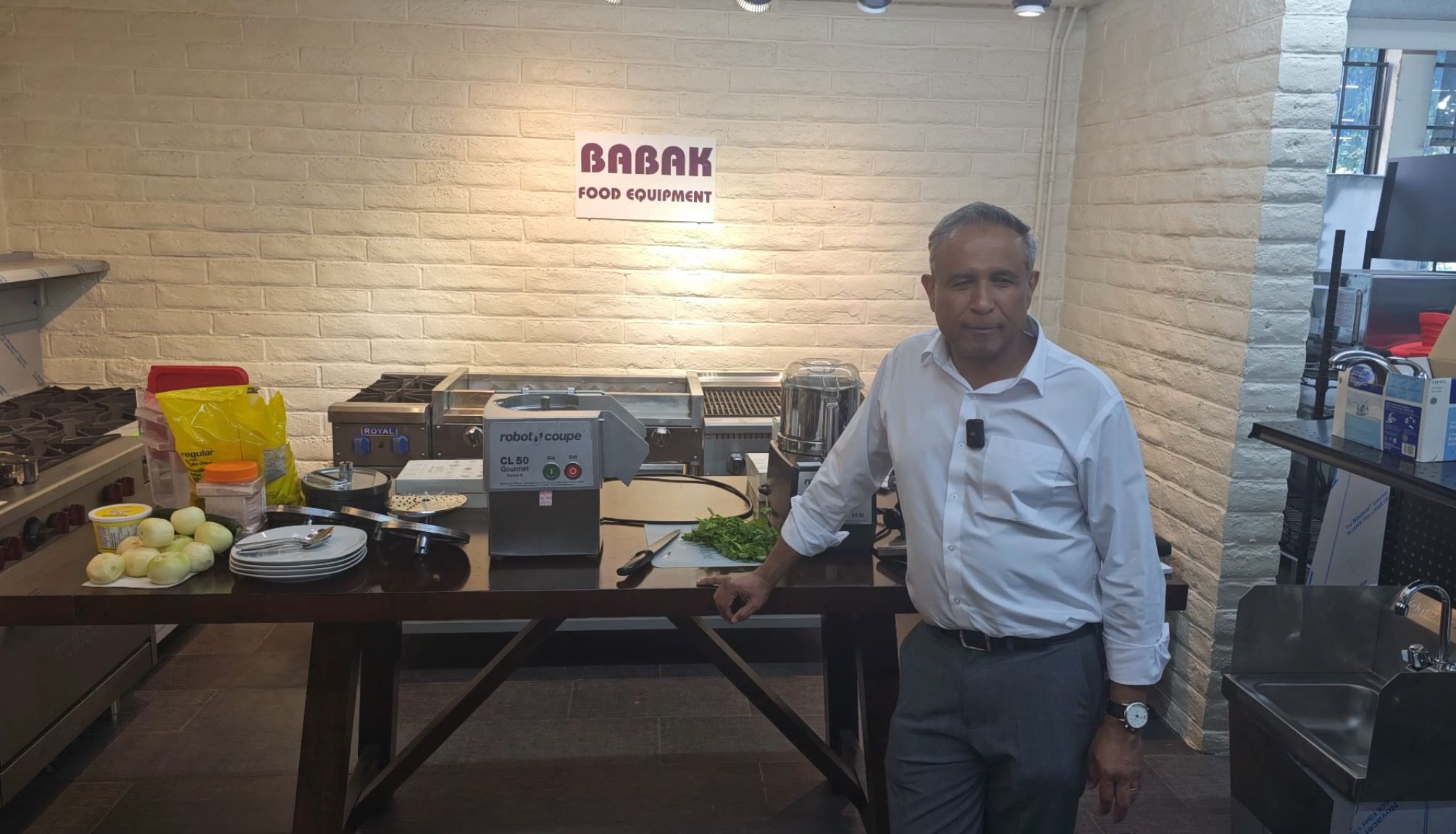
The Robot Coupe CL50 and the Robot Coupe R301 are both commercial food processors, but they are built for different kinds of prep. The CL50 is a continuous-feed machine made for volume slicing, shredding and dicing. The R301 is a combination machine with a bowl for chopping and pureeing plus a continuous-feed head for slicing. If most of your work is vegetables in bulk, start with the CL50. If you need one machine for sauces, doughs, pastes and slicing, the R301 is usually the better fit.
Babak Food Equipment sells both lines from our Burnaby, BC showroom. Below we explain how each machine works, where each one earns its place, and how to choose. You can browse the full range of commercial food processors any time.
Robot Coupe CL50 vs R301 at a glance
People searching for the CL50 often call it a “dicer”, and the old comparison video on our channel used the same shorthand. Strictly speaking, neither machine is a dedicated dicer. Both are food processors that become dicers when you add the right kit. What really separates them is the way product moves through the machine.
- CL50: a continuous-feed processor. You load product into the feed head, it is cut by the disc, and it falls out the side into a pan or container. Nothing stops the flow, so it keeps running while you refill the hopper.
- R301: a combination processor. It has a bowl with an S-blade for batch work, and it can also run discs through a continuous-feed head, which gives you two machines in one base.
That single difference drives almost every decision below: capacity, workflow, cleanup and the type of kitchen each one suits.
What the Robot Coupe CL50 is
The Robot Coupe CL50E is a continuous-feed food processor supplied with two discs. It has no bowl. Product goes in the top through a feed head and leaves through a discharge chute, so a cook can process a whole case of onions, peppers or potatoes without ever emptying the machine mid-job.
It is the machine to look at when the same cuts come up every day: sliced mushrooms, shredded cabbage, grated cheese, diced tomatoes for a salsa station, or julienned carrots for a salad bar. Because the cut is made by a disc rather than a blade spinning in a bowl, results are uniform from the first piece to the last, which matters for portion control and presentation.
The CL50 becomes far more flexible once you add accessories. Beyond the discs it ships with, Robot Coupe offers a range of slicing, shredding, grating, julienne and dicing options, so one machine can produce many cuts as your menu changes. We have two short how-to posts showing it at work: how to do a small dice with the CL50 and how to make a waffle cut.
Where the CL50 fits best
- Pizzerias, sandwich shops and salad bars that prep produce in large volume every morning.
- Caterers and commissary kitchens that process many pounds of vegetables per shift.
- Institutional kitchens, such as care homes and schools, where speed and consistent cuts matter.
What the Robot Coupe R301 is
The Robot Coupe R301 is a combination food processor with a 3.7 L stainless steel bowl. With the S-blade fitted, it chops, minces, purees, emulsifies and mixes in batches: hummus, pesto, ground vegetables, vinaigrettes, farce, pastry fillings. Swap to the continuous-feed head and discs and the same base slices, grates and shreds.
That is its strength. A single R301 can handle the bulk of a small or mid-size kitchen’s prep, from a morning of sliced vegetables to a batch of sauce, without a second machine. The bowl is stainless steel and removes for cleaning, and a bowl-only variant such as the Robot Coupe R301B suits operations that mainly need batch chopping and pureeing.
Where the R301 fits best
- Cafes, bistros and independent restaurants that need one versatile machine.
- Kitchens with limited counter space.
- Menus built around sauces, dips, spreads and fillings as well as sliced vegetables.
Capacity and speed
For raw throughput on slicing and dicing, a continuous-feed machine like the CL50 has the advantage, because it never has to stop for the bowl to be emptied. The R301 can also run continuous-feed attachments, but you are working through a smaller feed head and sharing the base with a bowl you may keep swapping in and out.
For batch work, the R301 is the one to pick. A 3.7 L bowl is large enough for a meaningful batch of hummus or sauce, and the blade speed gives a fine, smooth texture. A continuous-feed machine will not do that job at all.
Exact motor power, speeds, hourly output and electrical requirements differ by model and version, so always read the manufacturer’s spec sheet for the model you are considering. If you want help comparing them, our team can go through the numbers with you.
Cutting results and attachments
Both machines accept a range of Robot Coupe discs. Typical options include slicing discs in different thicknesses, shredding and grating discs, ripple-cut (crinkle) discs, and julienne and dicing kits. The CL50 is generally the machine people choose when dicing is a daily task, since the cut falls out continuously and a dicing kit makes quick work of a pallet of onions.
When you compare the two, ask yourself these questions:
- How many pounds of produce do I process in a typical prep session?
- Do I need a bowl for purees, pastes and emulsions?
- Which cuts do I make every day, and which only once in a while?
- How much counter and storage space can I give the machine and its discs?
Cleaning and daily handling
Both machines have removable parts that can be washed in the sink or, where the manufacturer allows, in a commercial dishwasher. Always follow the manufacturer’s instructions and your local health authority’s sanitation requirements. Practical points:
- The CL50 has fewer parts to wash between jobs, because there is no bowl, but the feed head and discharge chute need attention after sticky products.
- The R301 has a bowl, lid and blade assembly to clean, and the blade is sharp, so handle it carefully.
- Store discs in a rack or case, not loose in a drawer, to protect both the edges and your hands.
- Unplug the machine before any cleaning or disc change.
Which kitchen suits which machine
Match the machine to the way you work, not just to the size of the business.
- Choose the CL50 if you slice, shred or dice in large quantities and the cuts repeat. High-volume prep lines and commissary kitchens benefit most from the continuous flow.
- Choose the R301 if you chop, puree and slice in smaller amounts across the day and want one machine to do it all.
- Consider both in a busy kitchen: the CL50 on the vegetable station and the R301 on the sauce and cold-kitchen station keeps both jobs moving at the same time.
- Need more bowl capacity? Larger bowl models such as the Robot Coupe R401 sit between the R301 and the big batch machines.
If your work leans toward meat and cheese, take a look at our slicers and graters. For fruit and vegetable specific cutting, see the fruit and vegetable cutters. You can also read why every kitchen can use a processor in our food processor guide.
CL50 vs R301 summary table
| Feature | Robot Coupe CL50 | Robot Coupe R301 |
|---|---|---|
| Type | Continuous-feed processor | Combination processor (bowl and continuous feed) |
| Bowl | None | 3.7 L stainless steel |
| Best at | Slicing, shredding, grating, dicing in volume | Chopping, pureeing, emulsifying, plus slicing |
| Batch work (sauces, hummus) | No | Yes, with the S-blade |
| Continuous production | Excellent, never stops to empty | Good with the continuous-feed head |
| Typical kitchen | Commissary, caterer, high-volume prep line | Cafe, bistro, small to mid-size restaurant |
| Counter footprint | No bowl to store | Slightly larger with bowl and lid |
| Cleaning | Feed head, chute and discs | Bowl, lid, blade and discs |
Frequently Asked Questions
Is the Robot Coupe CL50 a dicer?
Not on its own. The CL50 is a continuous-feed food processor. It slices, shreds and grates out of the box, and it dices or cuts julienne when you fit a dicing or julienne kit. Check that the kit you want is compatible with the exact model before you order.
What is the difference between a continuous-feed and a combination food processor?
A continuous-feed machine pushes product through a feed head and ejects it as it is cut, so it never stops to be emptied. A combination machine adds a bowl with an S-blade for chopping, pureeing and emulsifying, and it can also be fitted with a continuous-feed head. The CL50 is the first type and the R301 is the second.
Can the R301 do the same slicing jobs as the CL50?
It can slice, shred and grate with its continuous-feed head, and it handles ordinary prep volumes well. The difference shows up in long production runs, where a dedicated continuous-feed machine moves product with less hands-on handling.
Which one is better for a small restaurant?
If you do a mix of chopping, pureeing and slicing, the R301 covers more jobs in one footprint. If your prep is mostly slicing and dicing vegetables in volume, the CL50 is the more focused tool.
What power supply do these machines need?
Check the data plate or spec sheet for the model you are buying. Voltage, phase and amperage vary by model and region, so have a licensed electrician confirm your circuit before installation.
Where can I see the machines before I buy?
Visit the Burnaby showroom at 7190 Randolph Ave or call (604) 566-9747, and our team can walk you through the models, discs and kits that suit your menu.
Ready to compare the machines in person? Browse our food processing equipment, visit the Burnaby showroom at 7190 Randolph Ave, or request a quote and our team will help you choose the right Robot Coupe for your kitchen. Pricing, availability, delivery and installation are confirmed at the time of purchase.