

Blog
Small Dice With the Robot Coupe CL50: Step-by-Step

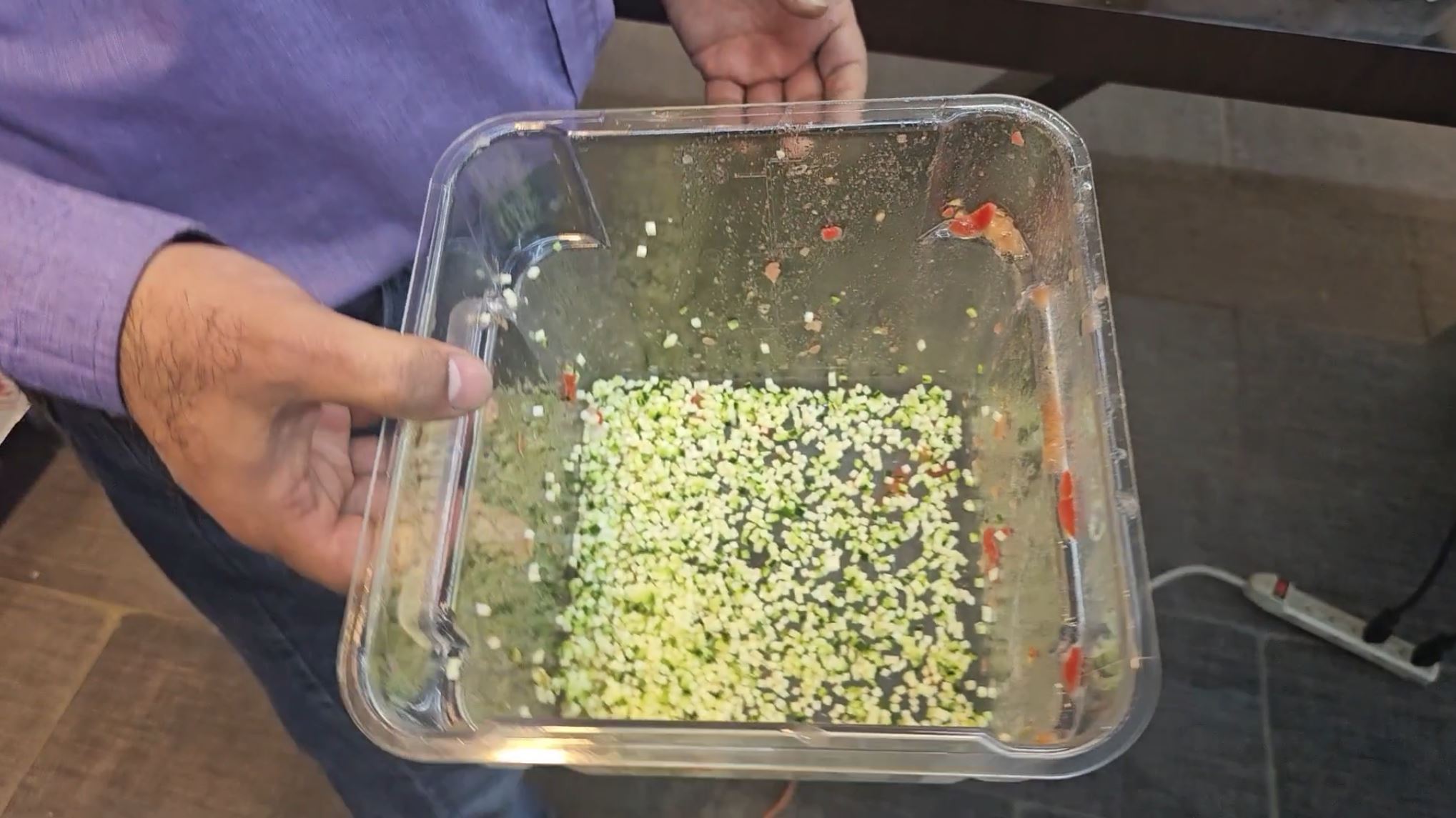
Getting a clean small dice with the Robot Coupe CL50 is a matter of setup and technique more than speed. The machine cuts a dice in two stages: a slicing disc cuts the product into slices, and a dicing grid then pushes those slices through a lattice of blades to turn them into cubes. Choose the right disc and grid, prepare the product so it feeds straight, and the CL50 turns out even cubes of onion, celery, carrot, pepper and more far faster than a knife.
This guide explains the small dice workflow in plain steps, the prep that makes the biggest difference, how to clean the unit safely and what to try when the cubes come out ragged. The Robot Coupe CL50 is a compact continuous-feed processor, and Babak Food Equipment lists the Robot Coupe CL50E for kitchens that want a small footprint with a fast prep rate.
Small dice with the Robot Coupe CL50: how it works
The word “dice” simply means a cube cut. A continuous-feed processor such as the CL50 builds that cube from three measurements, and you control them by choosing the right parts.
- Slice thickness is set by the slicing disc. A thinner slice makes a shorter cube.
- Strip width comes from the grid. The grid’s blade spacing cuts the slice into strips.
- Cross cut is made when the next slice is pushed through the same grid, which cuts the strips into cubes.
That is why the dicing accessory is a pair of parts. The dicing grid goes in the ejector or mounting position, and a slicing disc of matching thickness sits above it on the motor shaft. For the cube to be even, the slice thickness and the grid spacing should be matched so the result is square rather than a short brick. Robot Coupe supplies dicing kits that pair the right grid with the right disc, and the exact sizes and part numbers for your machine are on the spec sheet or in the operator manual. If you want the smallest dice, ask for the finest dicing grid offered for your model, together with its matching slicing disc.
What you need before you start
- The CL50 base, bowl or ejector assembly, feed head and pusher for your model.
- The dicing grid and the matching slicing disc for the cube size you want.
- A container under the discharge chute that is large enough for the batch.
- A cutting board, a sharp knife and a clean, dry work table.
- Your sanitizing supplies and cleaning brush for afterwards.
Always read the operator manual for your own unit before assembly. Models and accessories differ, and this guide stays general on purpose.
Step-by-step: cutting a small dice
1. Unplug and assemble
Make sure the machine is switched off and unplugged. Fit the slicing disc on the shaft, lock the grid into place where the manual shows it, then close the feed head. The head must be fully latched before the motor will start, because the safety interlock is there to protect your hands.
2. Prepare the product
This is where most dice quality is won or lost.
- Trim the product so it fits the feed opening without forcing.
- Cut round vegetables such as onions in half so the flat side is supported.
- Use firm, cold product. Warm or overripe items bruise and release juice.
- Trim the ends flat so each piece enters square to the disc.
- Dry washed vegetables briefly so the surface does not slip.
3. Fill the hopper evenly
Pack the opening snugly so the pieces cannot tumble. Mixing long carrots and short celery pieces side by side is fine, as long as they sit straight and in the same direction. Loose, tilted pieces produce slivers.
4. Start the motor and push steadily
Switch on the machine, then press the product down with the pusher at a smooth, moderate pressure. Do not hammer it and do not stop and start. A steady push gives a clean cut, while jerking the pusher produces ragged edges. Never put your hand or an object other than the pusher into the feed opening.
5. Stop and empty the unit
When you finish a batch, switch off the motor, wait for the disc to stop and then empty the container. Check a handful of cubes: they should be uniform in size with clean faces. If not, see the troubleshooting section below.
Good products for a small dice
The CL50 handles firm vegetables and fruit well. These are the items cooks most often put through it for a small dice:
- Onion, celery and carrot for mirepoix, soups, sauces and stocks.
- Peppers for salsa, stuffing, omelet fillings and sandwich toppings.
- Cucumber for salads, tzatziki and relish.
- Potatoes for hash, breakfast potatoes and soups, held in cold water until needed so they do not darken.
- Firm tomatoes for pico de gallo and bruschetta, although very ripe tomatoes are better diced by hand.
- Apples and pears for pastry fillings and slaws.
Soft, wet or very small items such as ripe tomatoes, berries and herbs tend to crush rather than cut, so keep those for a knife or a different tool.
Tips for an even small dice every time
- Keep the blades sharp. A dull blade tears the product. Check the grid and disc regularly, and replace them when the cut quality drops.
- Work in batches. Do not overload the opening. A moderate load cuts more cleanly than a crowded one.
- Cut by type. Process onions, then switch to other items, so strong flavors do not cross into delicate ones.
- Standardize your cube. Write the disc and grid combination on your prep sheet so every cook produces the same size.
- Keep the product cold. Cold vegetables hold their shape and cut cleaner.
- Check the first handful. If the first batch looks off, correct it before you run the whole case.
Cleaning and food safety
Unplug the machine before you touch any blade, disc or grid. Remove the cutting parts using the tool or method in the manual, and keep your fingers away from sharp edges. Rinse off residue, wash with detergent, rinse, sanitize and let the parts air dry, which is the same general sequence BC health authorities describe for manual warewashing. The exact sanitizer type, strength and contact time depend on your health authority’s guidance, so follow the requirements that apply to your premises and keep test strips on hand.
Check your manual for which parts are dishwasher safe, because harsh dishwasher cycles can dull blades or wear the grid. A 3-compartment sink makes it easy to wash small parts in sequence, and you can browse our 3-compartment sinks if your dish area needs an upgrade. Fresh produce prep also belongs to your food safety plan, so write down who cleans the processor, how often and with which sanitizer.
Troubleshooting: when the dice is not clean
| Problem | Likely cause | What to try |
|---|---|---|
| Cubes are crushed or mushy | Dull blades or soft, warm product | Replace worn parts, chill the product, use firmer items |
| Cubes are rectangles, not squares | Disc and grid not matched | Use the matching kit for your target size |
| Lots of slivers and ends | Product tilting or loosely packed | Cut flat, pack the opening snugly, push straight |
| Product jams in the grid | Fibrous product or too much pressure | Reduce pressure, trim stringy ends, clear the grid with the unit off |
| Uneven size in one batch | Pushing too fast or in jerks | Slow down and push at a steady pace |
Is the CL50 the right machine for your prep?
The CL50 is built for lighter, continuous prep: cafes, small restaurants, food trucks, caterers and prep rooms where counter space is tight. For heavier daily volume, or when you want a bowl cutter and a continuous feed in one body, a larger combination machine is the better fit. Our comparison of the CL50 and the R301 explains the differences. Cooks who also cut fries or lattice shapes can read about waffle cuts on the CL50.
If you are comparing machines more widely, see our food processors and fruit and vegetable cutters. For wider prep planning, browse vegetable prep equipment, or ask our team which combination fits your menu and volume.
Frequently Asked Questions
How do you make a small dice with the Robot Coupe CL50?
Fit a slicing disc and a matching dicing grid, load firm, trimmed vegetables into the feed opening and push them down steadily with the pusher. The disc cuts slices and the grid cuts them into cubes. Match the disc and grid so the cube comes out square.
What is the smallest dice the CL50 can cut?
The smallest cube depends on the finest dicing kit offered for your model. Check the spec sheet or ask our team for the available grid and disc sizes before you order.
Does the CL50 need a special disc to dice?
Yes. Dicing needs a dicing grid together with a slicing disc, and the pair is chosen by the cube size you want. A slicing disc alone only makes slices.
Can I dice soft vegetables like ripe tomatoes?
It is difficult. Very ripe or soft items tend to crush on a continuous-feed machine. Firm tomatoes, chilled, work better, and a sharp knife is still best for very ripe fruit.
How do I clean the dicing grid safely?
Unplug the machine, remove the grid using the method in the manual and handle it by the frame, not the blades. Wash, rinse, sanitize and air dry following your health authority’s guidance and the manufacturer’s instructions.
Is the CL50 suitable for a food truck or small cafe?
Its compact footprint and continuous-feed design suit light to moderate daily prep in tight spaces. For heavy volume, ask us about larger machines.
Looking for a processor to match your prep list? Browse our food processors, visit the Burnaby showroom at 7190 Randolph Ave or call (604) 566-9747 to request a quote on the Robot Coupe CL50E and the dicing accessories you need. Pricing, availability, delivery and installation are confirmed at the time of purchase.