

Blog
Commercial Rice Cookers: How to Choose the Right One

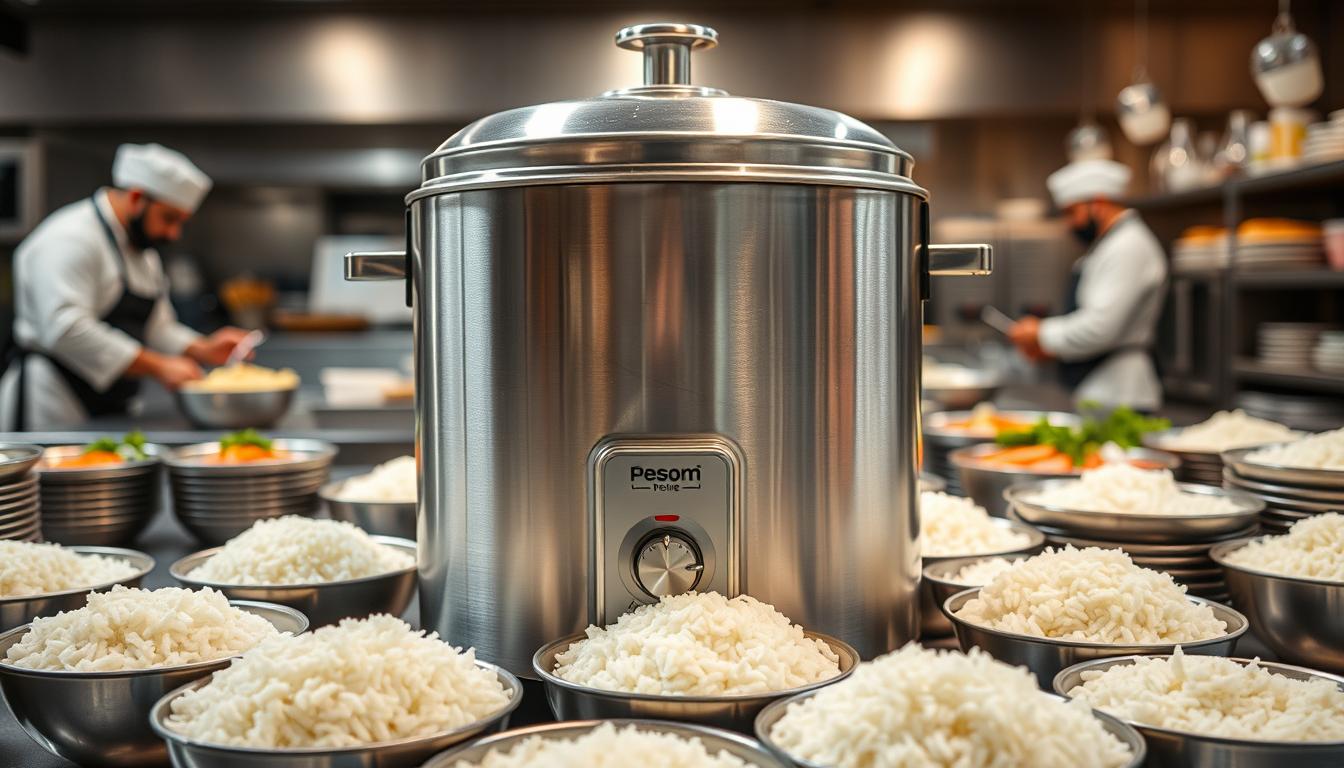
The best commercial rice cooker for your kitchen depends on three things: how much cooked rice you serve at peak, how long it needs to stay hot, and what power and space you have. Most restaurant units are electric cooker-warmers that cook a batch in roughly 30 to 45 minutes, then hold the rice at serving temperature until you need it.
Below is a practical guide to choosing a commercial rice cooker: capacity in cups, electric versus gas, features worth paying attention to, and how to look after the unit. We sell and install this kind of equipment, so this is written from what we see in real kitchens.
How Much Capacity Does a Commercial Rice Cooker Need?
Capacity is where most buyers go wrong. Commercial models are usually rated in cups of uncooked rice, and the cooked yield is roughly double. A 30-cup unit (uncooked) typically gives about 60 cups cooked, so check which number a spec sheet is quoting before you compare. Cup here usually means the small rice measure supplied with the cooker, not a standard 8 oz cup, so ask if you are unsure.
- Small cafe, food truck or office canteen: around 20 to 30 cups uncooked, or about 13 L.
- Typical restaurant: 30 to 60 cups uncooked. If rice is a side dish for most plates, this range usually covers a lunch rush with one refill.
- Rice-forward menus (sushi, curry, rice bowls) and caterers: 60 cups and up, or two units so you can stagger batches. People often search for 100 cup models, but two mid-size units can be more flexible than one very large one, because you can cook two rice types or keep one running while the other is cleaned.
A simple rule: estimate the number of rice portions in your busiest hour, multiply by your portion size in cooked cups (about half a cup is a common side portion), and choose a cooker whose cooked yield covers at least that. Add a margin if you can only cook one batch at a time, because a batch cannot be topped up halfway through the cycle.
Electric vs Gas Commercial Rice Cookers
Most commercial rice cookers sold today are electric, because they are compact, plug-in and have a simple cook-then-warm cycle. Gas models exist for high-volume operations that already have gas lines. Both are covered in our rice cookers and rice warmers category.
- Electric: easy to place on a counter, automatic switch from cook to warm, no combustion air to worry about. Check the voltage and amperage before you buy, since larger units can need a dedicated circuit.
- Gas: quicker recovery for very large batches, but it needs a gas connection and usually ventilation. Better suited to a hot line than a prep counter.
Rice Cooker vs Rice Warmer vs Rice Steamer
These terms get mixed up in searches. A rice cooker cooks raw rice and then switches to a warming mode. A rice warmer only holds already-cooked rice at serving temperature, often used next to a large cooking pot or a steamer. A commercial rice steamer cooks by steam in perforated pans, usually in a steamer from the steam cooking category. If you cook rice all day in many batches, a steamer or a bank of cookers may be worth considering.
Features That Matter in Daily Use
- Automatic cook-to-warm switch. The cooker senses when the water is gone and moves to warm without staff watching it.
- Removable inner pot. Makes cleaning and sanitizing much easier.
- Nonstick or stainless inner pot. Nonstick releases rice easily and cleans fast, but scratches if staff use metal tools. Stainless is tougher but needs more scrubbing.
- Keep-warm performance. Rice should hold hot without drying out or turning yellow. In BC, hot food must be held at 60°C (140°F) or above under the Food Premises Regulation, so a hot-holding unit needs a thermometer accurate to within 1°C.
- Lid and steam vent design. Reduces drips on the counter and keeps moisture in the pot.
- Handles and footprint. Cool-touch handles help when staff are moving fast, and the unit needs to fit your counter and shelf height.
- Induction (IH) heating. A higher-end option on some models for more even heat. Worth asking about if rice is the star of your menu.
Commercial Rice Cookers We Carry
Our selection ranges from compact counter units to large-capacity cooker-warmers. A few examples:
- The Atosa SRC-60 electric rice cooker and warmer is a 60 cup model for busy restaurants.
- The Globe Chefmate RC1 rice cooker and warmer is a straightforward option for smaller kitchens.
- The Omcan 20 L rice warmer suits operations that need large holding capacity.
For the full lineup, browse specialty cooking equipment or the main commercial cooking equipment category. We can help match capacity and power requirements to your kitchen.
How to Cook Good Rice in a Commercial Cooker
- Measure rice with the cooker’s own cup so your ratios stay consistent.
- Rinse the rice until the water runs mostly clear, especially long grain and sushi rice, to remove surface starch.
- Add water according to the manufacturer’s chart. As a rough starting point, long grain white rice often uses about 1.5 to 1.75 parts water to 1 part rice, while brown rice needs more water and a longer cook. Adjust to your rice variety.
- Let the cooker finish its cycle, then leave the lid on for a few minutes before fluffing to even out the moisture.
- Fluff with a plastic or wooden paddle (metal can damage a nonstick pot) and keep the lid closed on warm.
Power, Placement and Workflow
Before you pick a model, look at where it will live. A cooker-warmer needs a stable, heat-resistant counter at a comfortable working height, with clearance around the lid so steam can escape without hitting a shelf or wall cabinet. Keep it away from the dish pit and from any spot where staff will lean over it while serving. If the kitchen is tight, a warmer on a shelf near the pass and a cooker in the prep area can work better than one big unit in the middle of the line.
Confirm the plug type, voltage and amperage on the spec sheet. Small and mid-size units usually run on a standard outlet, while larger ones may need a dedicated circuit, and your electrician or our team can help you check. Also think about how many people will use the unit. A model with a clear indicator light and a simple switch is easier to train staff on than one with many programs.
Questions to Ask Before You Buy
- How many cups of rice will I serve in my busiest hour, and is that cooked or uncooked?
- Will I cook one rice type, or several (white, brown, sushi, basmati)?
- Do I need to hold rice for a long service, or cook small batches often?
- Is the inner pot removable, and is a spare pot available?
- Does it carry a certification mark from a Standards Council of Canada-accredited agency, as required for electrical equipment in BC?
- Do I have the right electrical supply and counter space?
Cleaning and Care
Unplug and let the unit cool, then wash the inner pot, lid and any removable parts with warm soapy water and a soft sponge. Wipe the heating element area and exterior with a damp cloth, and never submerge the base. Descale the pot occasionally if you have hard water. Avoid leaving rice in the cooker overnight. Rice that is not served should not sit in the danger zone: Fraser Health guidance, for example, calls for cooling from 60°C to 20°C (140°F to 68°F) within 2 hours and then from 20°C to 4°C (68°F to 39°F) within 4 hours, and reheating to at least 74°C (165°F) within 2 hours. Confirm the exact cooling and reheating requirements with your own health authority.
Quick Comparison Table
| Kitchen type | Typical capacity (uncooked) | Best fit |
|---|---|---|
| Cafe, food truck, small canteen | About 20-30 cups (up to about 13 L) | Compact electric cooker-warmer |
| Full-service restaurant | 30-60 cups | Mid-size electric cooker-warmer |
| Rice-heavy menu or caterer | 60 cups and up | Large unit or two units; consider a warmer for holding |
| Holding only | Varies | Rice warmer next to your cooking source |
Frequently Asked Questions
What size commercial rice cooker do I need for a restaurant?
Most restaurants use 30 to 60 cups of uncooked rice capacity, which makes about 60 to 120 cups cooked. Estimate your peak-hour portions and choose a model that covers them, or use two units to stagger batches.
What is the difference between a commercial rice cooker and a rice warmer?
A cooker cooks raw rice and then switches to warm. A warmer only holds cooked rice at serving temperature. Many kitchens use both, especially when volume is high.
Are commercial rice cookers electric or gas?
Both exist, but electric is most common because it is easy to install and simple to use. Gas models suit very high-volume kitchens with a gas line and ventilation.
How long does a commercial rice cooker take?
Usually around 30 to 45 minutes per batch depending on the model, rice type and batch size. Brown rice takes longer.
Can a commercial rice cooker keep rice warm all day?
It can hold rice for several hours, but quality drops over time and food safety rules apply. In BC, hot food must stay at 60°C (140°F) or above, so cook fresh batches through the shift and confirm hot holding guidance with your own health authority.
How do I cool and reheat leftover rice in BC?
Fraser Health guidance asks for cooling from 60°C to 20°C within 2 hours, then from 20°C to 4°C within 4 hours, and reheating to at least 74°C (165°F) within 2 hours. Spread rice in shallow pans to cool it faster, and confirm the details with your own health authority.
Can I use a commercial rice cooker for brown rice or other grains?
Yes, with a different water ratio and cooking time. Check the manufacturer’s instructions, since some cookers have a specific setting for brown rice.
Find the Right Rice Cooker for Your Kitchen
Browse our commercial rice cookers and warmers, stop by our Burnaby showroom at 7190 Randolph Ave, or call (604) 566-9747 to request a quote. Pricing, availability, delivery and installation are confirmed at the time of purchase.