

Blog
Commercial Refrigeration Solutions for Restaurants

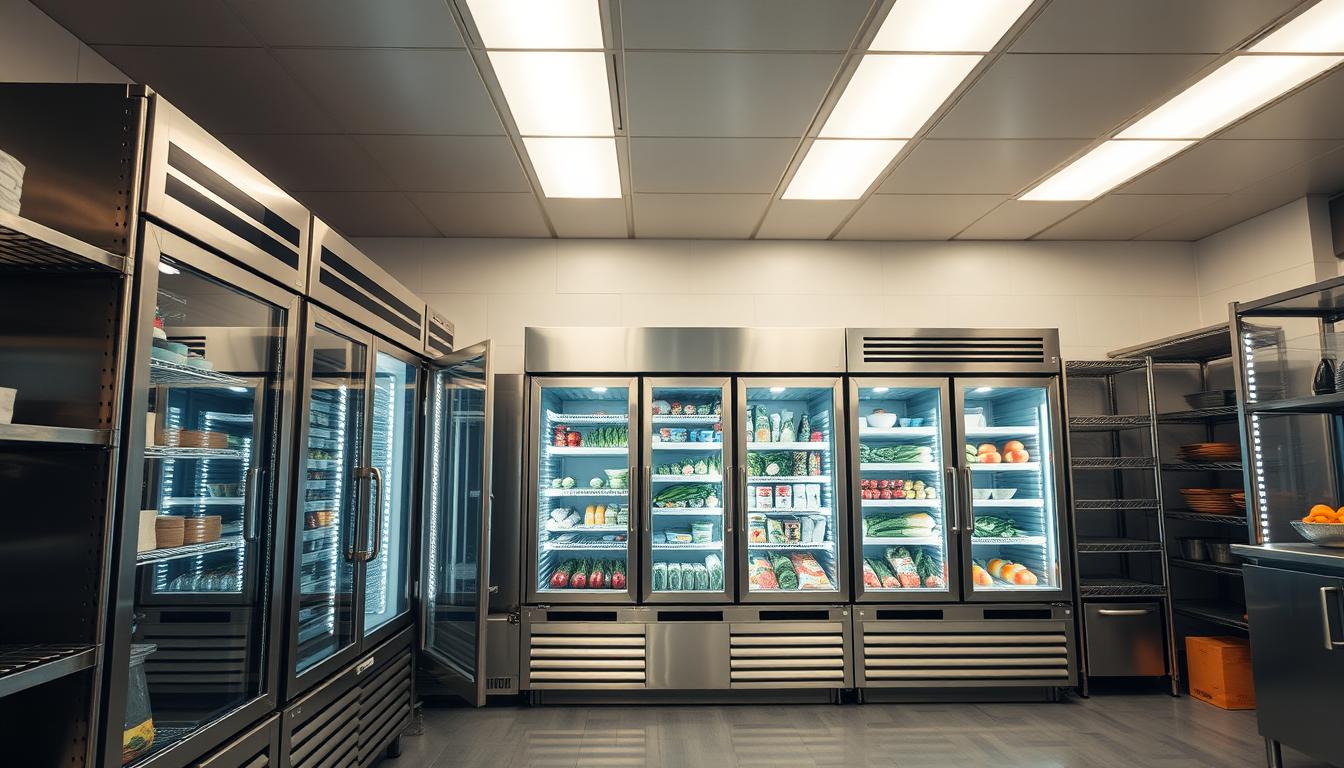
Commercial refrigeration solutions for a restaurant start with one question: what do you need to keep cold or frozen at your busiest hour, and where in the kitchen does it need to be? Reach-in refrigerators and freezers cover bulk storage, undercounter units and prep tables keep ingredients near the line, display and bar coolers serve the front of house, and blast chillers cool cooked food safely. Matching each type to its job is how you cut waste and keep food safe.
Babak Food Equipment supplies restaurant refrigeration from our Burnaby, BC showroom. Browse our full range of commercial refrigeration, or read on to plan your cold line.
Commercial refrigeration solutions by kitchen station
Reach-in refrigerators and freezers
Reach-ins are the workhorses of restaurant refrigeration. They come in one-, two- and three-door sizes, with solid or glass doors. Solid doors insulate better and suit back-of-house storage. Glass doors let staff see stock quickly. Explore reach-in refrigeration. A three-door model such as the Turbo Air ER72-3-N-V gives a large storage volume on a modest footprint.
Prep tables and undercounter units
Sandwich, salad and pizza prep tables keep ingredients in refrigerated pans at hand, with storage underneath. Undercounter refrigerators and freezers fit under a work surface, which saves space. See food prep refrigeration and undercounter refrigeration. The Atosa MSF8306GR-NTCV mega top prep table is one example with two doors and a wide top.
Bar and display refrigeration
Back bar coolers, merchandisers and deli cases serve guests directly. Glass doors, lighting and presentation matter here. Browse bar refrigeration for beer, wine and soft drinks.
Blast chillers and specialty units
A blast chiller drops cooked food through the danger zone quickly. In BC, health authority guidance commonly asks for cooling from 60 C to 20 C within 2 hours, then to 4 C within 4 hours, and this is hard to do in a standard refrigerator. Gemm blast chillers, such as the Gemm BCB05, are designed for the job. See all blast chillers. Ice machines are also part of the cold line and are a separate category in our range.
Walk-in refrigeration
For high-volume kitchens, a walk-in cooler or freezer gives bulk storage. Read our guide to custom walk-in refrigeration to see how they are planned.
How to choose restaurant refrigeration
- Map your menu. List what must stay cold, how much and where it is used.
- Size for peak, not average. Consider deliveries and the busiest weekend, then allow room to grow.
- Choose door style. Solid for back-of-house, glass for visibility, drawers for proteins at a station.
- Check the footprint. Measure doorways, aisles and clearances, including the swing of doors.
- Check ambient temperature. Units next to a fryer or oven work harder than units in a cool prep room.
- Plan service access. Make sure the condenser can be cleaned and the unit can be reached by a technician.
Our guides to choosing commercial refrigeration and how to choose a commercial refrigerator go deeper into each step.
Restaurant refrigeration and food safety in BC
British Columbia’s Food Premises Regulation sets the key limits: cold foods at 4 C (40 F) or below, frozen foods at -18 C (0 F) or below, and hot foods held at 60 C (140 F) or above. Refrigeration equipment needs an accurate thermometer so staff can check temperatures. Your local health authority, such as Vancouver Coastal Health or Fraser Health, decides how these rules apply to your premises, and new or altered premises need plan approval before construction. Always follow your health authority’s requirements.
Practical habits help too: log temperatures at fixed times, keep door openings short, store raw proteins below ready-to-eat foods, and do not overload shelves so air can circulate.
Energy efficiency and climate control
Refrigeration runs around the clock, so small efficiency gains add up over the life of a unit. A few steps help:
- Keep condenser coils clean. Dust blocks heat exchange and makes the compressor work harder.
- Check door gaskets regularly and replace them when they stop sealing.
- Place units away from ovens, fryers and direct sun where you can.
- Leave clearance for ventilation, as the installation sheet specifies.
- Use LED lighting and self-closing doors where offered.
- Look for models with efficient compressors and good insulation.
Ventilation in the kitchen also affects refrigeration. A hot, poorly ventilated room forces compressors to run longer. Plan make-up air and hood placement with your contractor.
Installation and insurance
Most reach-in and undercounter units plug into a standard outlet, but check the data plate for voltage and amperage. Remote-condenser units and walk-ins need an electrician and often a refrigeration technician. Equipment like this is also something to mention to your insurer, who can tell you how it affects your policy and what proof of installation they need.
New and used refrigeration
Used units can reduce startup costs. Browse used commercial refrigeration for certified pre-owned equipment. Inspect the gaskets, door hinges and shelving, and check that the unit reaches and holds temperature.
Keeping refrigeration running
A simple routine protects food and equipment. Check and log temperatures at the start and end of every shift. Wipe door gaskets weekly and look for tears or gaps. Clean condenser coils on a regular schedule, since a dusty coil is the most common cause of a warm unit. Keep evaporator fans clear of boxes and film wrap. Defrost freezers that need it, and never stack product against the back wall where air must move. When a unit starts to run constantly or struggles to hold temperature, call a refrigeration technician early rather than waiting for a failure.
Refrigeration types at a glance
| Type | Best for | Where it sits | Notes |
|---|---|---|---|
| Solid door reach-in | Bulk storage | Back of house | Best insulation |
| Glass door reach-in | Visible stock, beverages | Front of house or line | Faster to check inventory |
| Undercounter | Station storage | Under work surfaces | Saves space |
| Prep table | Sandwiches, salads, pizza | On the line | Pans and storage in one |
| Bar cooler | Beer, wine, drinks | Back bar | Glass or solid doors |
| Blast chiller | Cooling cooked food | Kitchen | Helps meet cooling times |
| Walk-in | High-volume storage | Dedicated room | Needs planning |
Frequently Asked Questions
Where can I find reliable commercial refrigeration solutions for my restaurant?
Look for a supplier that carries a full range, from reach-ins and prep tables to bar coolers and blast chillers, and can help you size the equipment to your menu. Babak Food Equipment sells commercial refrigeration from our Burnaby, BC showroom and works with restaurants across Canada.
What temperature should restaurant refrigeration hold in BC?
In British Columbia, cold food is held at 4 C (40 F) or below and frozen food at -18 C (0 F) or below under the Food Premises Regulation. Equipment should have an accurate thermometer. Follow your local health authority’s requirements.
What options suit an efficient, high-capacity unit for a busy kitchen?
Multi-door reach-in refrigerators and freezers give the most storage per square foot on the line, and prep tables keep ingredients within reach. For very high volume, a walk-in adds bulk storage. Look at door style, shelving and the unit’s energy rating.
What is the best brand of commercial refrigerator?
The best brand is the one that fits your duty cycle, kitchen conditions and service access. We carry Turbo Air, Atosa, Traulsen, Blue Air and others. We are an authorized Atosa dealer and an authorized dealer for Gemm blast chillers.
How do I cool cooked food safely?
Health authority guidance in BC commonly asks for cooling from 60 C to 20 C within 2 hours, then from 20 C to 4 C within 4 hours. A blast chiller is built to meet that cooling curve. Follow your own health authority’s requirements.
How much clearance does a refrigerator need?
Check the installation sheet for the model. Most units need space around the condenser for air flow, and units with side or rear vents must not be boxed in. Poor ventilation raises energy use and shortens compressor life.
Browse our commercial refrigeration range, visit the Burnaby showroom at 7190 Randolph Ave, or request a quote and our team will help you plan the right cold line for your restaurant. Pricing, availability, delivery and installation are confirmed at the time of purchase.