

Blog
Commercial Blender for Restaurants: How to Choose

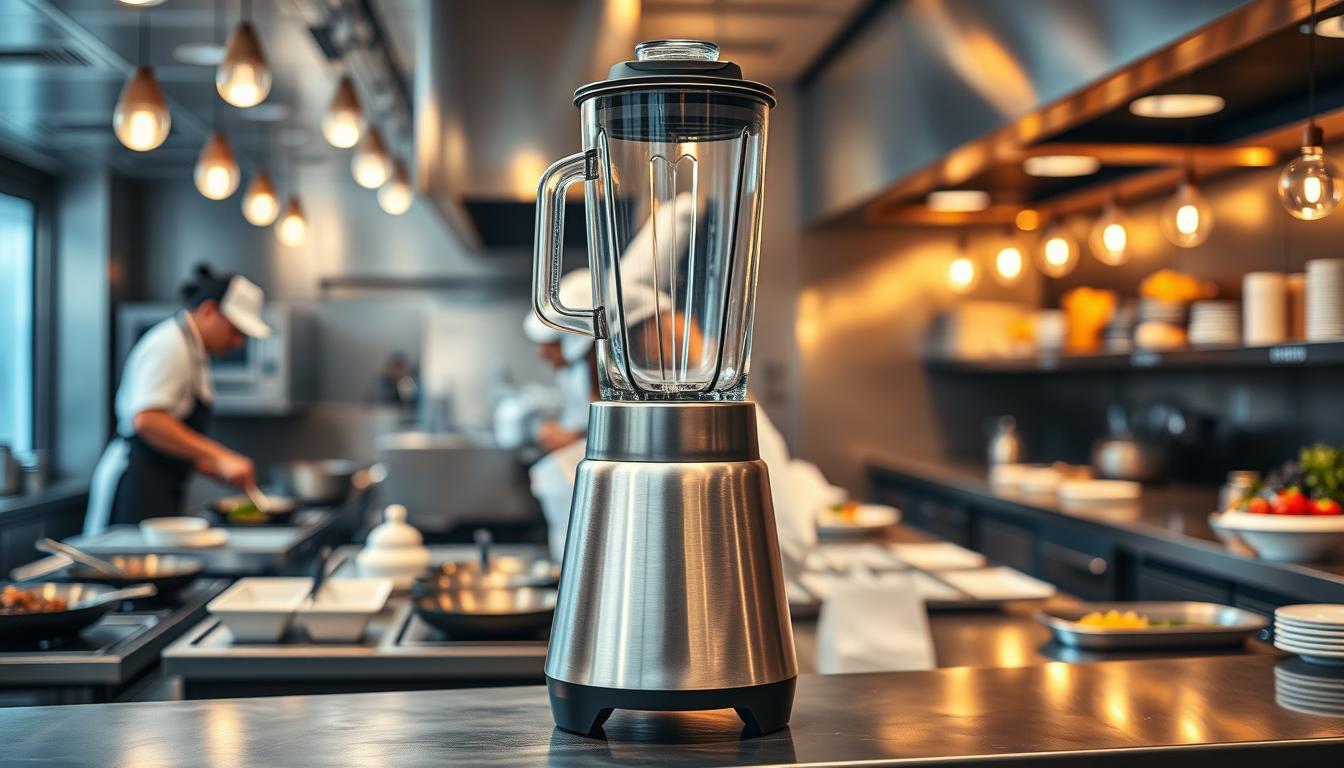
A good commercial blender is built for hours of daily use, not a few minutes a week. It has a stronger motor, a tougher container and controls that survive wet hands, ice and constant cycling. The most durable blender for a busy restaurant kitchen is one whose motor, drive and container match your actual workload, whether that is back-to-back smoothies, bar drinks, or heavy purees for sauces and soups.
Babak Food Equipment sells commercial blenders, immersion blenders and food processors from our Burnaby, BC showroom, and serves restaurants across Canada. This guide shows how to choose between the main types, what makes one blender outlast another, and which brands we carry. Browse our full range of commercial blenders at any time.
What makes a blender commercial
A consumer blender is designed for short bursts. A commercial blender is built for repeated cycles, with parts that can take daily use:
- Motor power. Commercial motors commonly range from about 2 to 3 peak horsepower and up. More power means you can blend ice, frozen fruit and thick purees without bogging down.
- Thermal protection. A built-in sensor shuts the motor down before it overheats, which protects it during peak service.
- Drive system. A metal drive coupling holds up to heavy loads better than plastic gears.
- Container material. Copolyester containers resist cracking and staining, and they stand up to commercial dishwashing.
- Controls. Programmable timers, wash-down touchpads and preset cycles make results repeatable, so any staff member can make the same drink every time.
- Serviceability. The ability to replace blades, drive sockets and containers keeps the machine in service longer.
The most durable blender for a busy restaurant kitchen
No single model is the most durable for every kitchen. Durability is about fit. A blender that runs a few hours a day under light loads can last far longer than one that runs flat out and is under-powered for the job. When you compare options, ask these questions:
- How many drinks or portions per hour at peak?
- Are you blending ice and frozen fruit, hot soups, or thick purees?
- Is the blender used at the bar or counter, where noise matters, or in the back kitchen?
- Do you need programmable cycles for consistency?
Then match the machine. For heavy, all-day drink service, choose a higher horsepower model with a robust drive. For lighter service, a mid-range commercial unit may be all you need, and you avoid paying for capacity you will not use.
Types of commercial blenders
Bar and beverage blenders
These are the familiar countertop units used for smoothies, frozen cocktails, shakes and cold drinks. They usually have a 48 to 64 oz. container and variable speed or preset programs. See our beverage blenders. If you run a bar, our beverage equipment range covers the rest of the setup.
Food-prep blenders
Built for purees, sauces, soups and batters, these models often have larger containers and more torque. Our food prep blenders include units that handle both hot and cold work in the back kitchen.
Immersion blenders
An immersion (stick or hand) blender goes into the pot, so you can puree large batches of soup, sauce or batter where they are cooked. They are a favourite for big-batch work because there is no transferring of hot liquid. Shaft length and motor power determine how big a pot they can handle. Browse the immersion blenders we sell, such as the Robot Coupe MP 350 Turbo.
Brands we carry
Babak sells a range of commercial blender brands so you can compare options for your workload:
- Vitamix. A long-standing name in commercial blending, with drink machines and quiet models for counters and bars, such as the Vitamix 5205 XL variable speed blender.
- Blendtec. Commercial blenders with programmable cycles and sound-enclosure models, including the Blendtec Stealth 885, designed for busy front-of-house service.
- Robot Coupe. Immersion blenders and power mixers for back-kitchen soups and sauces.
- Dito Sama and Axis. Immersion blenders at a range of power levels for different pot sizes.
Dito Sama is distributed by Eurodib, and Babak is an authorized Eurodib dealer. Ask our team to compare models side by side for your menu.
Immersion blender or countertop blender for big batches?
This is one of the most common questions we hear, usually phrased as “should I choose an immersion blender or a countertop unit for big-batch soups and sauces?” The short answer:
- Immersion blender: best for large pots. You blend directly in the stockpot, there is less to wash and no hot-liquid transfers. Texture is good, but not as silky as a high-speed countertop blender.
- Countertop blender: best for the smoothest purees, emulsions and drinks, and for ice. You work in smaller batches, so large volumes take longer.
Many restaurants use both: an immersion blender for the soup station and a countertop blender for sauces and drinks.
Noise, speed and workflow
If the blender is in view of guests, noise matters. Sound enclosures reduce it noticeably and also keep splashes and ice from flying. For busy takeaway counters, think about:
- Cycle time. A faster blend means shorter ticket times.
- Preset programs. One-touch cycles keep drinks consistent across shifts.
- Container count. Extra containers let you keep serving while one is being washed.
- Space. Measure the counter and the clearance above it, since many blenders are tall.
Care and maintenance that extends life
- Rinse the container right after use, before food dries on the blades.
- Run a quick cycle with warm water and detergent, then wash, rinse and sanitize as your local health authority requires.
- Do not overfill. Respect the maximum line, and add liquid first, then solids, then ice.
- Replace worn blade assemblies and drive sockets on schedule.
- Keep the base dry and wipe vents free of dust.
New or used commercial blenders
Our team can also help with pre-owned units. Browse the used restaurant equipment category for certified pre-owned equipment. Inspect any used blender for container cracks, a wobbling drive and worn blades. For drink-focused kitchens, you may also like our guide to commercial smoothie blenders.
Commercial blender comparison
| Type | Best for | Typical batch | Notes |
|---|---|---|---|
| Bar and beverage blender | Smoothies, frozen drinks, shakes | One to two drinks | Often has presets and a sound enclosure option |
| Food-prep blender | Purees, sauces, soups, batters | Larger container, multiple portions | Higher torque, handles hot and cold |
| Immersion blender | Soup, sauce and batter in the pot | Pot-sized batches | Shaft length sets pot depth |
| Food processor | Chopping, slicing, doughs | Bowl or continuous | Different job, often paired with a blender |
Frequently Asked Questions
What is the most durable blender for a busy restaurant kitchen?
Durability comes from the build, not the brand name alone. Look for a commercial-rated motor with thermal protection, a metal drive coupling, a heavy-duty container, and parts that can be serviced. Models designed for continuous bar or kitchen duty, such as the commercial Vitamix and Blendtec ranges we sell, are built with those features.
Should I choose a countertop blender or an immersion blender for big-batch soups and sauces?
For large pots of soup or sauce, an immersion blender is usually the better tool because you blend in the pot and avoid ladling hot liquid into a container. A countertop blender gives a finer, smoother texture in smaller batches. Many kitchens keep both.
How much horsepower does a commercial blender need?
Light smoothie and shake service can run on a unit around 2 peak horsepower. Heavy, all-day service with ice, frozen fruit and thick purees is better served by a 3 peak horsepower class machine or higher. Check the duty rating as well as the horsepower figure.
Do I need a sound enclosure?
If the blender sits at a front counter, a bar or an open kitchen where noise affects guests, a sound enclosure makes a real difference. It also protects the container from impacts. Back-of-house prep usually does not need one.
How do I clean a commercial blender?
Rinse right after use, then run it with warm water and a small amount of detergent for 30 seconds. Wash, rinse and sanitize the container and lid according to the manufacturer’s instructions and your local health authority’s requirements.
Can I buy a used commercial blender?
Yes. Browse the used restaurant equipment category or ask our team about certified pre-owned units. A used blender should be inspected for container cracks, drive wear and blade condition before use.
Browse our commercial blender range, visit the Burnaby showroom at 7190 Randolph Ave, or request a quote and our team will recommend the right model for your menu. Pricing, availability, delivery and installation are confirmed at the time of purchase.