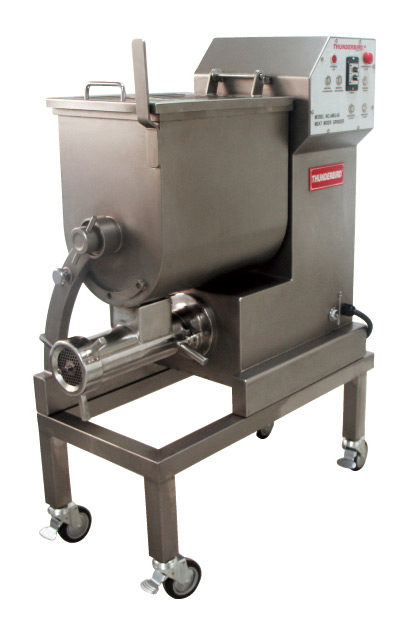
A commercial meat grinder lets you grind fresh beef, pork, chicken and game in-house for burgers, sausage, meatballs and charcuterie. Babak Food Equipment offers countertop and floor-standing electric meat grinders, as well as grinder attachments, for butcher shops, delis, restaurants, grocery stores and processing kitchens across Vancouver and British Columbia – from brands such as Hobart, Axis, Eurodib and Omcan.
Types of commercial meat grinders
Countertop electric meat grinders
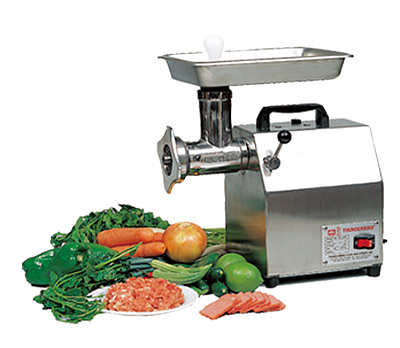
Countertop electric meat grinders, commonly #12 or #22 hub sizes, suit restaurants, delis and small butcher counters that grind fresh meat daily. They are compact, easy to break down for cleaning and often run on a standard outlet.
Floor and heavy-duty grinders
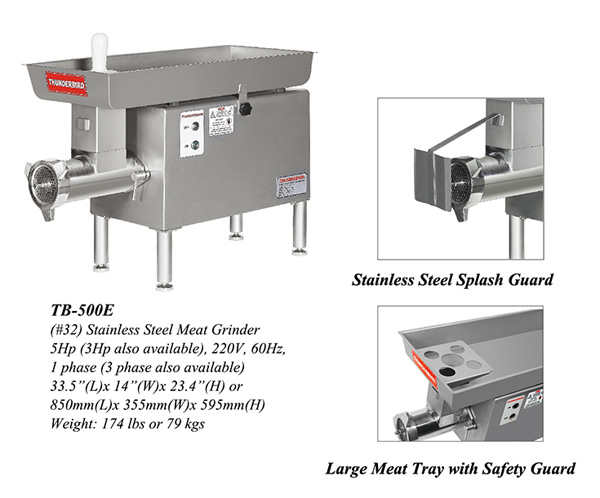
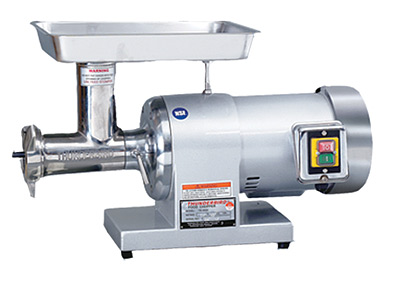
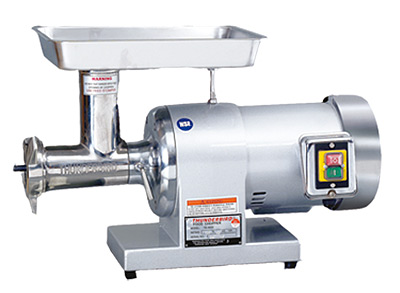
Larger #32 grinders and floor models are built for butcher shops, grocery meat departments and processing kitchens that grind large volumes. Heavy duty meat grinders typically have more powerful motors, larger feed pans and gear-driven drives for continuous work. Some models combine a mixing tub and grinder for sausage production.
Grinder attachments
Many planetary mixers have an attachment hub that can drive a meat grinder head – a practical option for kitchens that grind only small batches. See our planetary mixers for hub-equipped models.
Manual meat grinders
Hand-crank grinders are low-cost and need no power, but are only practical for very small quantities or occasional use.
How to choose a commercial meat grinder
Volume: estimate how many pounds you grind per day and at peak. Hub size (#12, #22, #32) is the quickest guide – the larger the number, the higher the output.
Motor and drive: look at horsepower and whether the drive is gear-driven. Heavier, longer grinding sessions need a stronger motor and better cooling.
Plates and knives: a range of plate hole sizes lets you go from coarse chili grind to fine burger grind. Keep knives and plates sharp for a clean cut instead of smearing.
Food safety and cleaning: stainless steel heads, trays and augers that remove without tools make sanitizing faster. Keep meat and parts cold – about 32–34°F (0–1°C) – for the best grind.
Power: smaller grinders may plug into 120V; larger units often need 208–240V or three-phase power.
Safety: feed throats with guards, a stomper and a reverse function help staff work safely and clear jams.
Why buy your commercial meat grinder from Babak Food Equipment?
With more than 20 years in business and a 4.9★ Google rating from 380+ reviews, Babak Food Equipment helps butchers and kitchens choose the right grinder for their volume. We are an authorized dealer for Thunderbird meat grinders and meat saws, and our team can help you compare hub sizes and check your power needs. Delivery and installation options are available across BC – details and costs are discussed when you order. Browse the full meat prep range or ask about certified used restaurant equipment.
Meat grinder sizes at a glance
SizeTypical motorBest for#12 countertopAbout 0.75–1 HPRestaurants, delis, small batches#22 countertop or floorAbout 1–2 HPButcher counters, busy restaurants#32 heavy-dutyAbout 2–5 HPButcher shops, grocery, processingMixer hub attachmentDriven by mixerOccasional, small-batch grinding
Frequently asked questions
Who makes the best commercial meat grinder?
Hobart is one of the most established names in commercial meat grinders, and brands such as Axis, Eurodib, Omcan and Thunderbird are also widely used. The best grinder is the one sized to your daily volume and built for your hours of use.
What is the difference between a meat grinder and a meat mincer?
They are the same machine. ‘Mincer’ is the term commonly used in the UK and elsewhere, while ‘meat grinder’ is the usual name in North America.
How much does a commercial meat grinder cost?
Price depends mainly on hub size, motor power and construction – a compact #12 unit costs far less than a heavy-duty #32 grinder. Request a quote and our team can price models that fit your volume.
What size meat grinder do I need?
Most restaurants and delis are well served by a #12 or #22 grinder. Butcher shops and grocery meat departments that grind large volumes usually need a #32 heavy-duty model.
How do you clean a commercial meat grinder?
Disassemble the head, auger, knife and plates after each use, wash in hot soapy water, rinse, sanitize and air dry. Always follow the manufacturer’s cleaning instructions and your local food-safety rules.
Availability, pricing, warranty terms, delivery and installation are confirmed at the time of purchase – request a quote on any model or call our team at (604) 566-9747.
No account yet?
Create an Account