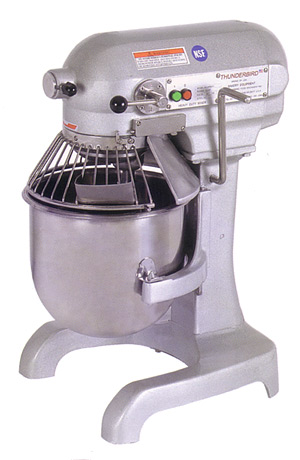
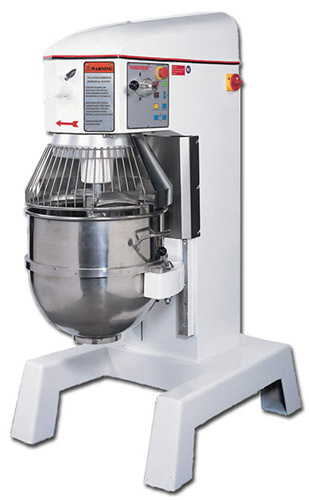
A planetary mixer is the most versatile mixer in a commercial kitchen – one machine whips cream, creams butter, blends batter, mashes potatoes and kneads dough. Babak Food Equipment offers bench and floor planetary mixers for bakeries, restaurants, pizzerias, cafés, hotels and institutional kitchens across Vancouver and British Columbia, from brands such as Hobart, Globe, Axis and Thunderbird, in sizes from compact bench units to 80-quart floor models.
Types of planetary mixers
Countertop and bench mixers
Bench-top planetary mixers of about 5 to 20 quarts suit cafés, small bakeries and restaurant pastry stations. A 20 qt mixer is one of the most common sizes in restaurants: big enough for daily batches of dough, batter and dressing, yet small enough to sit on a stand or sturdy table. Most smaller units run on a 120V outlet.
Floor planetary mixers
Floor models from about 30 to 80 quarts or more serve hotels, institutional kitchens, commissaries and high-volume bakeries. A 60 qt planetary mixer is a popular size for bakeries and large restaurants that mix big batches of dough, cookie mix and mashed potatoes. Larger units typically come with a bowl lift, bowl truck and multiple attachments.
Mixers with attachment hubs
Many planetary mixers include a front attachment hub that drives accessories such as a vegetable slicer, cheese grater or meat grinder head – a practical way for a smaller kitchen to add prep capacity without another machine.
How to choose a planetary mixer
Batch size: list your largest regular batches by product. Bowl volume in quarts is not the same as dough capacity – check the manufacturer’s capacity chart for each product.
Dough stiffness: low-hydration dough (pizza, bagels) is the hardest work for a planetary mixer. If it is a big part of your menu, size up or consider a spiral mixer.
Transmission and speeds: gear-driven mixers with three or four fixed speeds hold up well to heavy use; some models offer variable speed for more control.
Power: bench models often run on 120V, while floor mixers usually need 208–240V and sometimes three-phase power.
Attachments: a flat beater, wire whip and dough hook are standard on most models. Check what is included and whether extra bowls, a bowl truck or hub attachments fit your workflow.
Safety and cleaning: a bowl guard with interlock, a timer and smooth stainless surfaces make the mixer safer and faster to clean between batches.
Planetary mixer vs. spiral mixer
The planetary mixer earns its name from the way the beater spins on its own axis while orbiting the bowl, so it can whip, beat and knead. A spiral mixer is a dedicated dough machine with a rotating bowl and a spiral hook; it kneads larger batches faster with less heat. If your kitchen makes a bit of everything, choose planetary. If dough is your main product, look at spiral mixers or run both.
Why buy your planetary mixer from Babak Food Equipment?
For more than 20 years Babak Food Equipment has helped kitchens choose the right equipment, and we hold a 4.9★ Google rating from 380+ reviews. We are an authorized Thunderbird dealer, and our team can help you compare Hobart, Globe and other planetary mixers by bowl size, speeds and power needs. Delivery and installation options are available across BC – details and costs are discussed when you order. Ask about certified used restaurant equipment too.
Planetary mixer sizes at a glance
Bowl sizeTypical powerBest forAbout 5–12 qt120VCafés, pastry stations, small batchesAbout 20 qt120V (most models)Restaurants, small bakeriesAbout 30–40 qt120V or 208–240VBusy bakeries and restaurantsAbout 60–80+ qt208–240V, often three-phaseHotels, institutions, commissaries
Frequently asked questions
What are the main uses of a planetary mixer?
Planetary mixers whip cream and egg whites, cream butter and sugar, mix batters and cookie dough, knead bread and pizza dough, and mash potatoes. With hub attachments, some models can also slice vegetables or grind meat.
What mixer do professionals use?
Professional kitchens and bakeries generally use commercial planetary mixers for general mixing and spiral mixers for large-batch dough. Hobart is one of the best-known names, alongside brands such as Globe, Axis and Thunderbird.
What are the three types of mixers?
In commercial kitchens the three main types are planetary mixers, spiral mixers and horizontal mixers. Horizontal mixers are mostly used in large industrial bakeries.
Is a 20 qt or 60 qt mixer right for my kitchen?
A 20 qt mixer suits most restaurants and small bakeries. A 60 qt mixer is for high-volume baking or institutional cooking, needs more floor space and usually higher-voltage power.
Can I use a planetary mixer for pizza dough?
Yes, using the dough hook and the low speed. Keep within the manufacturer’s dough capacity, because stiff pizza dough is the heaviest load for this type of mixer.
Availability, pricing, warranty terms, delivery and installation are confirmed at the time of purchase – request a quote on any model or call our team at (604) 566-9747.
No account yet?
Create an Account