

Blog
Ice Machine Condenser Types: Air, Water and Remote

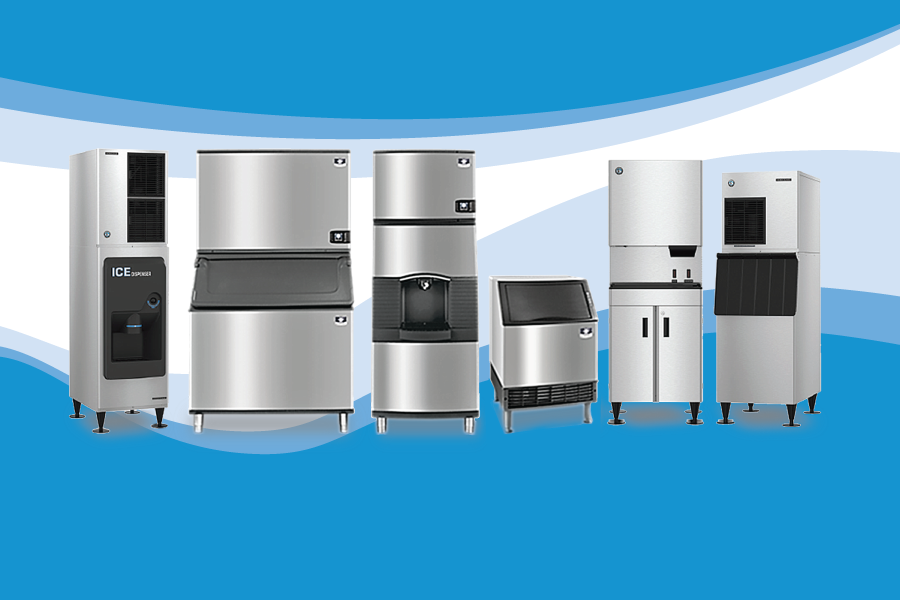
An ice machine condenser removes the heat that the refrigeration system pulls out of the water to make ice. There are three types: air-cooled, water-cooled and remote. For most restaurants, bars and cafes an air-cooled ice machine is the simplest and most economical choice. Water-cooled and remote condensers solve specific problems with heat, noise or space. This guide explains how each one works and how to pick the right one for your site.
Babak Food Equipment carries a full range of commercial ice machines, and our team can help you match the condenser type to your kitchen or bar.
What an ice machine condenser does
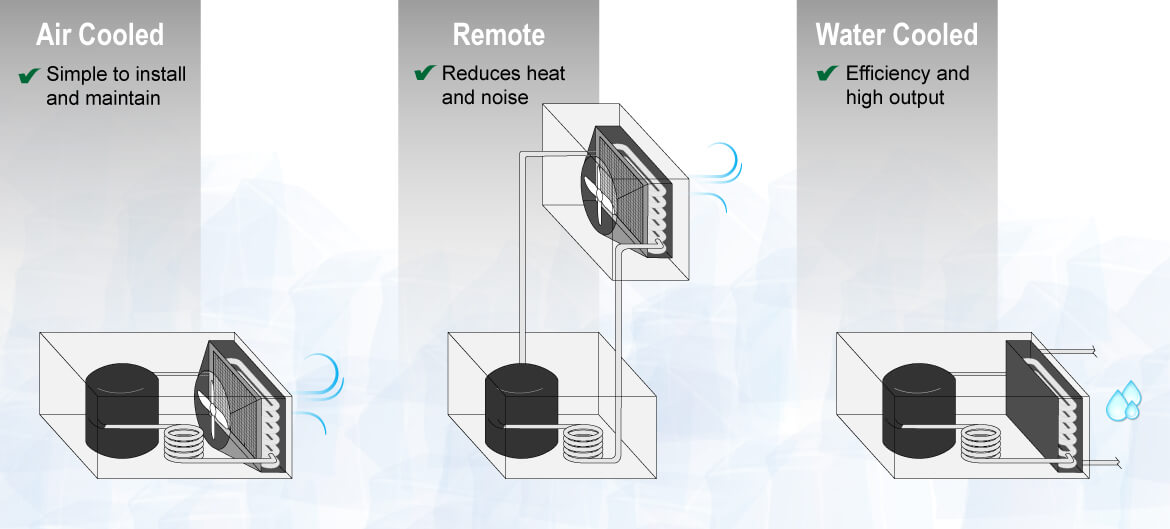
An ice machine works like a refrigerator that makes ice. The refrigerant absorbs heat from the water on the evaporator, then carries that heat to the condenser. The condenser releases the heat to air, to water or to a separate outdoor unit. If the heat cannot escape, the pressure rises, the ice slows down and the compressor works harder.
That is why the condenser type, the room temperature and the incoming water temperature all affect how much ice you really get. Rated capacity is measured under specified conditions, and a hot room or warm water can cut daily output noticeably. Always compare the spec sheet with your real conditions.
Air-cooled ice machine condensers
Air-cooled is the most common design. A fan pulls room air across the condenser coil and blows the heat back into the room. Everything is built into the cabinet, so installation is simple: a power connection, a water supply and a drain.
Advantages
- Lowest purchase and installation cost of the three types.
- No extra water used for cooling.
- Easy service, with one self-contained unit.
- Widely available in undercounter, modular and upright sizes.
Limitations
- The machine dumps heat into the room, which adds load to your air conditioning.
- It needs clear space around it for airflow. Check the manufacturer’s clearance requirements for the front, back and sides.
- Hot kitchens reduce production. If the room is regularly very warm, for example above roughly 27 to 32 °C (80 to 90 °F), the machine may produce less ice and wear faster.
- Grease and dust clog the coil, so it needs regular cleaning.
For the majority of restaurants, air-cooled is the right default. Examples in our range include the Atosa YR280 24-inch air-cooled undercounter ice machine and the Atosa YR450 30-inch air-cooled modular ice machine. Browse undercounter ice machines and modular ice cubers for more.
Water-cooled ice machine condensers
A water-cooled condenser is also built into the machine, but instead of a fan and air, water flows through the condenser to carry heat away. In a simple once-through system the warm water goes down the drain. Some sites connect water-cooled machines to a recirculating loop or a chiller instead.
Advantages
- Works well in hot rooms, because it does not depend on room air temperature.
- Puts almost no heat into the room, which helps when the space is hard to cool.
- Quieter than a machine with a large fan, and less affected by airborne grease.
Limitations
- A once-through water-cooled condenser can use many times more water than the machine uses to make the ice itself. That raises your water and sewer costs and makes it hard to justify in most new installations.
- It needs a second water line and a drain connection, and the water temperature and pressure must be within the manufacturer’s range.
- Mineral scale can build up in the condenser, so water quality matters.
- Local rules on water use may restrict or discourage once-through systems. Check with your municipality and your plumber before you choose one.
Because of the water use, water-cooled machines are usually considered only where an air-cooled or remote design is not practical, or where a closed-loop cooling system is already available. If water use is a concern for your business, ask us about air-cooled and remote options first.
Remote ice machine condensers
A remote condenser moves the condenser out of the ice machine. The ice machine head sits in your kitchen or bar, and the condenser is installed somewhere else, often on the roof or an outside wall. Refrigerant lines connect the two.
Advantages
- Moves heat and fan noise out of the building, which is valuable in bars, hotels and dining rooms.
- Keeps the machine cool and productive in hot or cramped kitchens.
- Reduces cooling load inside the building compared with air-cooled units.
- Does not use extra water, unlike once-through water-cooling.
Limitations
- Higher equipment cost, plus installation labour for the line set and the outdoor unit.
- The distance and height between the ice machine and the condenser have limits set by the manufacturer.
- Refrigeration work should be done by a qualified refrigeration technician, and a roof or wall location needs access and mounting.
- Outdoor condensers need to be suited to your climate. The manufacturer specifies accessories for cold-weather operation.
Remote systems fit large operations, hotels, bars and any space where heat and noise inside the room are a problem. They are less common for small cafes, where an air-cooled machine is simpler.
Air-cooled vs water-cooled vs remote: how to choose
- Choose air-cooled if your room stays reasonably cool, you can leave clearance around the unit, and you want the lowest cost and simplest installation.
- Choose remote if the room is hot, noisy or hard to cool, you have a safe place for the condenser outside, and the budget allows for the installation.
- Consider water-cooled only if you have a suitable closed-loop or chiller system, or other options are impractical, and you have checked water-use rules.
Also think about the rest of the setup. Match the machine to a bin with the right ice bin, or consider an upright ice machine for higher volumes and an ice and water dispenser for self-serve areas. For the ice shapes and which suits your drinks, read our guide to commercial ice maker ice types.
Installation, clearance and BC requirements
- Electrical. In British Columbia, electrical equipment must bear a certification mark from a certification agency accredited by the Standards Council of Canada. Confirm the mark on any unit you buy.
- Plumbing. Drain and water connections must follow the BC Plumbing Code. Ask your plumber how the ice machine drain should be connected.
- Sanitation. Ice is treated as food by BC health authorities. Fraser Health guidance asks operators to clean and sanitize ice machines regularly, to follow the manufacturer’s instructions, and to describe it in the sanitation plan. Use a scoop, not hands, and never return unused ice to the bin. Follow your own health authority’s requirements.
- Coil cleaning. Air-cooled units and remote condensers need their condenser coils cleaned on the schedule set out in the manual. A dirty coil is a leading cause of poor production.
Condenser type comparison table
| Feature | Air-cooled | Water-cooled | Remote |
|---|---|---|---|
| Where the heat goes | Into the room | Into the drain or a cooling loop | Outdoors |
| Upfront cost | Lowest | Medium | Highest |
| Extra water use | None | Can be high if once-through | None |
| Installation | Simplest | Second water line and drain | Line set and outdoor unit |
| Hot room performance | Reduced output | Good | Good |
| Best for | Most restaurants and cafes | Special cases with a cooling loop | Large, noisy or hot sites |
Frequently Asked Questions
What are the three types of ice machine condensers?
Air-cooled, water-cooled and remote. Air-cooled uses a fan and room air, water-cooled uses flowing water, and remote places the condenser outside the ice machine, usually outdoors.
Which ice machine condenser is best for a restaurant?
For most restaurants, an air-cooled machine is the best balance of cost, simplicity and reliability, as long as the room is not extremely hot and there is room for airflow.
Why are water-cooled ice machines less common now?
A once-through water-cooled condenser uses far more water than an air-cooled one, so it is expensive to run and harder to justify. They are mainly used where a closed-loop cooling system exists.
When should I choose a remote condenser?
When the kitchen or bar is hot or noisy, when you cannot give an air-cooled machine enough clearance, or when you want heat kept outside the building.
How hot is too hot for an air-cooled ice machine?
Output drops as the room gets warmer. Roughly above 27 to 32 °C (80 to 90 °F), many air-cooled machines lose capacity noticeably. Check the manufacturer’s rated operating range.
How often should I clean the condenser?
Follow the manufacturer’s schedule. In greasy or dusty kitchens, coils may need cleaning more often than in clean areas.
Not sure which condenser fits your space? Browse our ice machines, visit the showroom at 7190 Randolph Ave, Burnaby, call (604) 566-9747, or request a quote. Pricing, availability, delivery and installation are confirmed at the time of purchase.