

Blog
Commercial Freezers for Restaurants: Types, Sizing and Care

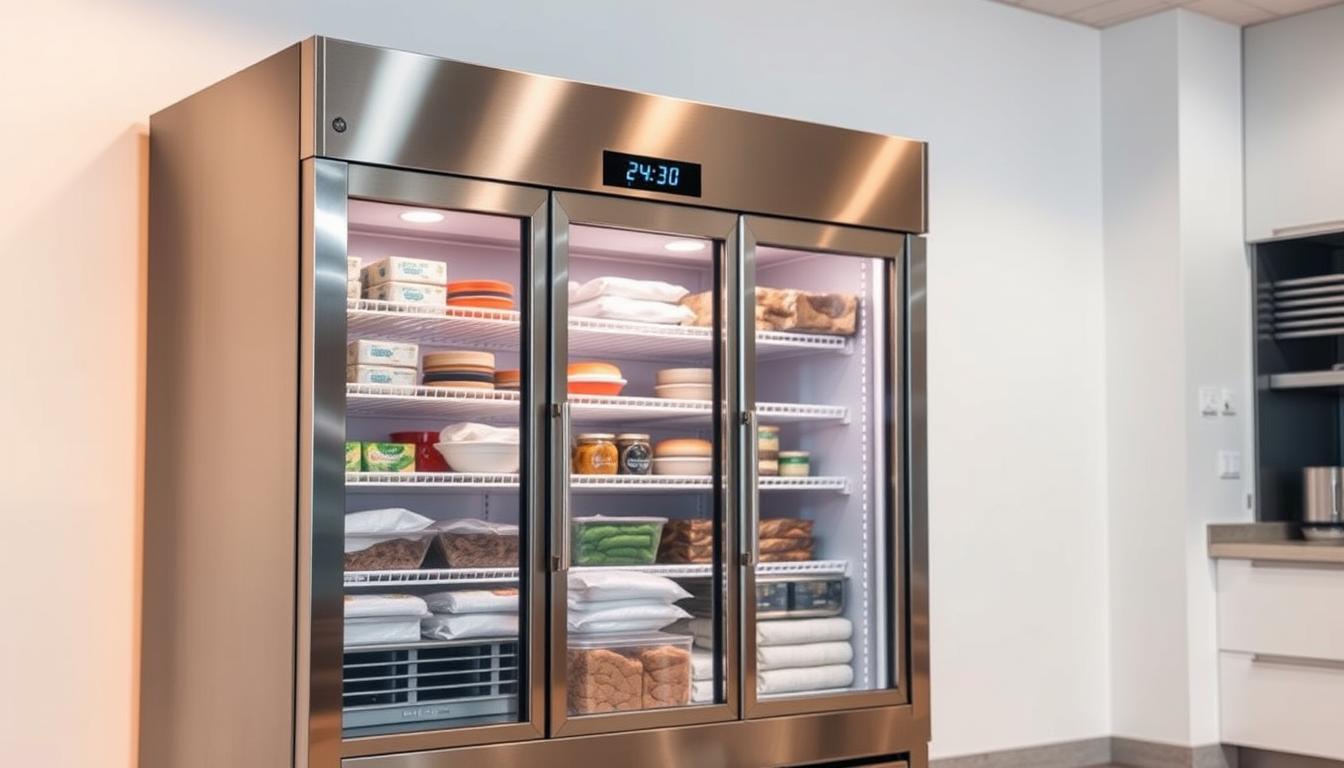
Commercial freezers hold frozen product at a steady temperature through a full service day, with heavy door traffic and a hot kitchen around them. For most restaurants the choice comes down to four formats: solid door reach-in, glass door reach-in, undercounter, and display or merchandiser freezers. A restaurant freezer should hold food at or below -18 C (0 F), the frozen-food temperature in BC’s Food Premises Regulation, and keep doing it on the busiest night of the week.
Babak Food Equipment carries commercial freezers for restaurants, cafes, bakeries and shops from our Burnaby, BC showroom, and we are an authorized Atosa dealer. This guide covers the main types, how to size one, what to check before you buy, and how to look after it. Start with our commercial refrigeration range if you want to browse as you read.
Types of commercial freezers for restaurants
Match the format to the job. A freezer that suits a pizzeria may be wrong for a coffee bar.
Solid door reach-in freezers

Solid door reach-in freezers are the workhorse of the back of house. The solid doors insulate better than glass, so they hold temperature well and cost less to run. They come in one, two and three door widths, usually with stainless steel interiors and exteriors. If you store bulk proteins, fries, dough or prepped items, start here.
Glass door reach-in freezers

Glass door reach-in freezers let staff and customers see the stock without opening the door. That saves cold air in a busy kitchen and sells product in a shop or convenience setting. Glass is a weaker insulator than a solid door, so expect somewhat higher energy use and place the unit away from direct sun.
Undercounter freezers
Undercounter freezers tuck beneath a prep counter and keep frozen ingredients next to the cook. They suit small kitchens, bars and cafes, and they work well as a second freezer on the line beside a bigger unit in the storeroom.
Merchandiser and ice cream freezers
If you sell frozen items directly, look at freezer merchandisers and ice cream freezers, which are built for display and customer access. For rapid chilling of cooked food before it goes into the freezer, blast chillers are worth a look.
How to size a restaurant freezer
Capacity is quoted in cubic feet or litres of interior space, and the right size depends on how often you receive deliveries and how much you pre-portion. Work through these questions with your menu in front of you.
- Delivery rhythm: a weekly delivery needs more freezer space than three deliveries a week.
- Menu mix: bulk cuts, fries and frozen desserts take more room than small prepped items.
- Growth: leave extra capacity so you are not packed so tight that cold air cannot circulate.
- Footprint: measure the space, the door swing, the route from the delivery door and the clearance behind and above the unit for airflow.
An overloaded freezer works harder and freezes unevenly, so if you are between two sizes, the larger one is usually the safer pick. Our team can walk through your menu and storage plan with you.
What to check before you buy a commercial freezer
Refrigeration system and ambient temperature
Commercial freezers use a compressor and condenser that give off heat. Hot kitchens make them work harder, so ask which units are designed for demanding ambient conditions, and leave the clearances the manufacturer specifies around the unit.
Defrost method
Freezers build frost over time. An automatic defrost cycle keeps the evaporator clear, while manual defrost units need regular attention. Ask how the model you are considering manages defrost, because it affects both maintenance and temperature stability.
Construction and doors
Look for sturdy stainless steel or aluminum surfaces, self-closing doors, tight gaskets that can be replaced, and adjustable shelves. Locking doors and field-reversible hinges can matter in a shared kitchen layout.
Energy use and noise
Ask for the energy details on the specific model and compare them. A unit that runs efficiently saves money over its life, and a quiet compressor matters for open kitchens and cafes.
Electrical and certification
In BC, electrical equipment must bear a certification mark from an agency accredited by the Standards Council of Canada, and you should ask our team to confirm the marks and power requirements for the exact model. Have a licensed electrician confirm the circuit before installation.
Keeping frozen food safe
Health authorities in BC, including Vancouver Coastal Health and Fraser Health, expect frozen food to be held at -18 C (0 F) or colder, and a working thermometer in each unit makes daily checks simple. Beyond that, a few practices help:
- Check and record temperatures at opening and closing, and keep the record with your food safety plan.
- Do not load hot food straight into the freezer. Chill it first, using a blast chiller or the cooling steps in your food safety plan.
- Label and date items, and rotate stock first in, first out.
- Store raw proteins below ready-to-eat food to prevent drips.
- Keep doors closed and avoid leaving them open during loading.
Follow your health authority’s requirements for the specifics that apply to your premises. For an overview of equipment choices, see how to choose commercial refrigeration and our quick guide to commercial freezers.
Maintenance that protects your stock

Freezers are among the most trouble-free pieces of kitchen equipment when they get regular care, and among the most costly when they fail overnight with a full load.
- Condenser coils: clean them on the schedule the manufacturer recommends. Dust and grease force the compressor to work harder.
- Gaskets: inspect them for tears and gaps. A bad seal lets in warm, moist air and builds ice.
- Drains and evaporator: keep them clear so meltwater does not back up.
- Clearances: leave the airflow space around the unit and do not stack boxes against vents.
- Service: arrange a periodic check with a qualified refrigeration technician rather than waiting for a failure.
Our guide on regular equipment maintenance explains how to build a simple schedule.
New or certified pre-owned freezers

New freezers give you current features and a manufacturer warranty. If you are watching your budget or setting up a second location, our used commercial refrigeration selection offers certified pre-owned options, and the wider used restaurant equipment category covers more. Ask our team to explain what applies to any pre-owned item you are considering.
Freezer type comparison
| Type | Best for | Strength | Consider |
|---|---|---|---|
| Solid door reach-in | Main kitchen storage | Best insulation, durable | Needs floor space |
| Glass door reach-in | Retail and visible stock | See stock without opening | Higher energy use than solid |
| Undercounter | Small kitchens, bars, line stations | Compact, next to the cook | Limited capacity |
| Merchandiser | Selling frozen items | Display and customer access | Lighting and placement |
| Ice cream freezer | Scooping and dipping | Built for frozen desserts | Specialized use |
Frequently Asked Questions
What temperature should a commercial freezer hold?
BC’s Food Premises Regulation sets frozen food at -18 C (0 F) or colder. Keep a working thermometer in each unit, check it daily, and follow your health authority’s requirements.
What is the best commercial freezer for a small restaurant?
A solid door reach-in covers most small kitchens, and an undercounter unit is a good second freezer beside the line. Our team can match the size to your menu and delivery schedule.
Should I buy a solid door or glass door freezer?
Choose solid doors for back-of-house storage because they insulate best. Choose glass doors where staff or customers need to see the stock without opening the door.
How often should I clean the condenser?
Follow the manufacturer’s schedule for the exact model. Kitchens with grease and flour in the air usually need more frequent cleaning than a clean storeroom.
Can I buy a certified pre-owned commercial freezer?
Yes. Babak offers certified pre-owned refrigeration, and our team can explain the options and what applies to each item.
Where can I see commercial freezers in person?
Visit the Burnaby showroom at 7190 Randolph Ave or call (604) 566-9747, and our team will help you compare models.
Ready to choose? Browse our reach-in refrigeration and freezers, visit the Burnaby showroom at 7190 Randolph Ave, or request a quote and our team will recommend the right freezer for your kitchen. Pricing, availability, delivery and installation are confirmed at the time of purchase.