

Blog
Commercial Microwave Ovens: Wattage, Size and Price Guide

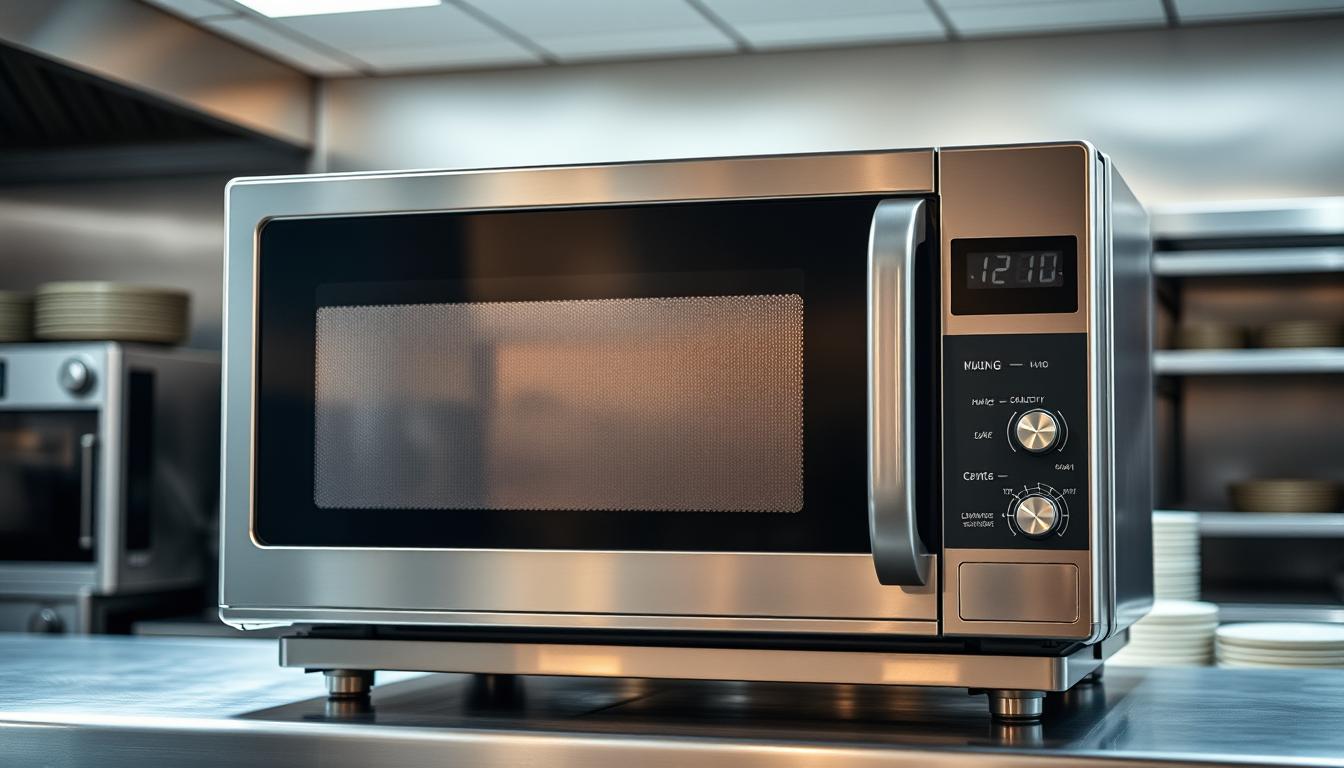
A commercial microwave oven is a purpose-built unit that runs at roughly 1,000 to 3,000 watts, handles dozens or even hundreds of cycles a day, and has a stainless steel cabinet and a stronger magnetron than a household microwave. Three decisions matter most: wattage, duty level and interior size. We cover all three below, with rough Canadian price ranges so you can budget before you ask for a quote.
Babak Food Equipment sells commercial microwaves from our Burnaby, BC showroom and serves restaurants, cafes and institutions across Canada. Browse the full range of commercial microwave ovens, or read on to match the right model to your menu.
How a commercial microwave oven differs from a home unit
A household microwave is designed for a few short cycles a day. Put one behind a busy line and the door, keypad and magnetron wear out quickly. A commercial microwave oven is built to run repeatedly through every service:
- Higher output. Commercial models start around 1,000 W and go past 3,000 W. More power means shorter cycles and faster ticket times.
- Stainless steel interior and exterior. It resists spills, wipes clean quickly and stands up to daily sanitizing.
- Stronger doors, hinges and controls. The door is the first thing to fail on a consumer unit, and commercial doors are rated for far more cycles.
- Programmable controls. Pre-set pads let any staff member run the same time and power every time, so portions come out consistent.
- Better cooling and ventilation. Commercial cavities are designed for back-to-back loads without overheating.
“Industrial microwave”, “restaurant microwave” and “commercial grade microwave” all describe the same family of equipment. These are still microwaves, not combination ovens, so they reheat, defrost and cook with microwave energy only. If you also need browning or crisping, look at a commercial oven or a rapid-cook unit as well.
Commercial microwave wattage: 1000 W to 3000 W
Wattage is the microwave output into the food, and it sets how fast you reheat. Doubling the wattage roughly halves the time for the same portion. Here is how the common power levels are used:
- 1,000 W. Entry level for coffee shops, small cafes, staff rooms and light reheating. A model such as the Amana RCS10TS 1,000 W commercial microwave suits low-volume use.
- 1,200 W. A popular balance for restaurants that reheat soups, sauces and plated items through the day.
- 1,800 to 2,200 W. Busy kitchens, bars with food programs, bakeries and delis. Cycles are about twice as fast as a 1,000 W unit.
- 3,000 W and above. High-speed throughput, such as the Amana RC30S2 3,000 W microwave. These suit quick-service lines, cafeterias and anywhere speed is the main goal.
Look for models with several power levels, because defrosting and delicate items need lower settings. Higher wattage is not always better. Very high output can overcook the edges of dense food if the controls are basic, so pair a powerful unit with good programming and trained staff.
Heavy duty microwave oven vs light and medium duty
Duty level describes how many cycles the unit is designed to run per day. Manufacturers define the classes differently, so check the spec sheet, but the rough pattern is:
- Light duty: a few dozen cycles a day at most. Suitable for offices, small cafes and occasional reheating.
- Medium duty: up to roughly a hundred cycles a day. A good match for most restaurants, usually 1,000 to 1,200 W. See our moderate duty microwave ovens.
- Heavy duty: a hundred or more cycles a day, usually 1,800 W and up, with stronger components. Browse heavy duty microwave ovens, or look at the Sharp R25JTF heavy-duty commercial microwave.
Count your real daily cycles before you buy. If you hit the upper edge of a duty class every day, step up one class. A lightly loaded heavy duty microwave usually lasts longer than a maxed-out medium duty one, and the extra cost is often small compared with a replacement and a busy shift without a microwave.
Commercial microwave sizes and interior capacity
Commercial microwaves are described by cavity volume in cubic feet and by the largest dish they accept, so check both numbers:
- Compact (about 0.5 to 0.6 cu ft): counter-friendly units for sandwiches, cups and small bowls. Usually 1,000 W.
- Mid size (about 0.8 to 1.0 cu ft): the most common restaurant size. It takes a standard dinner plate and, on some models, a half-size food pan.
- Large (about 1.2 cu ft and up): for larger containers, cafeteria trays and bulk reheating.
The cavity sizes above are approximate. Measure your most common plate or container, then compare it with the interior width, depth and height in the product listing. Also measure the counter or shelf: an overall width of roughly 20 to 24 inches is typical, and the unit needs clearance for ventilation. A stainless work table with a microwave shelf, or an equipment stand, keeps the line counter free for prep.
Controls and features that save time
- Touch pads with programmable memory beat dials for consistency, since staff simply press a pad.
- Dial or mechanical timer models are simple, tough and easy to repair, but offer less repeatability.
- Multi-stage cooking lets you defrost and heat in one cycle.
- End-of-cycle signal helps in a loud kitchen.
- Dual energy feed (top and bottom) evens out heating in larger cavities.
- Stackable design doubles your capacity in the same footprint where the manufacturer permits it.
Pick controls to match your staff. A turnover-heavy team is faster and more consistent on pre-programmed touch pads than on a dial.
Power supply and installation in BC
Standard 1,000 to 1,200 W units usually plug into a 120 V outlet. Higher-wattage models often need a dedicated circuit, and some 3,000 W units require 208 or 240 V. Confirm the voltage and amp rating on the spec plate before you order, and have a licensed electrician check your circuit if you are unsure. Running several microwaves on one shared circuit trips breakers during rush periods.
In British Columbia, electrical equipment must carry a certification mark from a certification agency accredited by the Standards Council of Canada, so confirm the mark on any unit you buy. Technical Safety BC oversees electrical installations in the province.
Using a commercial microwave safely
- Never run the oven empty, and never use metal containers unless the manufacturer allows it.
- Cover and vent food, stir or rotate partway, and let it stand so the heat evens out. Microwaves leave cold spots.
- Use a probe thermometer. BC health authority guidance (for example Fraser Health) cites reheating food to at least 74 °C (165 °F). Always follow the requirements of your own local health authority.
- Wipe the cavity, door seal and any filter daily. Grease on the seal causes arcing and shortens the life of the oven.
- Stop using the oven if the door, hinge or seal is damaged, and have it repaired.
Rough commercial microwave prices in CAD
Prices depend on brand, wattage, duty rating and features. These are rough estimates for new equipment in Canada, and they vary by brand, size and spec. They are not Babak prices or a quote.
- Light and medium duty, 1,000 to 1,200 W: roughly $500 to $1,800 CAD.
- Heavy duty, 1,800 to 2,200 W: roughly $1,500 to $3,500 CAD.
- High-speed 3,000 W class: roughly $2,500 to $5,000 CAD.
- Used and certified pre-owned units: usually well below new, depending on age and condition. See our used restaurant equipment category.
Request a quote for current pricing on the model you have in mind.
Commercial microwave comparison table
| Wattage | Typical duty | Best for | Rough new price (CAD) |
|---|---|---|---|
| 1,000 W | Light to medium | Cafes, staff rooms, light reheating | $500 to $1,200 |
| 1,200 W | Medium | Restaurants, general reheating | $900 to $1,800 |
| 1,800 to 2,200 W | Heavy | Busy kitchens, bars, delis | $1,500 to $3,500 |
| 3,000 W | Heavy, high speed | Quick-service lines, cafeterias | $2,500 to $5,000 |
All prices are rough estimates and vary by brand, size and spec.
Frequently Asked Questions
What wattage should a commercial microwave be for a restaurant?
Most restaurants do well with 1,000 to 1,200 W for light reheating, and 1,800 W or more if you reheat constantly or need quick cycles. If you are unsure, go one step up from what you think you need.
What is the difference between medium duty and heavy duty microwaves?
Duty level is the number of cycles per day the oven is built to handle. Medium duty covers roughly up to a hundred cycles, while heavy duty is built for more than that, with stronger parts and higher wattage. Check the manufacturer’s rating for the exact figure.
Can I use a household microwave in a restaurant?
It is not recommended. A household unit is not designed for repeated use, wears out quickly and may not be rated for commercial use. Check with your local health authority and your insurer if you have questions.
How much does a commercial microwave oven cost in Canada?
As a rough estimate, from about $500 CAD for a light-duty unit to $5,000 CAD for a high-speed 3,000 W model. Prices vary by brand, size and spec, so request a quote for current pricing.
Do high-wattage microwaves need special electrical service?
Many 1,800 W and larger models need a dedicated circuit, and some 3,000 W models need 208 or 240 V. Confirm the requirements on the spec plate and have a licensed electrician verify your circuit.
How often should I clean a commercial microwave?
Wipe the cavity and door seal at the end of every shift and after any spill, and clean any air filter as the manufacturer recommends. Food buildup can cause arcing and damage the unit.
Ready to choose? Browse our microwave ovens, visit the showroom at 7190 Randolph Ave, Burnaby, call (604) 566-9747, or request a quote. Pricing, availability, delivery and installation are confirmed at the time of purchase.