

Blog
Best Commercial Slush Machine: Buying Guide for Canadian Restaurants


A slush machine does one job all day: it keeps a sweet liquid mix at the edge of freezing while a slow auger scrapes ice crystals off the cylinder wall, so a customer gets a smooth frozen drink in seconds. The best commercial slush machine for your business is the one sized to your busiest hour, with the right number of bowls for your flavour list and a design your staff will actually clean. This guide covers how these machines work, what to compare, what they roughly cost and how to look after them.
If you already know what you want, browse our slushy machines. If you are still deciding, read on.
How a commercial slush machine works
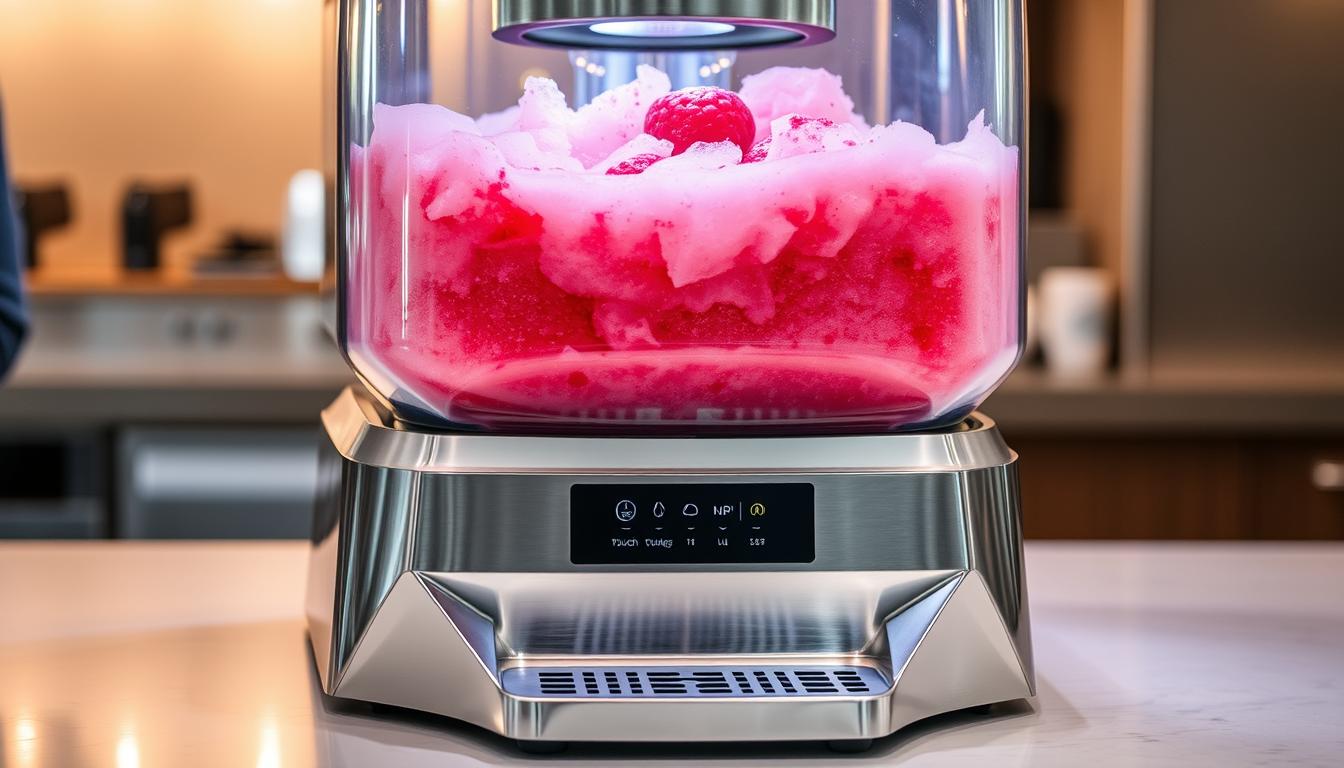
Each bowl sits on top of a refrigerated freezing cylinder. A motor turns a scraper inside the bowl so the mix never freezes into a solid block. Instead it forms fine ice crystals suspended in syrup, which is what gives slush its spoonable, pourable texture. A control board (or a simple dial on older designs) holds the product at a set consistency, and most machines refresh the mix automatically when it starts to melt.
The key point is that the machine does not make a drink from plain water. It needs a mix with enough sugar (or other dissolved solids) to freeze into a soft slush rather than hard ice. Mixes that are too sweet stay runny; mixes that are too weak freeze solid and can stall the motor. Your mix supplier will give a target range, and a simple refractometer (a handheld sugar meter) lets staff check each batch before it goes in the bowl.
What to look for in the best commercial slush machine
Number of bowls
Single-bowl machines suit a counter with one signature flavour. Two-bowl and three-bowl models are the usual choice for cafés, convenience counters and restaurants that want to offer two or three flavours at once. Remember that each additional bowl is its own freezing circuit, so a three-bowl machine draws more power and gives off more heat than a single.
Bowl capacity
Bowls are sold in litre or gallon sizes. Compare capacity with how many cups you expect to pour at peak, not with the average day. A good starting rule is to estimate your busiest hour of frozen drinks, multiply by the cup size, and make sure one bowl can cover that with some margin while a fresh batch is still freezing down. Small bowls are fine for a trial menu; high-traffic locations tend to outgrow them quickly.
Cooling and ventilation
Most countertop slush machines use an air-cooled condenser, which means they pull in room air and push warm air out. Leave the clearance the manufacturer specifies around the unit, keep the grilles clear of dust, and avoid putting the machine next to a fryer or a pizza oven. Poor airflow is the most common reason a slush machine struggles in summer.
Electrical requirements
Check the voltage, amperage and plug type on the spec sheet before you order, and confirm the circuit can carry the load alongside your other counter equipment. Electrical equipment in BC must carry an approved certification mark, so ask for the certification details on any model you are considering and confirm them on the data plate.
Cleanability
Look at how the bowl comes apart. Smooth-sided bowls, removable augers, simple drip trays and tool-free seals save minutes every day, and those minutes are what decide whether the machine is cleaned properly. Ask the supplier for the cleaning and sanitizing guide for the exact model.
Slush machine styles compared
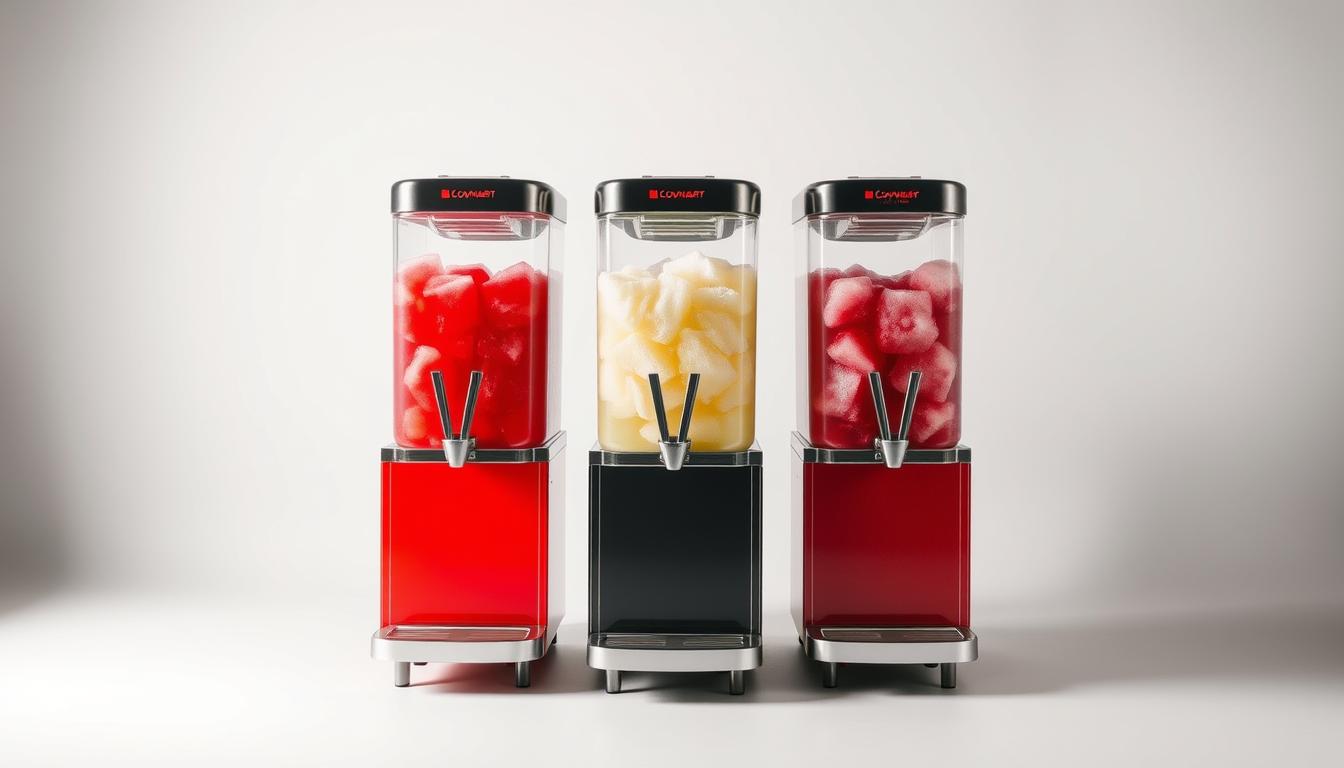
Most commercial models fall into a few groups. You do not need to memorize them, but knowing the difference helps you read a spec sheet.
- Standard slush dispensers. Clear bowls, front taps and a sugar-based mix. Best for the classic slush drink in a café, bar or quick-service counter.
- Granita-style dispensers. Designed for a softer, more liquid frozen product, often used for fruit-based drinks and dessert-style serves.
- Frozen cocktail machines. Built for mixes that include alcohol, which freezes at a lower temperature than a plain sugar mix. These need controls designed for that range. If you plan to serve alcohol, check the licensing rules that apply to your premises with the BC Liquor and Cannabis Regulation Branch before you add frozen cocktails to your menu.
- Blended frozen drink machines. A different approach: beverage blenders make each drink to order from ice and fruit. They suit smoothie-style menus with many flavours but are slower in a rush than a slush dispenser that pours in a few seconds.
A slush machine and a soft serve or shake machine are not interchangeable. If your menu leans toward dairy-based frozen desserts, look at our ice cream equipment instead.
Choosing the best slush machine for your restaurant or café
Different businesses need different machines. Use these as starting points rather than fixed rules.
- Small café or sandwich shop: a single or double-bowl countertop unit that fits beside the espresso station.
- Bar or restaurant with a patio: two or three bowls, because summer demand arrives in bursts and flavour choice matters. Check the cocktail question above.
- Cinema, arena or event venue: larger bowls and several flavours, with a plan for where the product mix is stored.
- Convenience or quick-service counter: two or three bowls with a self-serve-friendly layout and staff who can top up quickly.
Our team sees the same mistake often: buying the largest machine “just in case” and then leaving half the bowls empty because staff do not have time to mix and refill. A machine one size down that is always full usually earns more than an oversized machine that is half empty.
Slush machine cost: rough market ranges in CAD
People search for the cost of slush machines before anything else, so here are rough market ranges in Canadian dollars. These are rough estimates and vary by brand, size and spec. They are not Babak prices and not a quote.
- Single-bowl countertop machine: roughly $1,500 to $3,500.
- Two-bowl and three-bowl countertop machines: roughly $3,000 to $7,500.
- Larger or specialty frozen cocktail machines: often $5,000 and up.
Beyond the machine itself, count the syrup or mix (ongoing), cups and lids, cleaning supplies and a refractometer. Request a quote for current pricing on the models that fit your menu.
Daily cleaning and maintenance
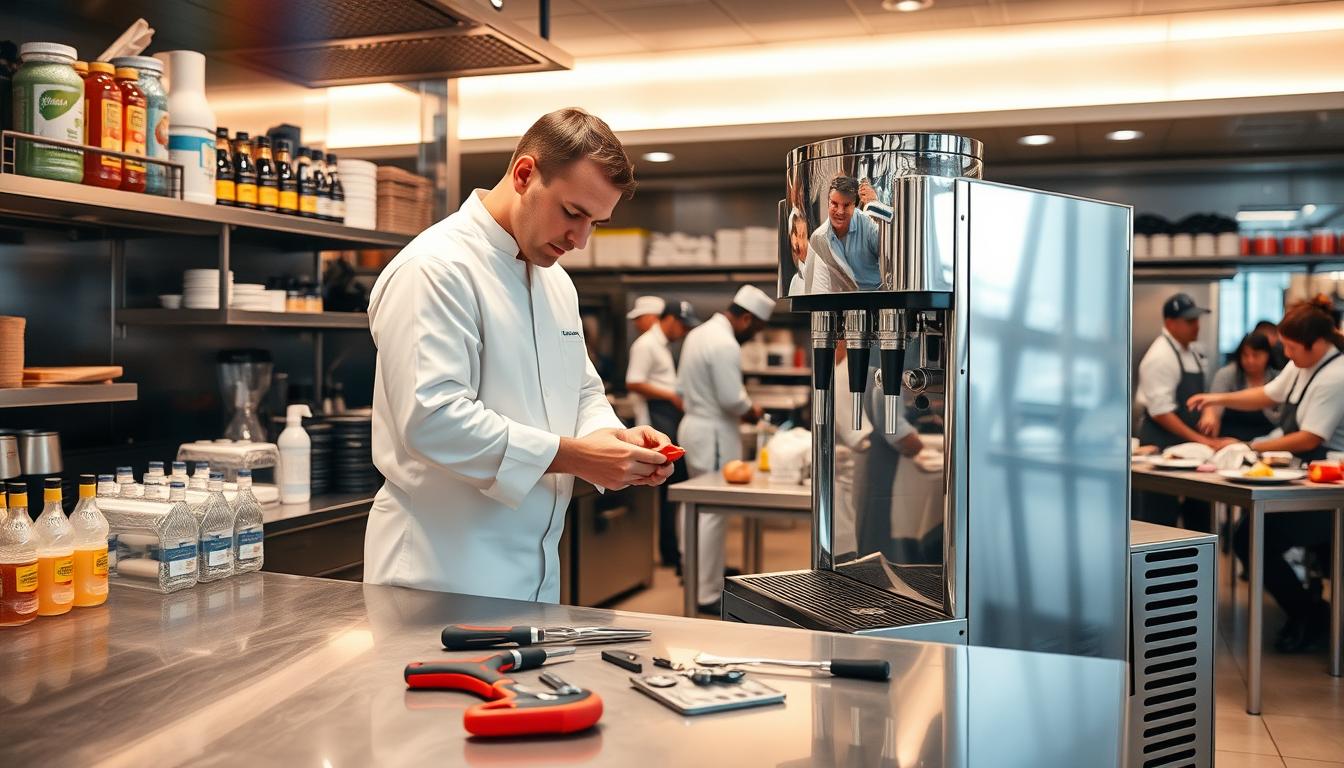
Sugary mix and warm air make slush machines easy to neglect, and a dirty machine will taste off long before it breaks. Follow the manufacturer’s cleaning schedule for your model and the sanitation plan agreed with your health authority. In BC that means Vancouver Coastal Health, Fraser Health or your regional authority, depending on where you operate.
- Empty and rinse each bowl at the interval the manufacturer recommends, using the approved sanitizer at the label concentration.
- Remove and wash the auger, bowl lid, taps and drip tray, then reassemble with food-safe lubricant where the manual calls for it.
- Wipe the front panel and clear the condenser grille of dust so the machine can breathe.
- Check the seals and O-rings for wear, because a worn seal causes leaks and cooling loss.
- Keep a simple log of cleaning dates; it helps when an inspector asks and when you need to explain a problem to service.
When a machine will not freeze, the cause is usually something simple: the mix is too weak, the condenser is blocked, or the bowl was filled warm. Check these before calling for service.
Where a slush machine fits in your beverage line-up
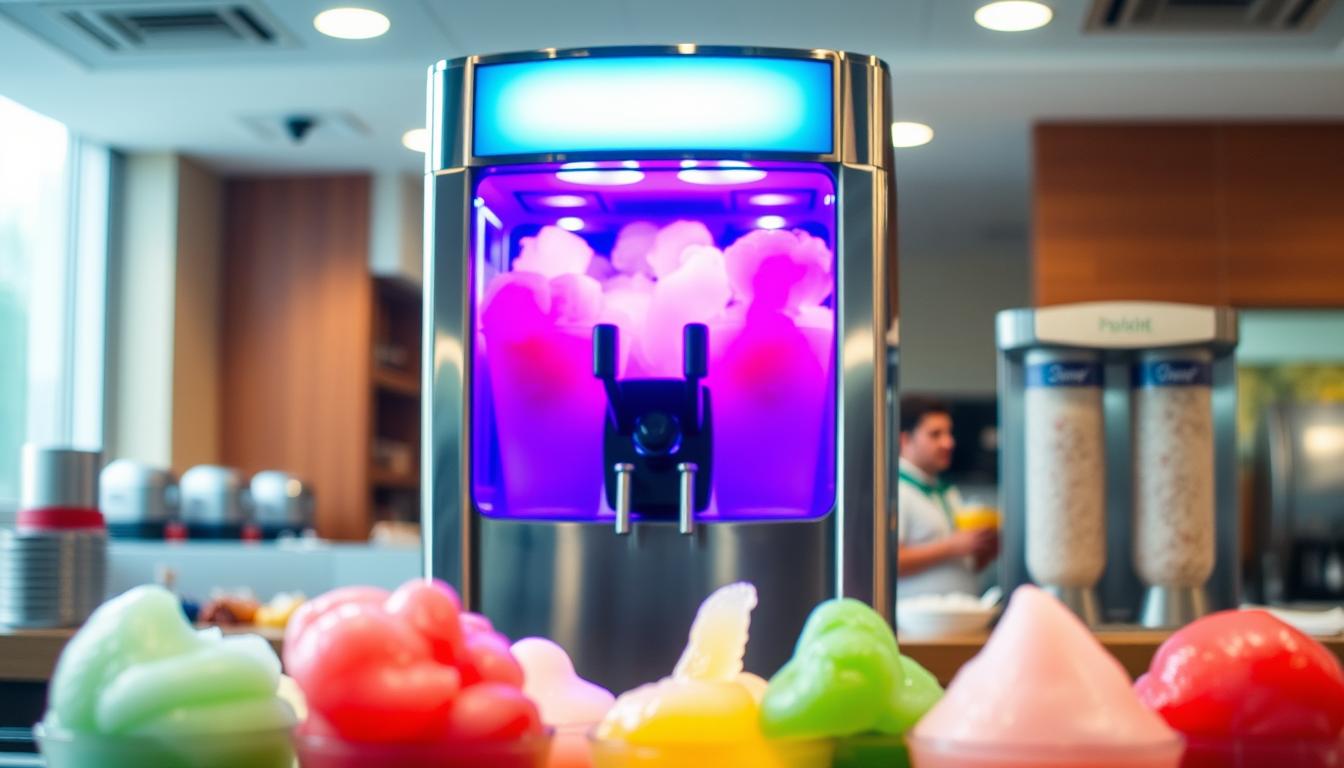
A frozen drink program works best alongside other beverage equipment. Many operators pair slush with cold beverage dispensers and a reliable supply of ice from ice machines. For a broader view of what a drinks counter needs, read our guide to beverage dispensers for restaurants.
Two makes among the frozen dispensers we list are Eurodib and Cofrimell. A couple of examples are the Eurodib OASIS2 two-hopper slushy machine and the Cofrimell OASIS1110 slush dispenser. Ask our team to compare capacities and features for your counter.
Quick comparison table
| Setup | Best for | Think about |
|---|---|---|
| Single bowl | One signature flavour, small footprint | Limited choice; one flavour only |
| Two bowls | Cafés and counters offering a pair of flavours | Power draw and heat output double |
| Three bowls | Busy bars, venues and patios | Needs more space and airflow |
| Frozen cocktail model | Bars with alcohol in the mix | Different controls and licensing checks |
| Blender-based | Many flavours made to order | Slower in a rush; more labour |
Frequently Asked Questions
What is the best commercial slush machine for a small restaurant?
For most small restaurants a two-bowl countertop machine is a good balance of flavour choice and footprint. Pick bowl capacity from your busiest hour, confirm the electrical load and leave room around the machine for airflow.
How much does a commercial slush machine cost in Canada?
As a rough estimate, single-bowl countertop machines run about $1,500 to $3,500 and multi-bowl machines about $3,000 to $7,500, depending on brand, capacity and features. These are market ranges, not Babak prices. Request a quote for current pricing.
What mix do I use in a slush machine?
Use a mix made for slush machines, with the sugar level the manufacturer specifies. A mix that is too weak freezes solid and one that is too sweet stays liquid. A handheld refractometer lets your team check each batch.
How often should a slush machine be cleaned?
Follow the schedule in the manufacturer’s manual and the sanitation procedures your health authority has accepted. Most operators clean on a regular, logged routine and also wipe the machine and condenser grille more often.
Can I make frozen cocktails in a slush machine?
Some machines are designed for alcohol mixes, which freeze at lower temperatures than plain sugar mixes. Check the model specification and confirm licensing rules for your premises with the BC Liquor and Cannabis Regulation Branch first.
Why is my slush machine not freezing?
Common causes are a weak mix, a blocked condenser, a warm or overfilled bowl or worn seals. Check those first and review the cleaning steps. If the problem continues, contact our team with the model number.
Ready to compare options? Browse our slushy machines and beverage equipment, visit our Burnaby showroom at 7190 Randolph Ave, or call (604) 566-9747 to request a quote. Pricing, availability, delivery and installation are confirmed at the time of purchase.