

Blog
Commercial Ice Maker Guide: Ice Types, Sizing and Condensers


Choosing a commercial ice maker comes down to four decisions: the type of ice you serve, the style of machine, how much ice you use on your busiest day, and how the machine rejects heat (its condenser type). Get those four right and you also avoid the common problems, from slow drinks to machines that cannot keep up in July.
Babak Food Equipment helps restaurants, bars, cafes and healthcare kitchens choose ice machines from our Burnaby, BC showroom. This guide walks through cube, half-dice, crescent, nugget, flake and gourmet ice, how to size a machine, air, water and remote condensers, and the water, drain and cleaning details that keep it running. To browse as you read, open our ice machines.
Types of ice: cube, half-dice, nugget, flake and gourmet
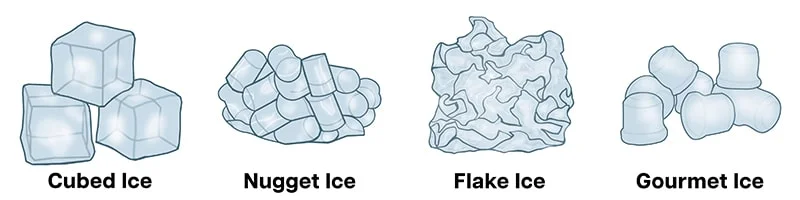
The ice you pick changes how drinks look, how fast they dilute and how food is displayed. Here is how each type is used, and how to choose between nugget, flake and gourmet ice when the options look similar.
Full cube and half-dice (small cube)
Cube ice is the all-purpose standard. Full cubes melt slowly and suit soft drinks, water and cocktails served in tall glasses. Half-dice or small cubes pack tighter in the glass, cool faster and blend well, so they are popular for fountain drinks and smoothies. Babak carries square cube machines such as the Hoshizaki IM series, small and medium cube machines from Scotsman and half-dice machines such as the Atosa YR series.
Crescent ice
Crescent ice is a curved, slightly irregular cube that comes from Hoshizaki’s KM series. It fills the glass well and pours easily, and it is a common choice in restaurants and bars.
Nugget ice
Nugget ice is soft, chewable and cools drinks quickly. It absorbs flavor, which makes it popular in quick-service drinks, coffee shops, healthcare and senior-care settings and for blended or flavored beverages. Scotsman nugget machines are among the options we carry. A nugget machine often uses more water to keep the ice soft, so ask for the water and drain details for the exact model.
Flake ice
Flake ice is soft, small and conforms around food. It is used on seafood and produce displays, salad bars, and for healthcare cooling, and it can be mixed into some blended drinks. Because flake ice packs tightly, it keeps displays cold with little air between pieces.
Gourmet (top-hat) ice
Gourmet ice, sometimes called top-hat ice, is a clear, dense cube that melts slowly. Bars and upscale restaurants use it for spirits and cocktails because it chills without watering the drink down. Scotsman’s CU50GA is one of the machines in this family.
Nugget, flake or gourmet: which should you pick?
- Nugget: best when guests chew ice, when drinks are blended or flavored, and for healthcare use.
- Flake: best when ice is part of a display, or needs to surround food, seafood or produce.
- Gourmet: best when appearance and slow melt matter, mainly cocktails and premium pours.
- Cube or half-dice: best for general restaurant, bar and fountain use.
For a deeper look, see our guides to types of ice and commercial ice maker ice types.
Commercial ice maker styles: undercounter, modular and upright
Machines come in several formats, and each fits a different space.
- Undercounter ice machines have a built-in bin and fit under a counter. They suit small bars, cafes and satellite stations with lower volume.
- Modular ice cubers make the ice and sit on top of a separate ice bin or dispenser. They are the choice for busy restaurants, hotels and bars that need a lot of ice.
- Upright ice machines combine a machine and bin in one cabinet, useful when you want a self-contained unit.
- Ice and water dispensers let guests or staff serve themselves, so they are common in healthcare, offices and self-serve areas.
How much ice do you need? Sizing a commercial ice machine
Ice machines are rated by the pounds (or kilograms) of ice they make in 24 hours, and the bin is rated by what it stores. Size the machine by your daily use and the bin by your peak. These rough rules of thumb are used across the industry, and your team should adjust them for your menu.
- Restaurants: roughly 1 to 1.5 lb of ice per guest per day, more if you serve a lot of iced drinks.
- Bars: often 3 lb or more per guest in a busy bar.
- Cafes and coffee shops: depends on the share of cold and blended drinks.
- Food displays and salad bars: add the ice needed to keep the display cold.
Three further points matter. First, ice machines are rated under standard test conditions, and output drops when the room and the incoming water are warmer, so a machine placed in a hot kitchen makes less ice than its rating suggests. Second, build in a margin; adding around 20% above your calculated need helps cover busy days and growth. Third, bin size matters: a bin that holds half a day’s ice smooths out peak demand and lets a smaller machine do the job. Our ice machine sizing guide goes into more detail.
Condenser types: air-cooled, water-cooled and remote
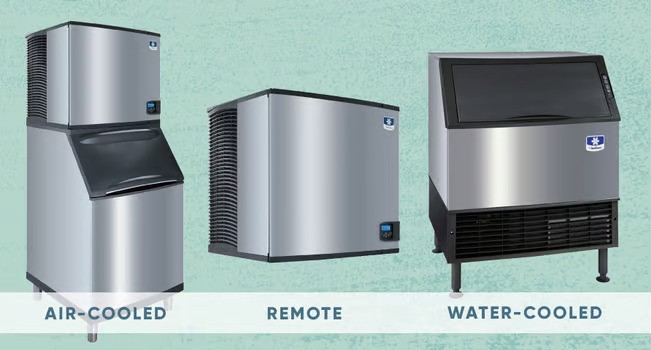
The condenser removes heat from the refrigeration system, and its type affects where you can put the machine, how loud and warm the room gets, and your utility use.
Air-cooled
Air-cooled condensers use fans and room air. They are the most common and the simplest to install, but they need free airflow around the machine and lose capacity in a hot room. Keep the intake and exhaust clear and clean the coil regularly.
Water-cooled
Water-cooled condensers use a steady flow of water to carry heat away. They stay quiet and perform well in warm spaces, but they use more water and need the correct supply and drain. Check the water use for the model and the cost where you operate.
Remote
A remote condenser sits outside, often on a roof, and connects with refrigerant lines. It moves heat and noise out of the kitchen, which helps in hot or tight spaces, but installation is more involved and needs a qualified refrigeration contractor. Our condenser types guide compares the three in more depth.
Water filtration, drains and installation
Water quality decides how clear and good-tasting your ice is, and how long your machine lasts. Scale builds up in hard water and can shorten the life of the machine and slow production. Ask for a filter matched to your local water and to the model. Plan the drain per the BC Plumbing Code and with your plumber, and have a licensed electrician confirm the circuit. Electrical equipment in BC must bear an accepted certification mark.
Cleaning and handling ice safely in BC
BC’s health authorities treat ice as food, so the machine and the scoop matter. Fraser Health guidance says to:
- Clean and sanitize ice machines regularly, because biofilm can build up inside, and describe it in your sanitation plan.
- Follow the manufacturer’s cleaning instructions for the exact model.
- Wash your hands, use a scoop and not your hands, and hold the scoop by the handle.
- Store the scoop outside the machine in a clean, sanitized container.
- Never return unused ice to the bin.
There is no single cleaning frequency for all of BC, so confirm yours with your health authority, such as Vancouver Coastal Health or Fraser Health. Our guide to commercial ice machines adds more on care.
Ice machine comparison
| Ice type | Look and feel | Best uses | Notes |
|---|---|---|---|
| Full cube | Solid, slow-melting | Soft drinks, water, cocktails | All-purpose |
| Half-dice | Small cube | Fountain drinks, smoothies | Packs tight, cools fast |
| Crescent | Curved cube | Restaurants, bars | Fills the glass well |
| Nugget | Soft, chewable | Coffee shops, healthcare, blended drinks | Check water use |
| Flake | Soft, fine | Displays, seafood, salad bars | Conforms around food |
| Gourmet | Clear, dense | Cocktails, premium pours | Slow melt |
Frequently Asked Questions
What is the best ice type for a restaurant?
Cube or half-dice suits most restaurants because it works for water, soft drinks and cocktails. Choose nugget if you serve a lot of blended or flavored drinks, and flake if you need ice for displays.
What is the difference between nugget ice and gourmet ice?
Nugget ice is soft and chewable and cools drinks quickly. Gourmet ice is clear and dense and melts slowly, which keeps spirits and cocktails from watering down.
How do I choose between nugget, flake and gourmet ice machines?
Choose by use. Nugget is best for chewable ice and blended drinks, flake is best when ice surrounds or supports food, and gourmet is best when appearance and slow melt matter most.
How much ice does a restaurant need per day?
A common rough rule is 1 to 1.5 lb per guest in a restaurant and more in a bar, plus a margin of about 20%. Your menu and your location change the result, so our team can help you size it.
Which condenser type is best?
Air-cooled is the standard and easiest to install. Water-cooled suits hot or confined spaces if water use is acceptable, and remote condensers move heat and noise out of the kitchen.
Where can I see ice machines in person?
Visit the Burnaby showroom at 7190 Randolph Ave or call (604) 566-9747, and our team will help you compare ice types and models.
Ready to choose? Browse our ice machines, visit the Burnaby showroom at 7190 Randolph Ave, or request a quote and our team will help you pick the right ice type and size. Pricing, availability, delivery and installation are confirmed at the time of purchase.