

Commercial Convection Ovens: Which Type Is Right for You?

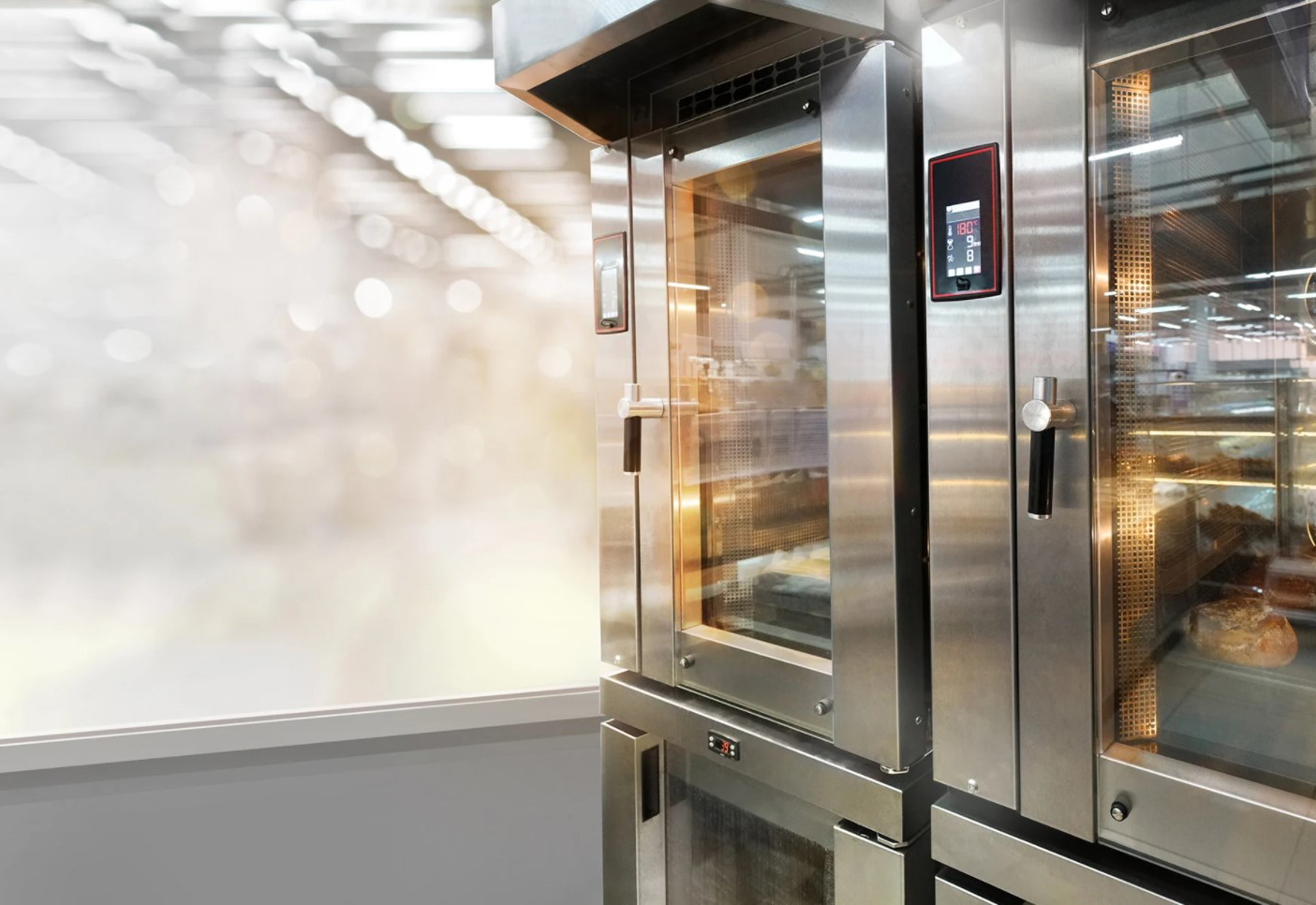
Hot air that moves cooks food faster and more evenly than hot air that sits still, and that single idea is why the commercial convection oven sits in so many kitchens. A fan circulates heated air around the cavity, so every tray gets similar heat, tops brown properly and a full load bakes at the same pace as a half load. Restaurants, bakeries, pizzerias, cafes, convenience stores and food trucks all use them, for roasting, baking and finishing frozen foods.
No two convection ovens are alike, though, and the wrong choice shows up as uneven bakes, tight kitchens and slow service. This guide explains the types, how to size one, what features matter and what to plan for before it arrives. You can browse all of our commercial convection ovens at any point as you read.
How a convection oven works
A standard oven relies on still, hot air, which creates hot and cool spots. A convection oven adds a fan, and in some models a second heating element around it, to move air continuously across the food. That moving air strips away the thin layer of cooler air that clings to food, so heat transfers faster.
The practical results are well known:
- Even cooking across racks, so you can load several trays at once.
- Faster cooking than a conventional oven, with shorter cook times often reported in the range of 20 to 25 percent, depending on the food and load.
- Lower temperatures for many recipes. A common starting point is to lower the set temperature by about 15 to 25 degrees F (roughly 10 to 15 degrees C) from a conventional recipe and watch the first batch.
- Better browning and crisping on roasts, pastries, fries and sheet-pan items.
Those numbers are general guides. Always follow the manufacturer’s instructions for your oven, and test each recipe.
Types of commercial convection ovens
Full-size convection ovens
Full-size ovens take 18 by 26 inch sheet pans, usually five or more racks, and suit bakeries and high-volume kitchens. They can be stacked in a double-deck arrangement to double capacity without doubling the floor space. These ovens usually stand on legs or a stand, so check your ceiling height and hood size.
Half-size convection ovens
Half-size ovens fit sheet pans in the narrower size, or smaller trays, and use less space and less energy. They are a common choice for cafes, small restaurants and finishing stations. For example, UNOX makes models that carry small trays in a compact body, such as the UNOX XAF023 ANNA LineMicro convection oven with four half-size trays and manual controls. Babak Food Equipment is an authorized UNOX dealer.
Countertop convection ovens
Countertop convection ovens sit on a table and are a good fit for food trucks, kiosks, bars and small kitchens that need baking, toasting or reheating without a floor-standing oven. Check that the table is rated for the weight and the heat.
Bakery and larger-format ovens
If baking is your main job, look at ovens with deeper cavities and more trays, such as the UNOX XAFR-04FS-ETDV Bakerlux convection oven with four full-size trays and touch controls. Our bakery ovens page lists more options, and our commercial ovens category shows every oven type side by side.
Gas vs electric convection ovens
The choice often comes down to the utilities you have available.
| Gas convection oven | Electric convection oven | |
|---|---|---|
| Heat source | Gas burners with a fan, indirect heat | Electric elements with a fan |
| Installation | Gas line, licensed gas fitter, ventilation | Electrical supply; ventilation per your plans |
| Typical use | Busy kitchens with gas already on the line | Kitchens without gas, or smaller and stacked units |
| Browse | Gas convection ovens | Electric convection ovens |
Check the spec sheet for voltage, phase and amperage on electric models, and for the connection size and input rating on gas models.
Features to compare
Fan system
Some ovens have a single-speed fan, some have multiple speeds so you can lower airflow for delicate items such as cakes and meringues, and some use dual fans for more even airflow across a deep cavity. Reversing fans help even out the bake by changing the direction of airflow. If your menu includes delicate baking, look for variable fan speed.
Controls
Manual dials are simple and durable. Digital controls offer precise temperature and time settings and can store programs, which helps keep results consistent across shifts. Touch controls add programmable recipes and cooking steps. Pick the level that your staff can use comfortably.
Interior and doors
Stainless interiors clean easily. Look for racks that slide out smoothly, interior lights and a window that lets cooks see inside without opening the door. Some ovens have two independent doors and others a single door that is easier to seal. Consider which side the door opens on in your layout.
Steam and humidity
A few convection models include a steam injection option, useful for bread and some roasts. If you need steam, humidity control and many cooking modes in one cabinet, compare with a combi oven.
Ease of cleaning
Smooth coved corners, removable racks and a design that keeps the door gasket accessible make daily cleaning faster, which in turn protects the oven and keeps your sanitation records in good shape.
How to size a convection oven
- Know your pan size. Check whether your trays are full-size sheet pans, half-size pans or hotel pans, and count how many you need at once.
- Estimate peak volume. Think about your busiest hour, not an average one.
- Think about the cycle. If a batch takes 20 minutes and you need 100 portions per hour, work out how many racks that requires.
- Measure the space. Include the clearances on the sides and back, door swing and the height of the hood.
- Plan for growth. A stackable model lets you add a second oven later without using more floor space.
Remember that convection ovens work best with room for air to circulate. Overloading trays or blocking the fan reduces the benefit.
Convection oven or combi oven or deck oven?
These three get compared often.
- Convection oven. Great for roasting, baking and reheating, with simple operation and a lower price point than a combi.
- Combi oven. Combines convection with steam for roasting, steaming, baking and more in one cabinet. It suits kitchens that want maximum flexibility, as our post on whether your kitchen needs a combi oven explains.
- Deck oven. A hearth-style oven for pizza and artisan bread, where radiant heat from the deck makes a distinct crust. See our deck oven guide.
Many kitchens run a convection oven alongside one of the others, using each for what it does best.
Ventilation, gas and electrical rules in BC
Before you buy, confirm the basics with your contractors and authorities.
- Ventilation. Some ovens require a hood and some do not, depending on the model and local requirements. Ask your hood contractor and your municipality before you order.
- Gas. In BC, gas appliances must carry a recognized certification mark, and installation is done by a licensed gas fitter under the correct permit. Technical Safety BC publishes the rules, and some municipalities issue their own permits.
- Electrical. Electrical equipment needs an accepted certification mark. Confirm your panel capacity with an electrician.
- Plan review. New or altered food premises are reviewed by the regional health authority, so include the oven in your equipment list.
Care and maintenance tips
- Wipe spills when the oven is cool enough to touch, and use cleaners the manufacturer approves.
- Clean the door gasket and glass regularly, since a poor seal wastes energy.
- Keep the fan area and vents free of debris and grease.
- Calibrate temperature with an oven thermometer from time to time.
- Follow the maintenance schedule in the manual and train all cooks on the same cleaning routine. For a wider framework, read about regular maintenance schedules.
Quick comparison
| Type | Best for | Watch for |
|---|---|---|
| Full-size | Bakeries, high-volume roasting | Height, stand and hood size |
| Half-size | Cafes, small restaurants | Pan size compatibility |
| Countertop | Food trucks, kiosks, small kitchens | Table strength and heat clearance |
| Gas | Kitchens with gas service | Licensed fitter and permit |
| Electric | No gas, or stacked units | Voltage and amperage |
Frequently Asked Questions
What is the difference between a convection oven and a regular oven?
A convection oven has a fan that circulates hot air, so heat spreads evenly and food usually cooks faster at a slightly lower temperature than in a conventional oven.
Should I reduce the temperature when using a convection oven?
Many cooks lower the set temperature by roughly 15 to 25 degrees F (about 10 to 15 degrees C) and check the food early. Always follow the manufacturer’s instructions and test each recipe.
What size convection oven do I need?
Match the oven to your pan size and peak volume. Count how many trays you need at once, allow for clearance and consider a stackable model if you expect to grow.
Do convection ovens need a hood?
It depends on the model, the fuel and local requirements. Confirm with your hood contractor and your municipality before you order.
Is a convection oven better than a combi oven?
They do different jobs. A convection oven is simpler and well suited to baking and roasting. A combi oven adds steam and more cooking modes, which suits kitchens that want maximum flexibility.
Can I install a gas convection oven myself in BC?
No. Gas appliance installation is regulated work done by a licensed gas fitter under the permit that applies. Check with Technical Safety BC or your municipality and your gas contractor.
Ready to compare models? Browse our convection ovens, then visit the Burnaby showroom at 7190 Randolph Ave or call (604) 566-9747 to request a quote. Pricing, availability, delivery and installation are confirmed at the time of purchase.