

Blog
Commercial Kitchen Shelving: Types, Sizes and How to Choose

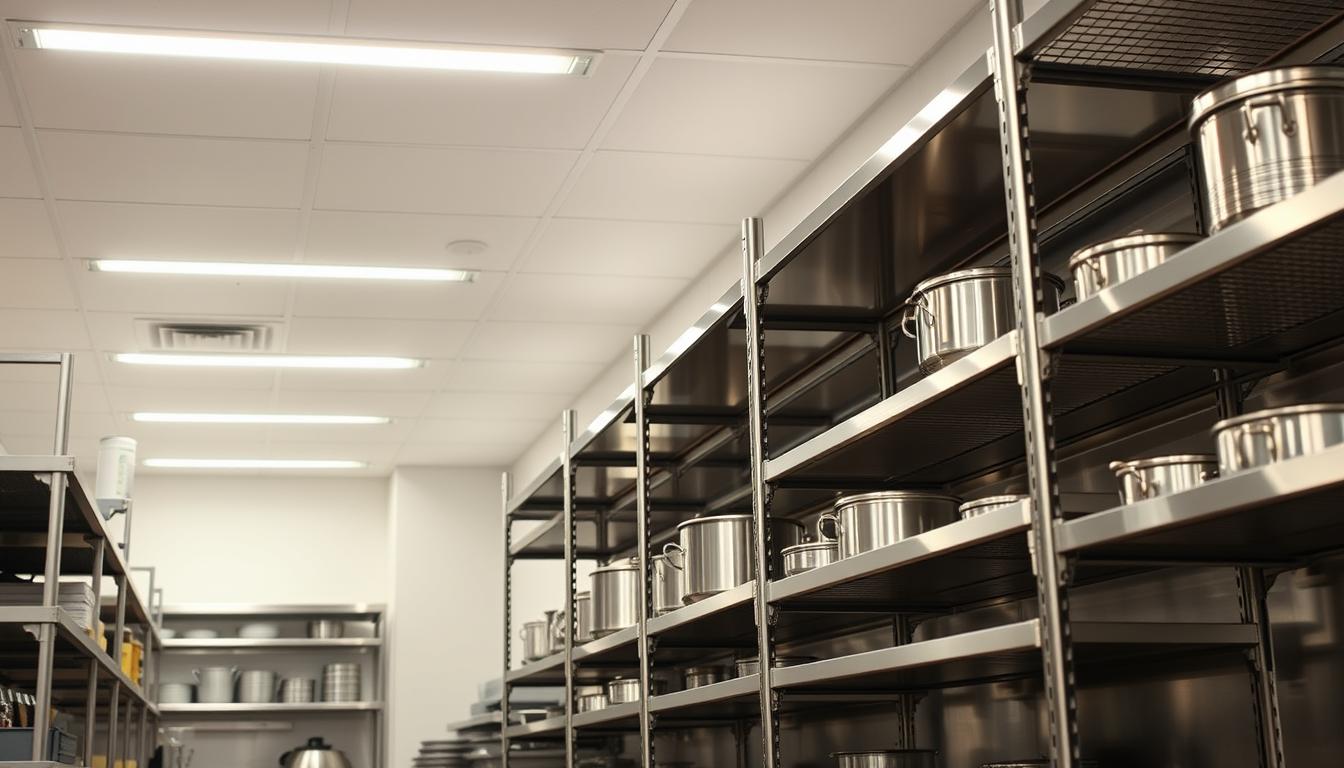
Commercial kitchen shelving is the storage backbone of a restaurant: it keeps dry goods, pans, small equipment and walk-in stock organized, off the floor and easy to reach. The right choice depends on where the unit will stand. Chrome wire shelving suits dry storage, epoxy-coated wire handles the damp of a walk-in cooler or freezer, and solid stainless shelving belongs where food is prepped or where wash-down is routine.
Babak Food Equipment supplies shelving for restaurants of every size from our Burnaby, BC showroom. This guide explains the main shelving types, how to size and load a unit, how to lay out shelving for restaurant kitchens, and how to keep it clean. You can browse the full range of tables and storage at any time.
Types of commercial kitchen shelving

Most restaurant shelving falls into three families. Each has a job, and mixing them in the right places saves money without compromising on hygiene.
Chrome wire shelving
Chrome wire shelving is the everyday choice for dry storage rooms, pantry areas and back-of-house closets. The open wire design lets air move around stored goods and lets dust fall through rather than collect. Units are modular: posts, shelves and clips can be reconfigured as your inventory changes, and shelf height can be moved up or down in small steps. It is light, quick to assemble and the most economical of the three families.
Epoxy-coated wire shelving
Walk-in coolers and freezers are humid, and some cleaning products are harsh. Epoxy wire shelving carries a protective coating that stands up to that moisture better than bare chrome, so it is the usual pick for cold rooms, dish areas and any spot that stays wet. Check the coating regularly; chips and scratches are where corrosion starts, so replace any shelf with a damaged surface.
Stainless steel shelving
Stainless shelving uses solid or slotted stainless shelves and is the most durable family. It is a good fit for prep lines, dish rooms, wall-mounted storage and any place where the shelf will be wiped down every day. Wall-mounted shelves free the floor entirely, which helps in tight kitchens. The double overshelves that sit above a work table add a second level of storage right where the cook needs it.
Shelving for restaurants: where each type goes

Think in zones rather than in products. A simple map keeps the whole kitchen consistent.
- Dry storage: chrome wire shelving, loaded with sealed containers, cans and packaged goods.
- Walk-in cooler and freezer: epoxy wire shelving, with raw proteins on the lowest shelves and ready-to-eat food above. Keep air gaps so cold air can circulate.
- Prep line and dish area: stainless shelves and overshelves, easy to sanitize and tough against knocks.
- Bulk and heavy items: dunnage racks keep sacks, cases and cartons off the floor in storerooms and walk-ins.
- Mobile needs: racks and carts move bun pans, plates and supplies between stations without extra carrying.
Health authorities in BC, including Vancouver Coastal Health and Fraser Health, review how food and equipment are stored when they inspect a premises. Ask your local environmental health officer what they expect for clearance from the floor and walls, and plan your shelving to meet that before you buy.
How to size commercial kitchen shelving units

Measure the space first, then work out what will sit on it. Four things decide whether a unit fits and works.
Depth and length
Wire shelving is commonly made in a few standard depths, from narrow shelves for cans and small packages up to deep shelves for stock pots and large containers. Lengths run from short sections to long runs, and you can often join sections to fill a wall. Pick the depth for what you store, not for what looks tidy: a shelf that is too shallow lets items hang over the edge, and one that is too deep pushes stock out of reach.
Height and shelf spacing
Tall posts make use of vertical space, but the top shelf has to be reachable and safe. Keep heavy items low, light items high, and leave enough room between shelves for the tallest container you plan to store. Adjustable shelf height is worth having because your menu and suppliers will change.
Load capacity
Every unit has a rated capacity per shelf and sometimes per unit, and the figure depends on the model, the shelf length and how the load is spread. Read the manufacturer’s specification for the exact unit, spread weight evenly and do not treat a shelf as a bench. If you plan to store heavy cases, ask our team about heavier-duty options.
Clearances and aisles
Leave aisle space for staff and carts, and keep shelving away from open flame, hot equipment and areas that get splashed. Check door swings and the access you need to reach plumbing and electrical panels.
Layout tips that save steps
Good shelving shortens the path between the delivery door and the line. A few habits make a real difference.
- Store the items used most often between waist and shoulder height, at the station where they are used.
- Group by category and label every shelf, so a new hire finds the right item without asking.
- Rotate stock first in, first out, with new deliveries behind or beneath older stock.
- Keep chemicals on a separate shelf below and away from food.
- Leave one section of flexible shelving you can reconfigure when the menu changes.
For a broader look at how storage fits into your whole floor plan, see our guides on kitchen layout and restaurant kitchen workflow. We also compare options in 6 types of commercial shelving.
Cleaning and caring for restaurant shelving

Shelving that stays clean lasts longer and passes inspections more easily. Build it into the closing routine.
- Remove stock from a section, wipe or wash the shelves and posts, rinse, and let them dry before reloading.
- Use the cleaners recommended by the manufacturer. Harsh or abrasive products can damage chrome and epoxy finishes.
- Dry wire shelving after washing, especially in humid areas, to slow corrosion.
- Inspect for bent posts, loose clips, wobbly shelves and chipped coating. Replace damaged parts rather than patching them.
- Level the unit on a flat floor and use adjustable feet or casters correctly. Lock the wheels on mobile units when they are loaded.
If your premises is new or being renovated, remember that BC health authorities review plans before construction. Our team can help you choose storage that matches the finished layout.
Quick comparison of shelving types
| Type | Best for | Main strengths | Watch for |
|---|---|---|---|
| Chrome wire | Dry storage, pantry | Economical, airflow, modular | Not for constantly wet areas |
| Epoxy wire | Walk-in cooler or freezer, wet areas | Moisture resistance, airflow | Chipped coating must be replaced |
| Stainless steel | Prep lines, dish rooms, wall storage | Durable, easy to sanitize | Solid shelves reduce airflow |
| Dunnage racks | Sacks, cases, heavy stock | Keeps goods off the floor | Not for small-item organizing |
| Racks and carts | Mobile storage and transport | Moves stock between stations | Lock wheels when loaded |
Frequently Asked Questions
What is the best commercial kitchen shelving for a walk-in cooler?
Epoxy-coated wire shelving is the usual choice because it handles the humidity and cleaning of a cold room better than bare chrome. Stainless is also used where an even tougher surface is needed. Keep air gaps so cold air can move around stored food.
How high should restaurant shelving be off the floor?
The clearance your health authority expects can differ, so ask your environmental health officer before you buy. Dunnage racks and posts with adjustable feet help you meet the clearance you are given.
Can I mix chrome and stainless shelving in the same kitchen?
Yes. Many kitchens use chrome for dry storage and stainless for the prep and dish areas. Match each type to the conditions of its zone rather than choosing one material for everything.
How much weight can a commercial wire shelf hold?
It depends on the model, the shelf length and how the load is spread. Always read the manufacturer’s specification for the exact unit and distribute weight evenly. Our team can help you select a unit rated for heavy cases or stock pots.
How do I clean commercial kitchen shelving?
Remove the stock, wash the shelves and posts with a suitable cleaner, rinse, and dry them before reloading. Avoid abrasive products on chrome and epoxy finishes, and replace shelves with a damaged coating.
Can I see shelving units before I buy?
Yes. Visit the Burnaby showroom at 7190 Randolph Ave or call (604) 566-9747, and our team will help you match shelving types, sizes and accessories to your kitchen.
Ready to organize your kitchen? Browse our tables and storage range, see storage and cabinets, visit the Burnaby showroom at 7190 Randolph Ave, or request a quote and our team will help you plan the right shelving. Pricing, availability, delivery and installation are confirmed at the time of purchase.