

Blog
Middleby Marshall Pizza Ovens: Conveyor Oven Buying Guide


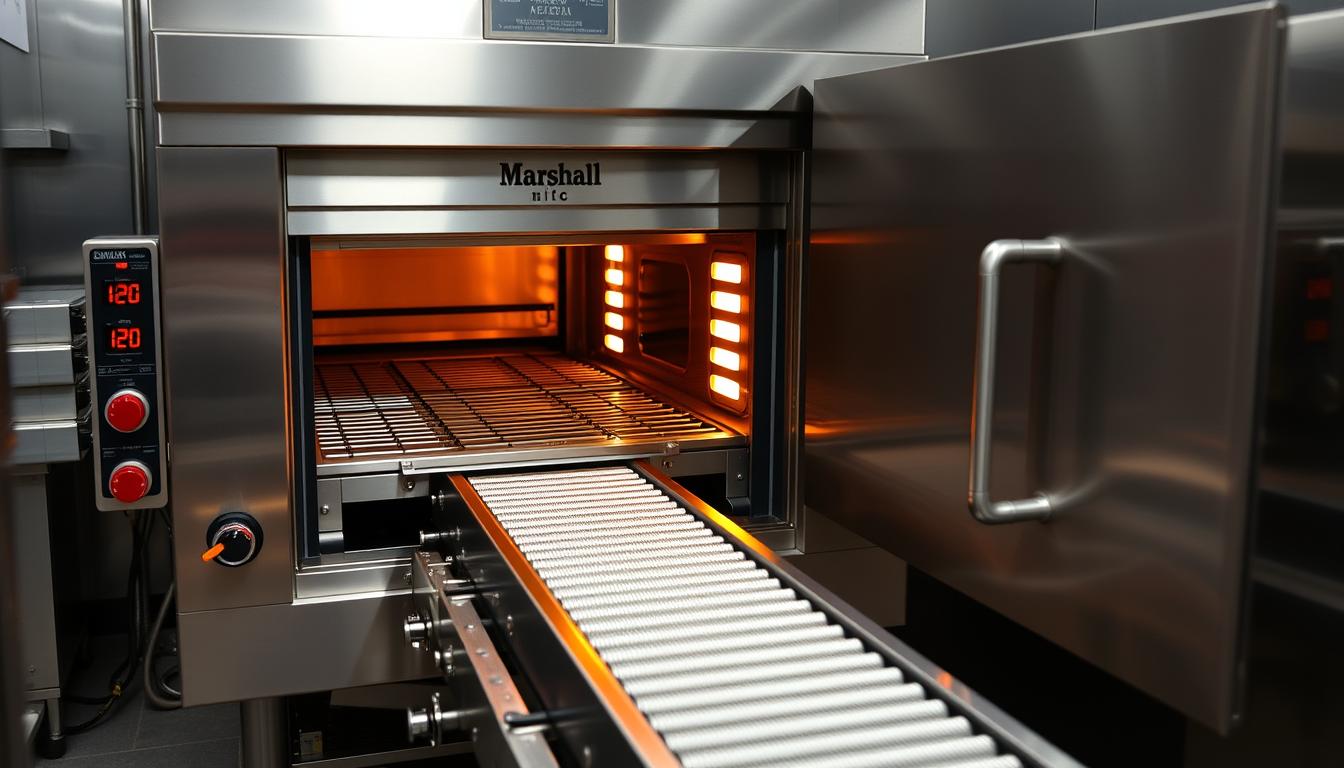
A Middleby Marshall conveyor oven is a strong choice for a pizza operation that bakes the same menu all day and needs every pie to come out the same. The belt moves the pizza through the oven, so there is no peel work, no turning and no guessing when it is done. If you are searching for a Middleby Marshall pizza oven, this guide explains how these ovens work, how to pick between gas and electric, how to size one, and how to run and look after it.
Babak Food Equipment lists a range of Middleby Marshall conveyor ovens, plus replacement parts for them, and our team can help you narrow the choice. You can also browse all conveyor ovens in one place.
What is a Middleby Marshall pizza oven?
Middleby Marshall is a long-established maker of conveyor ovens. People often search for it as a “Marshall pizza oven” or “conveyor pizza oven”, and the product is the same: a tunnel oven with a metal belt that carries pizzas, flatbreads, sandwiches and other items through a heated chamber. The belt speed sets the bake time.
Most pizza ovens in this family use air impingement. Fans push hot air through metal “fingers” above and below the belt, which blows heat onto the pizza surface instead of letting it sit in a still chamber. That is what bakes the crust and melts the cheese in a few minutes without scorching the top. If you want to see how conveyors compare with other styles, our guide on which pizza oven is the best covers deck, conveyor and wood-fired ovens side by side.
Why restaurants choose a conveyor pizza oven
- Consistency. The same belt speed and temperature give the same bake on the first pie and the two-hundredth. A new hire can load the belt after a short walk-through.
- Labor savings. Nobody has to stand at the oven rotating pies, so one person can build pizzas while another boxes them.
- Throughput. A wide belt can take several pizzas at once, which helps during a delivery rush or a lunch peak.
- Versatility. The same oven bakes wings, sub rolls, flatbreads, nachos, pasta bakes and many frozen items, so it can be useful beyond pizza.
Middleby Marshall models: gas, electric and belt width
The model number tells you a lot. In the models we list, the letter at the end shows the fuel (G for gas, E for electric), and the size in the product title shows the belt width or overall class. Here is how the line is grouped.
Compact ovens for small shops
Narrow models such as the PS520G 20″ gas conveyor oven and the 28″ and 29″ electric and gas ovens suit a counter-service shop, a bar with a food menu or a cafe adding pizza. They bake fewer pies at a time, but they fit smaller kitchens and use less gas or power.
Mid-size ovens for busy single locations
The 32″, 36″, 38″ and 40.5″ models are the sweet spot for many pizzerias. The PS536 and PS540 families, and the PS638 and PS640 series, each come in gas and electric. The PS640E-1 electric conveyor oven is one example for kitchens that cannot run gas.
High-volume ovens
The 55″ and 70″ ovens, including the PS555, PS360 and PS670 families and the X55 and X70, are built for high-volume pizza, large delivery operations and commissary kitchens. They need more floor space and more utility capacity, so involve your contractor early.
Some lines can be stacked two units high, and some have a split belt. Ask our team which options apply to the exact model you are considering, because they differ between series.
Gas or electric conveyor oven?
Choose gas when you already have a gas line, your landlord allows it and you want lower running costs per bake in most cases. Choose electric when gas is not available, when you are in a food court or a building without a gas supply, or when you want a simpler installation. Both types can give the same bake quality when they are set up properly.
In British Columbia, gas appliance installation must be done by a licensed gas fitter working under the correct permit. Technical Safety BC issues most permits, and some municipalities, including Vancouver and Burnaby, issue their own. Gas appliances also need an accepted certification mark, so ask us about the certification of any model you are considering. Electric ovens need a dedicated circuit sized to the oven’s nameplate rating, which your electrician can confirm.
How to size a conveyor oven for your pizza volume
Work backward from your busiest hour. Count how many pizzas you need to bake in that hour, divide by the number of bakes per hour the belt can deliver, and choose the belt width that covers the result with a little room to spare.
- Estimate peak pies per hour on a Friday night, not an average Tuesday.
- Check your pizza sizes. A 16″ pie takes much more belt width than a 10″ personal pizza.
- Allow for other items. If you will also bake wings and subs, those take belt space too.
- Plan for growth. If delivery apps are growing your orders, choose a size above your current peak or plan to add a second oven later.
- Measure the space including the loading and unloading ends, the door swing and the service clearance around the oven.
Do not buy the biggest oven by default. An oversized oven costs more to run and takes more floor space, which matters in a typical Vancouver-area kitchen where every square foot is spoken for.
Which Middleby Marshall model is the most energy efficient?
No single model wins for every kitchen, because efficiency depends on how well the oven matches your volume. A few rules hold up in practice:
- Right-size the oven. A belt that is mostly empty wastes heat. An oven sized close to your real volume uses less energy per pizza.
- Look at the spec sheet. Compare input rating (BTU/h for gas, kW for electric) against the belt width. Our team can pull the numbers for the models you are comparing.
- Use the lowest temperature that works. Trim the temperature and belt speed to your recipe instead of running the hottest setting by habit.
- Keep it clean. Clogged air fingers and dirty fan screens force the oven to work harder for the same bake.
Installation, ventilation and clearances
A conveyor oven is a heat source, so check ventilation before you order. Gas ovens generally need to sit under an approved exhaust hood. Electric ovens may still need a hood depending on the model, the menu and your local requirements. Your hood contractor and your municipal building and health authorities have the final say. Browse our exhaust and hood category for options, and ask about ventless exhaust if your building cannot support a hood. Ventless suitability depends on the oven, so check this before you buy.
Also plan for a stable stand, the clearances in the installation manual, and a work table at the loading end plus a landing table at the exit. Our stainless work tables are a natural fit.
Training your crew to run a conveyor oven
Training is short, but it should be deliberate. A simple one-page routine will do:
- Start-up. Turn the oven on, set the temperature, start the belt and wait for the oven to reach the set point.
- Loading. Place the pizzas evenly across the belt and keep spacing consistent so the heat is balanced.
- Test bake. Run a test pizza and adjust belt speed until the crust color and cheese match your standard.
- Record the settings. Write down the temperature and belt time for each menu item and post them by the oven.
- Safety. Teach staff where the hot surfaces are and never to reach into the chamber while the belt runs.
Cleaning and maintenance
Most breakdowns start with a dirty oven. Build these habits:
- Daily: let the oven cool, wipe the exterior, brush off the belt and empty the crumb trays.
- Weekly or as the manual directs: remove the air fingers, belt and crumb pans for a proper wash, then let everything dry completely before reassembly.
- Periodically: inspect the belt, drive chain, cooling fans, blower motors and controls for wear. Catch problems before they stop service.
Common wear items such as heating elements, blower motors, cooling fans, controllers, circuit breakers and bearings are the parts people ask about most. Look through our parts and accessories category, and contact our team with your model and serial number if you need help finding the right part or service advice.
Conveyor oven or deck oven?
A conveyor oven rewards speed and consistency. A deck oven rewards craft, with a hearth-baked crust and more control for a skilled pizzaiolo. Delivery-heavy shops tend to choose conveyor, and sit-down pizzerias with a signature crust tend to choose deck. If you serve a mix of products beyond pizza, a conveyor can also pair with a convection oven for baked goods.
Quick comparison of conveyor oven sizes
| Size class | Best for | Typical use | Things to check |
|---|---|---|---|
| 20″-29″ | Small shops, bars, cafes | Pizza, flatbread, sandwiches | Peak-hour capacity, space |
| 32″-40.5″ | Busy single-location pizzerias | Pizza, wings, subs | Gas or electric supply, hood |
| 55″-70″ | High volume, delivery, commissary | High-volume pizza and bakes | Floor space, utilities, ventilation |
Frequently Asked Questions
What is a Middleby Marshall conveyor oven and what are its main features?
It is a commercial tunnel oven that moves food on a belt through a heated chamber. Main features include adjustable belt speed and temperature, air impingement heating on most pizza models, gas and electric versions, and a range of belt widths from compact to high volume.
Is a Middleby Marshall oven good for pizza?
Yes. Conveyor ovens in this family are widely used for pizza because they bake evenly and repeatably with little supervision. They suit shops that value speed and consistency over a hand-turned hearth crust.
Which Middleby Marshall model offers the best energy efficiency?
It depends on your volume. The most efficient oven is usually the one sized closest to your real peak, kept clean and run at the lowest temperature that gives the bake you want. Ask our team to compare the input ratings of the models you are considering.
How does a conveyor oven compare with other ovens for throughput?
A conveyor oven bakes continuously, so throughput depends on belt width and bake time. For steady high volume it generally outpaces a single deck oven that needs a person to load, turn and unload each pie.
Do I need a hood over a conveyor pizza oven?
Gas ovens generally need ventilation under an approved hood, and electric ovens may too. Confirm requirements with your hood contractor and your local building and health authorities before you order.
Where can I find parts and service help for a Middleby Marshall oven?
Browse our parts and accessories category for common items such as heating elements, motors, fans and controllers, or contact our team with your model and serial number for help.
Ready to choose a conveyor oven? Browse our conveyor ovens, compare gas conveyor ovens with electric conveyor ovens, then visit our Burnaby showroom at 7190 Randolph Ave or request a quote. Our showroom is open Monday to Friday, 9:00 am to 5:00 pm. Pricing, availability, delivery and installation are confirmed at the time of purchase.