

Blog
Panini Grill Buying Guide for Restaurants and Cafés


Order a panini in a busy café and the machine behind the counter decides whether it arrives crisp, evenly pressed and hot in the middle or flat and soggy. A commercial panini grill (also called a panini press or sandwich grill) uses two heated plates to toast, press and mark bread while it warms the filling. This guide helps you pick a panini grill for a restaurant, café or deli: plate type, size, power, temperature control, cleaning and how it compares with consumer presses.
To see what is available, browse our sandwich grills.
How a commercial panini grill works
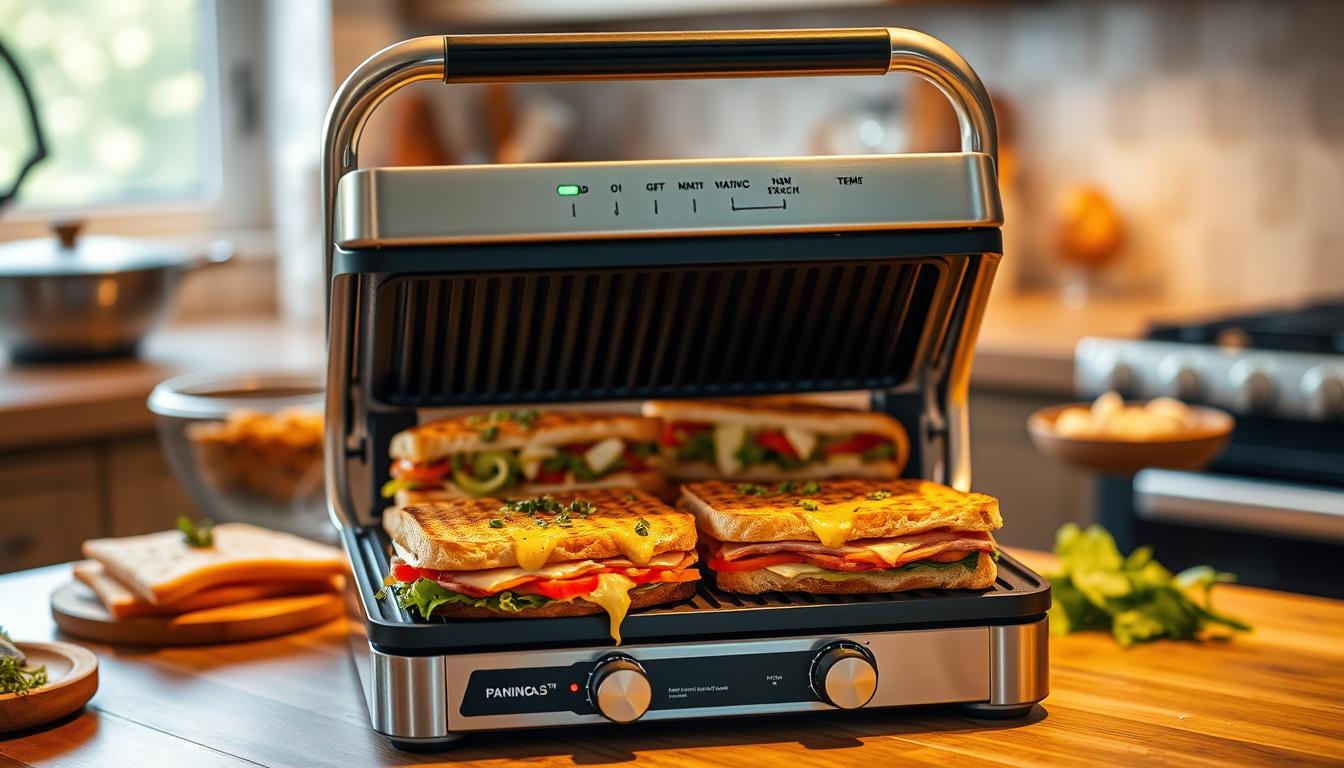
A panini grill has a heated bottom plate and a hinged top plate that comes down on the sandwich. Heat from both sides toasts the bread and melts the cheese in a few minutes. A hinge that floats, or an adjustable top plate, lets the grill adapt to thick sandwiches, wraps and flatbreads without crushing them. Commercial models have thermostats and larger heating elements than consumer presses, so they recover quickly between sandwiches.
A panini grill works as part of a sandwich line. It sits next to sandwich prep refrigerators and a meat slicer, and it is a good use of counter space because it needs no hood in most cases. Check with your ventilation contractor and local authority about your specific setup.
Types of panini grill plates
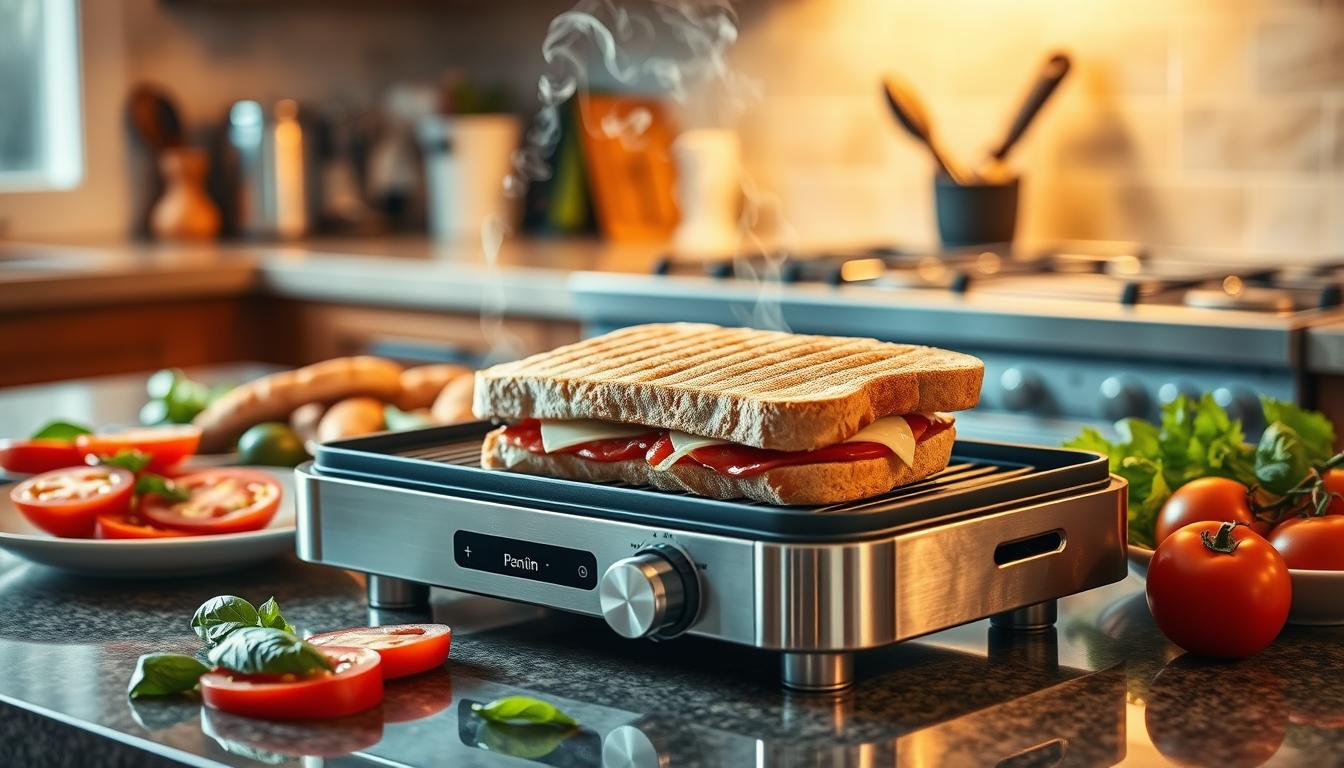
Ribbed plates
Ribbed (grooved) plates give the classic grill marks and let fat and moisture escape. Ribbed top and bottom plates are a good fit for traditional paninis with thick bread.
Flat plates
Flat plates give even contact and suit thin breads, wraps, quesadillas, flatbreads and grilled cheese. Flat plates are also easier to clean.
Ribbed top and flat bottom
A mixed set, with a ribbed top plate and a flat bottom plate, gives grill marks on the visible side and a flat, stable base. Our range includes combinations such as the Eurodib CORTL220 with a ribbed top and flat bottom and the Eurodib CORTF220 with flat top and bottom plates.
Cast iron and non-stick finishes
Cast iron plates hold heat well and recover steadily for continuous service, but they need seasoning and careful cleaning. Non-stick or coated plates release food easily and clean quickly, but the coating can wear with scraping and harsh cleaners. Ask which finish a model uses and how the manufacturer recommends you clean it.
What to look for in a commercial panini grill
Size and capacity
Plate dimensions determine how many sandwiches you can press at once. Single grills fit one or two sandwiches; double grills have two independent top plates for four or more. Match the size to your peak: a café that sells 30 paninis at lunch needs more than one small plate. Leave counter space for the open lid and for a clear work area.
Power and heat-up
Many compact commercial panini grills are rated around 1,800 W on a standard 120 V circuit. Larger and double models draw more and may need a higher-voltage or dedicated circuit. Check the specification and your available power before you order. In BC, electrical equipment must have an approved certification mark; confirm it on the data plate.
Temperature control
A thermostat with a visible dial lets staff set a consistent temperature, and an indicator light shows when the plates are ready. Some models allow separate settings for the top and bottom plates, which helps if you press delicate items or have both thick and thin breads.
Grease management
Look for a drip tray or channel that carries fat away from the plates. Easy-to-remove trays save time at close.
Build quality
Stainless steel housing, solid hinges and a well-balanced top plate are signs the grill is made for daily use. Plastic parts and thin lids tend to be a weak point.
Panini grill versus a consumer panini press
Searches such as “best panini press under $150” often return consumer products. A household press is designed for a few sandwiches a week, so it uses lighter plates, lower-wattage elements and plastic parts. In a restaurant it will overheat, take longer between sandwiches, and wear out. It also may not carry the certifications a commercial space expects. A commercial panini grill costs more because it is built for repeated use and fast recovery, and it is typically the better value over a year of daily service.
Panini grill cost: rough market ranges in CAD
These are rough estimates and vary by brand, size and spec. They are market ranges, not Babak prices and not a quote.
- Single commercial panini grill: roughly $300 to $900.
- Double or larger grills with heavier plates: roughly $800 to $2,000.
- Heavy-duty cast iron or specialty units: often $1,500 and up.
Request a quote for current pricing on models that fit your menu and counter. If budget is tight, ask our team about certified pre-owned equipment in our used restaurant equipment category.
How do I clean and maintain a panini grill?
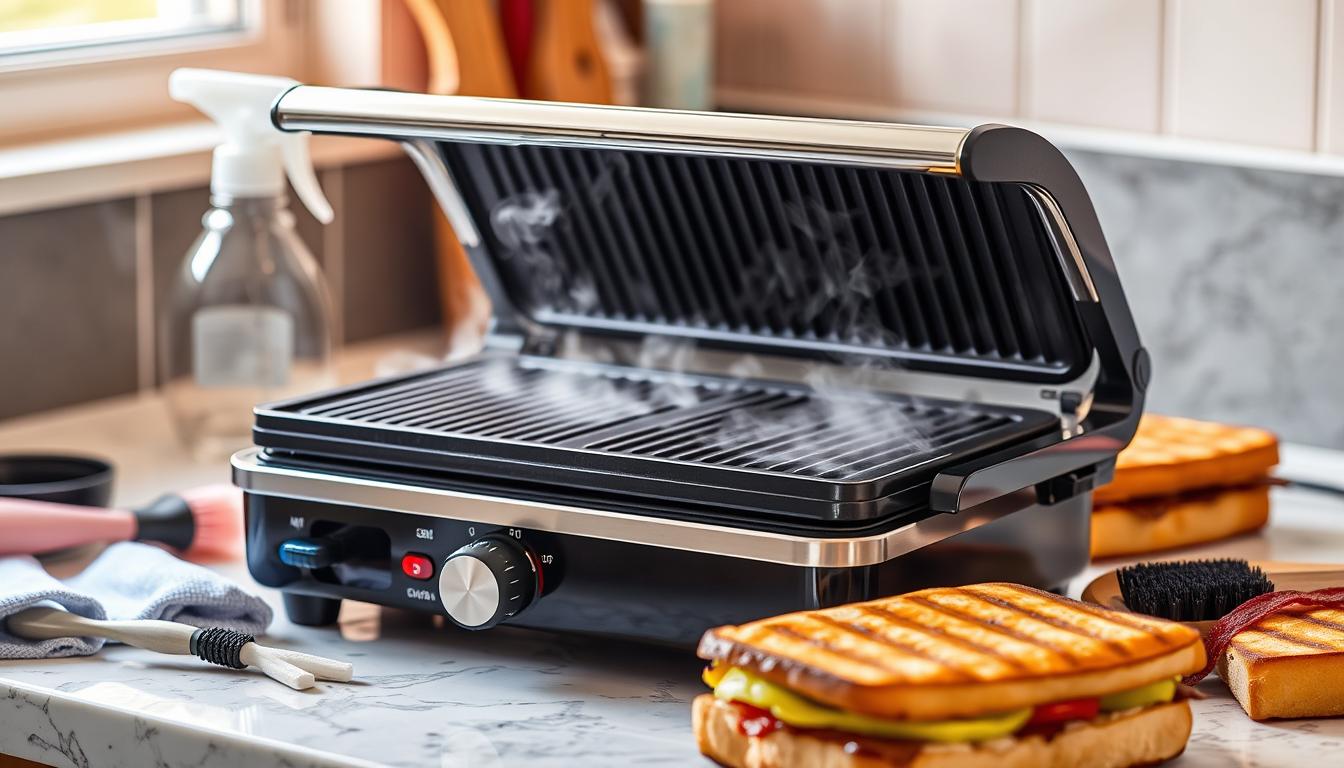
This is one of the most searched questions about panini presses, and a clean grill really does make better sandwiches. Always unplug the grill and let it cool until it is warm but not hot before cleaning.
- Scrape. While the plates are still warm, scrape off crumbs and melted cheese with a plastic or wooden scraper. Avoid metal tools on non-stick and coated plates.
- Wipe. Wipe the plates with a damp cloth and mild detergent. For stuck-on residue, lay a damp cloth over the warm plates for a few minutes to loosen it.
- Rinse and dry. Wipe away detergent with a clean damp cloth, then dry. Never submerge the grill or splash water into the controls.
- Empty the drip tray. Wash it with warm soapy water and sanitize as part of your regular routine.
- Clean the exterior. Use a stainless steel-safe cleaner on the housing and handle.
- Season cast iron. If your grill has cast iron plates, apply a thin coat of cooking oil after cleaning to protect them.
Follow the manufacturer’s care instructions for your model and the sanitation plan agreed with your health authority, such as Vancouver Coastal Health or Fraser Health in the Lower Mainland. Check cords and plugs regularly, and replace worn seals or plates rather than using a damaged grill.
Panini grill recipes and menu ideas
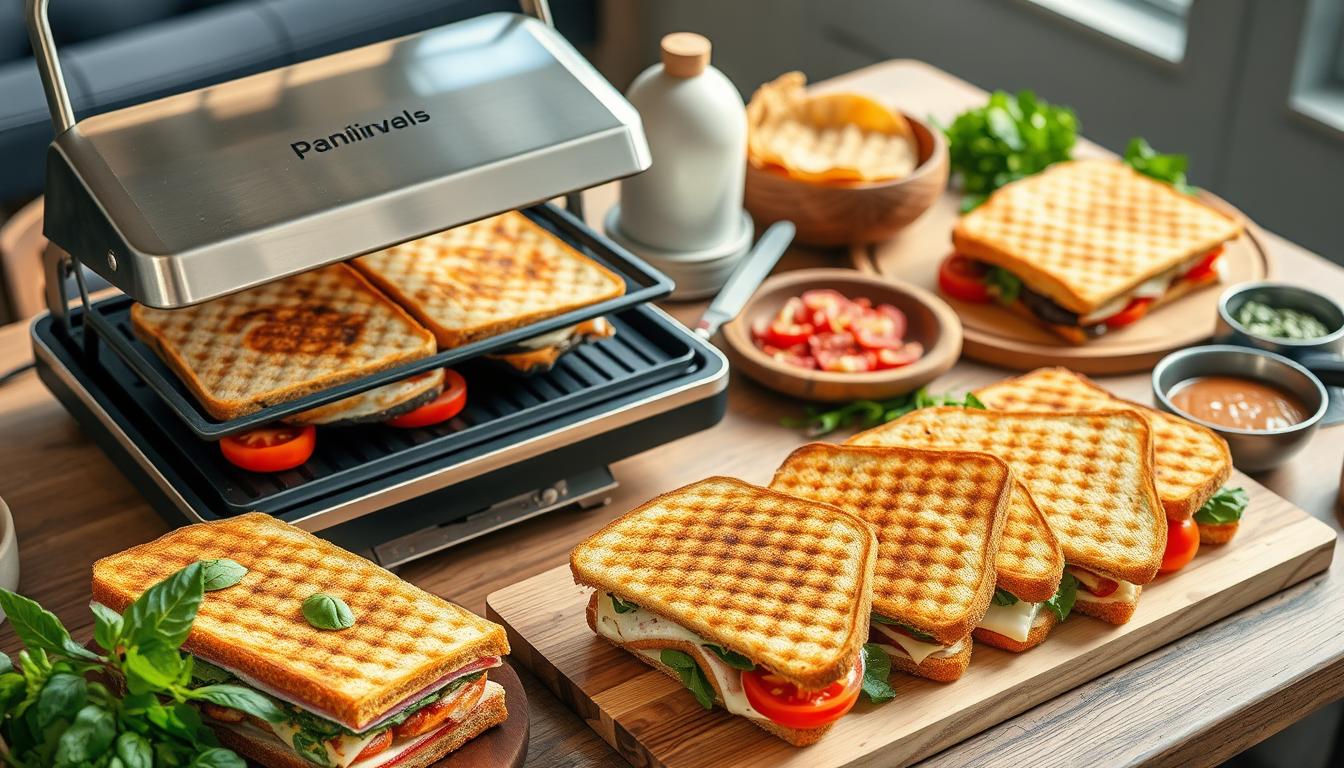
A panini grill does more than the classic Italian sandwich. Operators use theirs for:
- Grilled cheese and tuna melts.
- Breakfast sandwiches with egg and bacon.
- Quesadillas and flatbread wraps.
- Vegetable paninis with grilled eggplant, peppers and pesto.
- Dessert paninis with chocolate or fruit.
- Reheating pre-made wraps and pastries.
For hot, wide-surface cooking such as burgers, bacon or hash browns, a griddle is a better tool; read our guide to commercial griddles for the comparison. If you also serve hot sandwiches from a display, a display warmer helps hold finished items.
Panini grill comparison table
| Plate style | Best for | Notes |
|---|---|---|
| Ribbed top and bottom | Classic paninis with grill marks | More surface to clean |
| Flat top and bottom | Wraps, quesadillas, grilled cheese | Easy to clean |
| Ribbed top, flat bottom | Mixed menus | Marks on top, stable base |
| Cast iron plates | Continuous service | Needs seasoning |
| Non-stick plates | Fast turn, easy release | Avoid metal tools |
Frequently Asked Questions
What is the difference between a panini grill and a panini press?
They are usually the same appliance. In commercial kitchens it is called a panini grill or sandwich grill, and it is built with heavier plates, stronger heating elements and a thermostat for daily use.
Which plates are best for a commercial panini grill?
Ribbed plates give grill marks for classic paninis, flat plates suit wraps and grilled cheese, and a ribbed top with a flat bottom suits mixed menus. Choose by what you sell most.
How do I clean and maintain my panini press for long-lasting use?
Unplug it, let it cool until warm, scrape off crumbs, wipe the plates with a damp cloth and mild detergent, dry them and empty the drip tray. Avoid metal tools on coated plates and follow the manufacturer’s instructions.
Can I use a home panini press in a restaurant?
It is not recommended. Household presses are made for occasional use, so they heat more slowly and wear out in commercial service. A commercial panini grill is built for repeated use.
How much does a commercial panini grill cost?
As a rough estimate, single commercial panini grills cost about $300 to $900 and larger or heavy-duty models cost more. These are market ranges, not Babak prices. Request a quote for current pricing.
Does a panini grill need a hood?
Requirements depend on the equipment and your local rules, so confirm with your ventilation contractor and building and health authorities before you install it.
Ready to choose a panini grill? Browse our sandwich grills and specialty cooking equipment, visit our Burnaby showroom at 7190 Randolph Ave, or call (604) 566-9747 to request a quote. Pricing, availability, delivery and installation are confirmed at the time of purchase.