

Blog
Industrial Sinks: Types, Features and BC Requirements

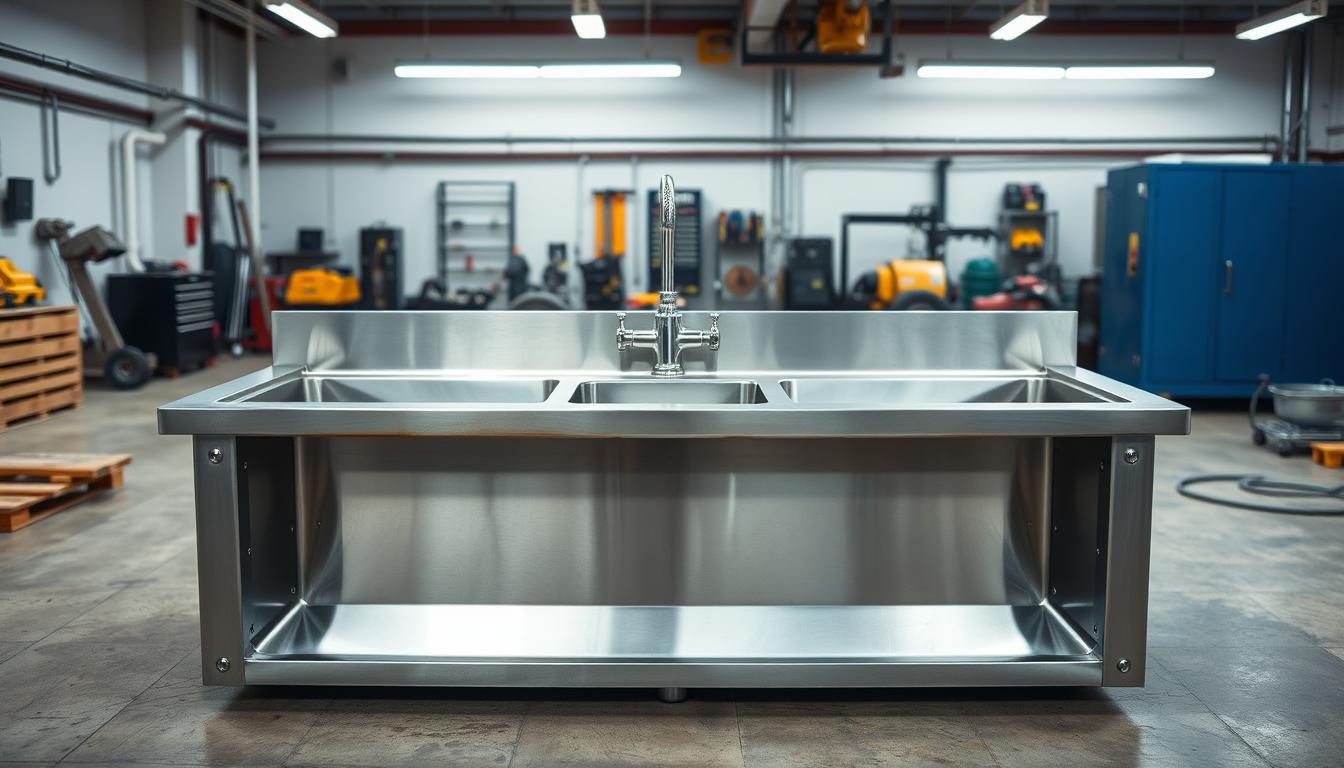
Industrial sinks are heavy-duty stainless steel sinks built for commercial kitchens, food processing areas and workshops. They have deeper bowls, thicker steel and stronger frames than a household sink, so they can take pots, trays and daily sanitizing without denting or leaking. This guide covers the main types of industrial sinks, what to look for in materials and size, and the rules that apply to sinks in BC food premises.
We stock sinks for restaurants, cafes, bakeries and food businesses across Vancouver and BC. If you only need the dishwashing setup, start with our guide to the three-compartment sink, then come back here to compare the other sink types.
What Makes a Sink “Industrial”?
There is no single standard for the word, but industrial or commercial sinks share these features:
- Stainless steel construction, usually type 304, which resists corrosion from food acids, salt and cleaning chemicals.
- Heavier gauge steel. A lower gauge number means thicker steel, so a 16 gauge sink is stronger than an 18 gauge sink. Heavy-use sinks often specify a thicker gauge for the bowls.
- Deep, large bowls sized to submerge full-size pots and pans.
- Rolled front and splash backs that keep water on the sink and off the wall.
- Strong legs and crossbracing, often with adjustable feet for uneven floors.
- Standard drains and faucet holes built for commercial faucets and plumbing.
Plastic and polyethylene sinks exist for light-duty and chemical applications, but for food premises stainless steel is the normal choice because it handles heat, impact and repeated sanitizing.
Types of Industrial Sinks
Three-Compartment Sinks
The workhorse of a manual dishwashing line: one bowl to wash, one to rinse and one to sanitize. Browse three-compartment sinks or the wider pot sink range, which includes one-compartment sinks and two-compartment sinks. A typical choice is an 18 x 18 inch or 24 x 24 inch bowl, such as the Thorinox TTS-1818-RL18 three-compartment sink with drainboards.
Hand Sinks
A separate hand sink keeps handwashing away from food prep and dishwashing. Compact hand sinks mount on the wall and often have wrist-blade or knee-operated controls. An example is the Atosa MRS-HS-14 hand sink with wrist blade handles.
Mop and Service Sinks
A floor-level basin where cleaning staff can fill buckets and dispose of dirty water, so it never goes into a food sink. See our mop sinks, including the Thorinox TMS-2533-16 mop sink.
Bar Sinks and Specialty Sinks
Narrow bar sinks fit under or behind a bar for glass rinsing and garnish. Our other sinks category also covers specialty sink types. Work tables with a built-in bowl, such as stainless work tables, suit prep stations where a full sink line would not fit.
Industrial Stainless Steel Sinks: Key Features to Compare
- Bowl size and depth: measure your largest pot, tray or mixing bowl and add room for your hands. A bowl that cannot submerge your largest item will not work for washing.
- Drainboards: left, right or both. Drainboards give you space to stack dirty items and air dry clean ones.
- Faucets and plumbing: check the faucet hole spacing and the supply style. Browse faucets and plumbing to match them.
- Steel thickness: thicker steel is quieter, more rigid and more dent-resistant.
- Legs and bracing: look for adjustable feet and a strong undershelf or crossbar.
- Splash height: a taller back splash protects your wall. Wall-mounted sinks can use side splash guards where they sit beside other equipment.
- Certification and finish: choose smooth, easy-to-clean surfaces with rounded corners.
How Many Sinks Does a BC Food Business Need?
The BC Food Premises Regulation requires you to wash and sanitize food contact surfaces and utensils, and it requires handwashing stations that are adequate in number and location. A handwashing station means a hand basin, hot and cold running water, a soap dispenser and single-use towels. The detail on sinks varies by health authority and by plan review, so use the figures below as a guide and always follow your health authority’s requirements.
- Manual dishwashing: Interior Health guidance, for example, calls for a three-compartment sink for premises that wash manually, with each bowl big enough to submerge the largest pot and drainboards next to the sink for air drying. A two-compartment sink may suit a business that uses only single-service utensils.
- Handwashing: hand sinks should be separate from food prep and dishwashing sinks.
- Food prep sinks: there is no fixed provincial rule we can point to. Your health authority decides during plan review.
- Dishwashing steps: BC health authorities describe scrape, wash, rinse, sanitize and air dry. Temperatures and contact times differ between authorities, so follow the instructions from Vancouver Coastal Health, Fraser Health or the authority that covers your premises.
Plans for new or altered food premises must be approved by your health authority before construction begins, so share your sink layout with them early. Drainage and any indirect connection for sinks and equipment should follow the BC Plumbing Code and your plumber’s advice.
Industrial Sinks for Non-Restaurant Uses
Food processing rooms, commissaries, butcher shops, bakeries, laundry rooms and workshops all use industrial sinks, but their requirements differ. A food processing plant may need larger bowls and heavier gauge steel for constant use. A laundry sink needs a deep, smooth basin. A workshop sink may handle oil and chemicals that a food sink never sees. If you are not sure which suits your space, send us your layout and what you plan to wash.
Installing an Industrial Sink
- Measure the space and the doorways. Sinks are long, and some need to be moved in sections.
- Plan the plumbing for hot and cold supply, the drain and any indirect waste connections. Use a licensed plumber and follow the BC Plumbing Code.
- Level the sink using the adjustable feet so water drains toward the bowls.
- Seal the back splash to the wall with food-grade sealant to stop water and pests from getting behind it.
- Run a test with water, check for leaks, and confirm the hot water reaches the temperature your health authority requires.
Cleaning and Caring for Stainless Steel Sinks
- Rinse after use and wipe dry to prevent water spots.
- Clean with mild detergent and a soft cloth, moving in the direction of the grain.
- Avoid steel wool and chlorine-based abrasives that scratch or pit the surface.
- Do not leave bleach solutions sitting in the sink for long periods.
- Check the faucets, drains and seals regularly and fix drips quickly.
Industrial Sink Comparison
| Sink type | Typical use | Key feature |
|---|---|---|
| Three-compartment | Manual dishwashing | Wash, rinse, sanitize bowls with drainboards |
| Two-compartment | Pot washing, light dishwashing | Smaller footprint than three bowls |
| One-compartment | Prep, soaking, utility | Compact, flexible placement |
| Hand sink | Handwashing | Wall mounted, hands-free controls |
| Mop sink | Cleaning and janitorial | Floor-level basin for buckets |
| Bar sink | Glass rinsing, garnish | Narrow, fits behind or under a bar |
Frequently Asked Questions
What is an industrial sink?
An industrial sink is a heavy-duty sink, normally stainless steel, with deeper bowls and thicker steel than a household sink. It is made for daily use in commercial kitchens, food processing areas and workshops.
Why is stainless steel used for commercial sinks?
Stainless steel resists corrosion, handles heat and repeated sanitizing, and has a smooth surface that is easy to clean. That is why health authorities and kitchen designers choose it for food premises.
How many compartments does a commercial kitchen sink need?
For manual dishwashing, health authority guidance in BC typically points to three compartments (wash, rinse, sanitize), and a two-compartment sink may suit businesses that only use single-service utensils. Check with your health authority during plan review.
What size industrial sink do I need?
Choose bowls that can submerge your largest pot or pan. Common bowl sizes are 18 x 18 and 24 x 24 inches, and you can add drainboards on one or both sides. Measure your space and your largest item before you buy.
Do I need a separate hand sink?
Yes, in most food premises. BC rules require adequate handwashing stations, and health authority guidance asks for hand sinks that are separate from food prep and dishwashing sinks.
Are there alternatives to stainless steel industrial sinks?
Plastic or polyethylene sinks are used in light-duty and chemical settings, but stainless steel is the normal choice in food premises because of its strength and cleanability.
Ready to choose a sink? Browse our pot sinks, hand sinks and mop sinks, or visit the Babak showroom at 7190 Randolph Ave in Burnaby. Call (604) 566-9747 or request a quote. Pricing, availability, delivery and installation are confirmed at the time of purchase.