

Blog
Jet-Tech Dishwashers: Models, Sizes and How to Choose

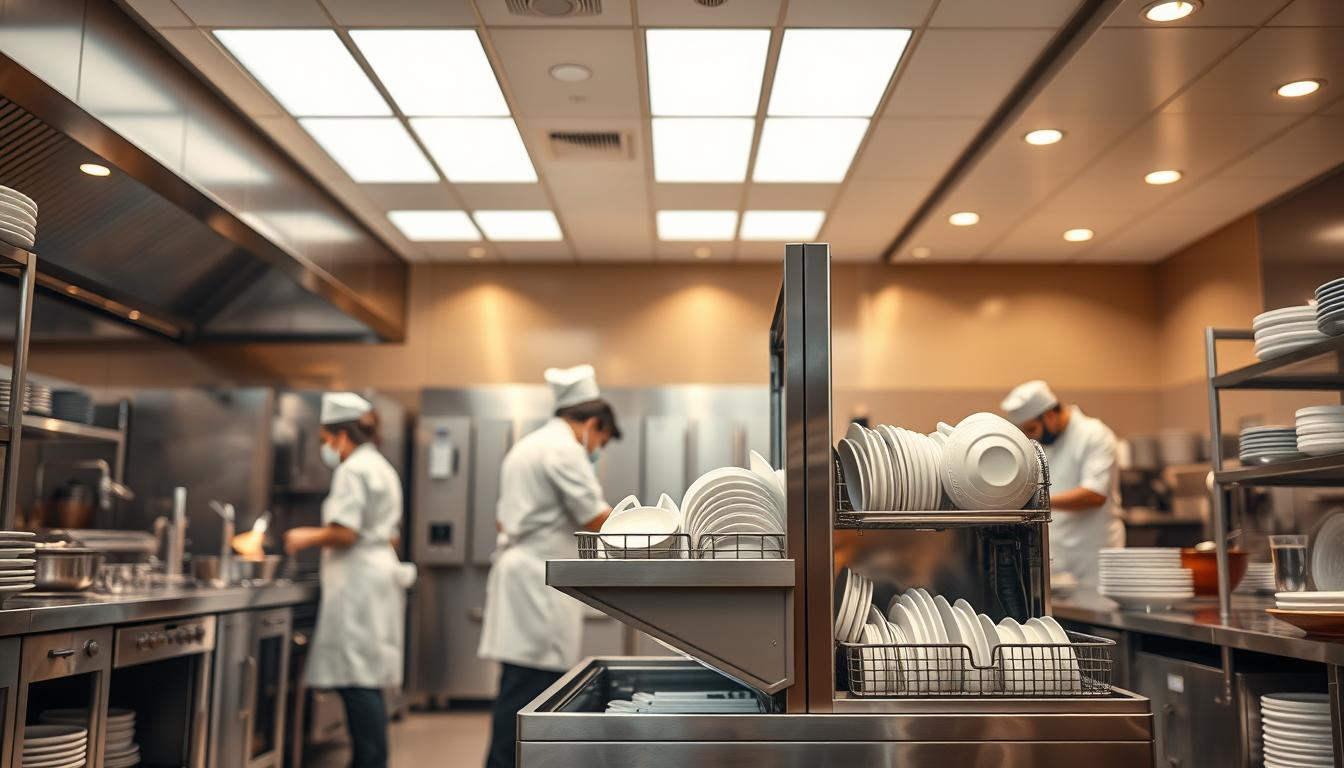
Jet-Tech makes undercounter and door-type commercial dishwashers, and the range splits into two groups: low-temperature machines that sanitize with a chemical, and high-temperature machines that heat the final rinse with a built-in booster. This guide explains how the Jet-Tech lines differ, how to match a machine to your volume and what to check before it goes into your kitchen.
You can see the full range on our Jet-Tech brand page, or browse all commercial dishwashers if you want to compare brands.
Jet-Tech dishwasher types
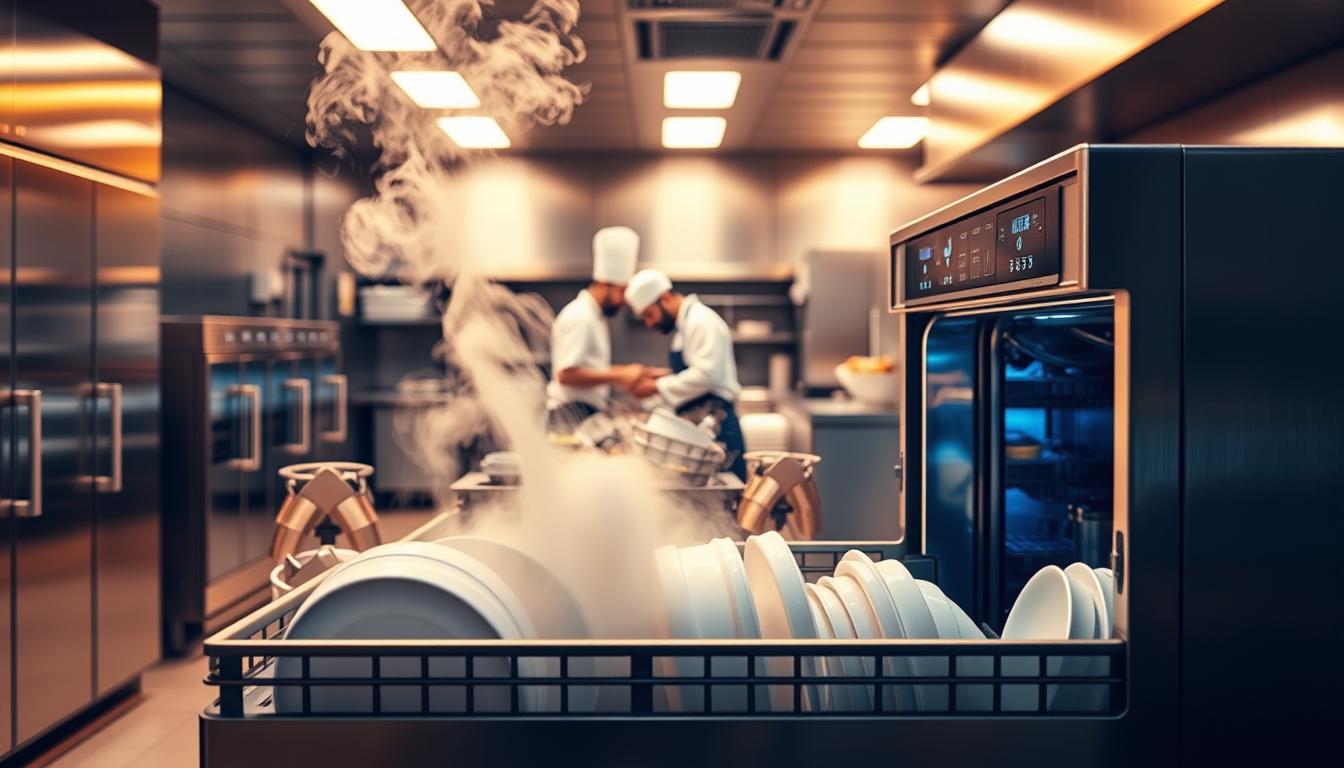
Jet-Tech models in our catalog fall into three practical groups. Specifications vary by model, so check the product page for the exact unit you are considering.
Undercounter models
Undercounter machines fit beneath a standard counter and suit cafés, bars, small restaurants and any kitchen with limited floor area. Two examples show the range:
- The Jet-Tech EV18 is a high-temperature undercounter unit with a built-in stainless booster for a 185 to 194 F (about 85 to 90 C) rinse, an automatic drain pump, detergent and rinse-aid pumps and two programmable cycles.
- The Jet-Tech X-33 is a low-temperature undercounter unit with a chemical sanitizing pump, a built-in rinse-additive and detergent pump and a capacity of 40 racks per hour.
Our undercounter dishwashers category lists more models, and our guide on undercounter dishwasher tips covers day-to-day use.
Door-type (hood-style) models
A door-type machine has a hood that lifts so staff can slide a rack in and out. It handles more racks per hour than an undercounter and suits a restaurant with a steady dish flow. Models in the line include the 757E, 757EV, 747HH and EV22. See all door type dishwashers.
For example, the 747HH is described with a 24 by 24 inch footprint, a wash phase at about 150 F and a final rinse at about 185 F, a 40-rack-per-hour capacity and a maximum dish height of 26 inches. The EV22 is built from 16 gauge AISI 304 brushed stainless steel with automatic tank fill and level regulation and a door clearance of 16.75 inches. The 757E adds an electronic control with several cycle options and a built-in booster for the high-temperature rinse.
Which one is right for you?
Think in terms of racks per hour, the largest item you wash and the floor space you have. A café washing cups and plates fits an undercounter machine. A restaurant with a full dinner service often needs a door-type model. A very high-volume kitchen may need a conveyor dishwasher instead.
High-temperature vs low-temperature sanitizing
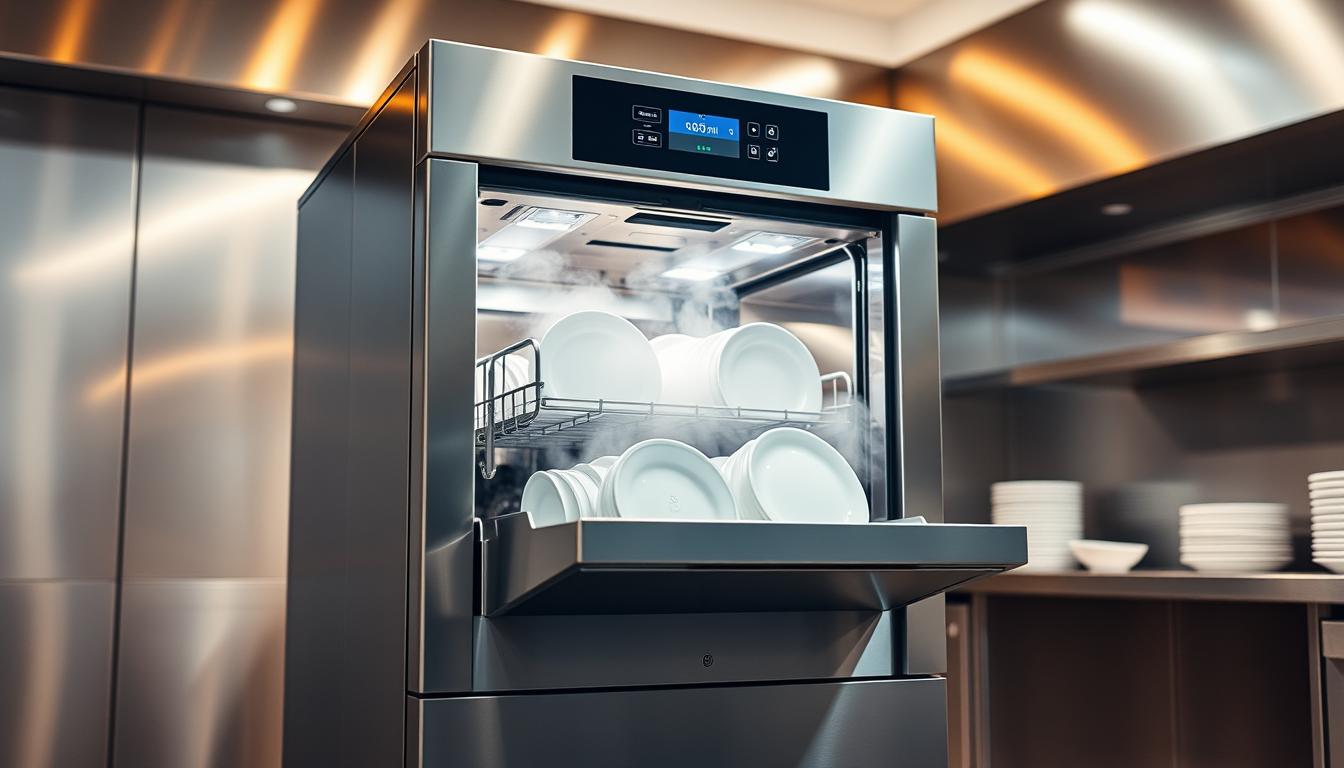
This is the most important decision when choosing between Jet-Tech models.
- High-temperature machines sanitize with very hot rinse water, usually boosted by a built-in heater. They do not need a chemical sanitizer, and dishes dry quickly. They need a power supply that can run the booster, so check your electrical capacity.
- Low-temperature machines sanitize with a chemical (commonly chlorine) injected into the rinse. They use less electricity, but they need a chemical supply, test strips and regular checks that the concentration is right.
Health authority guidance in BC differs by region, so confirm the exact temperatures, chemical concentrations and testing requirements with yours. As a reference point, Interior Health’s plan guidance describes a high-temperature machine with a final rinse of at least 71 C (160 F) at plate level, and a low-temperature chemical machine with a minimum 38 C (100 F) at the manifold and 50 ppm chlorine. Your own health authority’s requirements apply to your premises.
Features worth comparing
- Built-in booster heater. Needed on a high-temperature machine to reach final rinse temperature without an external heater. If your model does not include one, add a booster heater.
- Detergent and rinse-aid pumps. Automatic dosing keeps results consistent and saves staff time.
- Construction. Stainless steel tank and body, removable wash arms and scrap filters make cleaning faster.
- Door clearance. Check it against your tallest items: sheet pans, tall glasses, mixing bowls and pitchers.
- Safety switch. A door switch stops the wash pump when the door opens.
- Cycle options. Short cycles for glasses, longer cycles for heavily soiled plates and pans.
What you need in the kitchen before installation
A dishwasher is a plumbing and electrical project, not only an equipment purchase. Plan for:
- Electrical. Voltage, phase and amperage vary by model; a high-temperature unit with a booster draws considerably more power than a low-temperature one. The EV18 listing, for instance, shows a 22.3 A rating at 208 to 240 V.
- Water supply and drain. Hot water supply, inlet pressure and an approved drain connection. Drain per the BC Plumbing Code and your plumber.
- Space and ventilation. Allow room to load, unload and open the door, and consider whether steam needs a vent.
- Surrounding stations. A dish table, a pre-rinse spray and a clean-dish shelf keep the flow moving. Pair the machine with the right faucets and plumbing and, for heavy scrap loads, a garbage disposal.
Permits and approvals vary by municipality, so confirm your requirements before installation.
Daily care and maintenance
A dishwasher that is cleaned every day runs more quietly, uses less energy and lasts longer. Build these steps into closing:
- Remove and clean scrap filters and wash arms.
- Drain and rinse the tank according to the manufacturer’s instructions.
- Wipe the door and interior and leave the door open to air dry.
- Check chemical levels and, on low-temperature machines, test sanitizer concentration with test strips.
- Schedule descaling if your water is hard, because scale shortens heating element life.
Keep the owner’s manual nearby, and call a qualified technician for any problem with the booster, pumps or controls. Read more in our commercial dishwasher guide and compare options in top commercial dishwashers for restaurants.
Water quality, chemicals and common problems
Dishwasher results depend on water as much as on the machine. Hard water leaves scale on heating elements and a film on glassware, so many kitchens add a water treatment system or schedule descaling. Use detergent and rinse aid made for commercial machines, and keep the dosing pumps primed. If results drop, check these first:
- Cloudy or spotted glasses: hard water, low rinse aid or a dirty tank.
- Dishes not clean: blocked wash arm jets, a full scrap filter, an overloaded rack or low detergent.
- Dishes not drying: low final rinse temperature, too little rinse aid or a stacked rack that traps water.
- Machine not starting: door not fully closed, a tripped breaker or a water supply that is off.
If a fault continues after these checks, stop using the machine and call a qualified technician.
Jet-Tech model comparison
| Model | Style | Sanitizing | Notes from the product listing |
|---|---|---|---|
| EV18 | Undercounter | High temperature | Built-in booster, 208 to 240 V, two programmable cycles |
| X-33 | Undercounter | Low temperature (chemical) | 40 racks per hour, chemical sanitizing pump |
| 747HH | Door type | High temperature | 40 racks per hour, 24 x 24 in footprint, 26 in max dish height |
| EV22 | Door type | High temperature | 16 gauge 304 stainless, 16.75 in door clearance |
| 757E / 757EV | Door type | High temperature | Electronic controls, built-in booster |
Frequently Asked Questions
What is the difference between a high-temperature and a low-temperature Jet-Tech dishwasher?
A high-temperature machine sanitizes with a very hot final rinse produced by a built-in booster. A low-temperature machine sanitizes with a chemical injected into the rinse. High-temperature units draw more power; low-temperature units need chemical supply and testing.
What size Jet-Tech dishwasher do I need?
Count the racks you wash in your busiest hour and the tallest item you wash. Undercounter models suit cafés and bars, door-type models suit restaurants with steady dish flow and very high volume may need a conveyor machine.
Does a Jet-Tech dishwasher need a booster heater?
High-temperature models include a built-in booster. If a model does not include one, you need an external booster heater to reach the final rinse temperature.
What electrical supply does a commercial dishwasher need?
It depends on the model. High-temperature units with a booster often need a dedicated 208 to 240 V circuit. Check the specification on the product page and have a licensed electrician confirm the wiring.
How often should a commercial dishwasher be cleaned?
Clean filters, wash arms and the interior at the end of each service day, and descale periodically if your water is hard. Follow the manufacturer’s manual and your health authority’s requirements.
Which sanitizing requirements apply in BC?
They are set by your regional health authority (for example Vancouver Coastal Health, Fraser Health or Interior Health) and can differ in temperatures and chemical concentrations. Confirm the details with your authority before you choose a machine.
Explore the full range on our Jet-Tech page or browse commercial dishwashers, visit the Burnaby showroom at 7190 Randolph Ave or call (604) 566-9747 to request a quote. Pricing, availability, delivery and installation are confirmed at the time of purchase.